The Enugu Sports Club, a prestigious gathering place for the city’s elite, was abuzz with intellectual debate during its Chess Conclave’s maiden annual lecture. The lecture explored and refuted the long-standing claim that the Igbo people have Jewish origins.
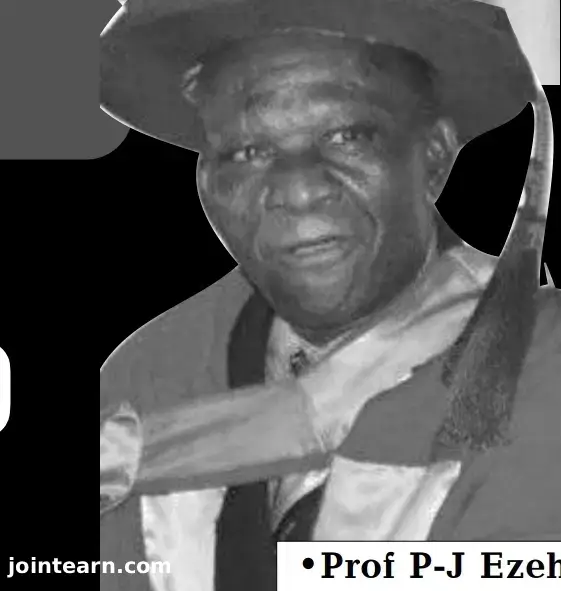
To delve into this topic, the club invited Professor Peter-Jazzy Ezeh, an esteemed emeritus professor of Anthropology at the University of Nigeria, Nsukka. Ezeh provided a wealth of academic references from the 18th century to modern-day research to challenge the idea that the Igbo migrated from the Jewish community. He encouraged Igbos to look toward African origins, particularly Egypt, rather than Israel, when considering their ancestral roots.
Debunking the Igbo-Jewish Link
Professor Ezeh made it clear that claims about the Igbo people’s Jewish ancestry were unsubstantiated by credible evidence. He criticized Olaudah Equiano, the first educated Igbo man who was enslaved at the age of 12, for comparing certain Jewish practices, such as circumcision, with Igbo customs. This comparison, Ezeh argued, was the basis for many scholars to mistakenly link the two cultures. However, Equiano’s perspective was shaped by limited experience, given that he was only a child when abducted and subsequently became a Christian in his adulthood.
Ezeh pointed out that the Igbo-Jewish theory lacks empirical or linguistic support. “When comparing Hebrew with Igbo, no lexical or linguistic connection has been found,” Ezeh said. He emphasized that to claim any two languages are related, their lexicons, sounds, and origins must align. Hebrew, he explained, is part of the Afro-Asiatic language family, which is more closely related to languages like Hausa, not Igbo.
According to Ezeh, the Igbo language belongs to the Niger-Congo family, one of the largest language groups in the world, whereas Hebrew’s Afro-Asiatic origins make it more closely related to Hausa and several other languages in northern Nigeria. Ezeh also referenced scientific linguistic studies, which show no connection between Hebrew and Igbo languages.
He further elaborated that while similarities between cultures—like circumcision or taboos on adultery—may appear striking, they do not support a genealogical link. These practices are common across many African cultures, not just between the Jews and the Igbo.
The DNA Study and Evidence
In 2017, a DNA study conducted by Jewish researchers concluded that the Igbo people are not genetically related to the Jewish community. Samples were taken from individuals in Igboland and compared with the Jewish database, and the findings were clear: there was no genetic overlap. Ezeh emphasized that, while early European explorers may have speculated about the lost tribes of Israel in relation to Indigenous groups around the world, modern science offers much clearer, evidence-based insights into genealogical history.
He noted that before the Nigerian Civil War, the idea of the Igbo-Jewish connection was mostly a trope. In contemporary times, serious academic studies and scientific research have debunked this claim, offering Egypt and other African nations as more plausible points of origin for the Igbo.
Cultural Identity and the Need for Accurate Historical Understanding
Justice Peter Umeadi, former Chief Judge of Anambra State and chairman of the lecture, echoed Professor Ezeh’s sentiments, stating that the Igbo have a distinct cultural, linguistic, and social identity. He highlighted the resilience and industrious nature of the Igbo people, which has consistently placed them at the forefront of development wherever they live.
The lecture’s keynote speaker, Prince Chukwuemeka Onyesoh, leader of the Chess Conclave section of the Enugu Sports Club, emphasized the importance of understanding one’s roots. He argued that a people without knowledge of their history are like trees without roots, bound to repeat the mistakes of the past. He called on Igbos to continue celebrating and documenting their heritage, warning that misinformation is often fueled by incomplete or superficial knowledge, especially among elites.
Chief Ifeanyi Nweke, chairman of Enugu Sports Club, praised the organizers for selecting a timely and crucial topic. He noted that reinforcing cultural identity is essential in a time when misconceptions about the Igbo people’s history continue to surface.
A Call to Action
Other notable figures at the lecture included Prof. Elochukwu Amucheazi, president of the Igbo Leaders of Thought; Dr. Alex Ogbonnia, former spokesperson for Ohanaeze Ndigbo; Dr. Martins Okwor, former MD of Enugu State Water Corporation; and Hon. Chijioke Edeoga, the 2023 Labour Party gubernatorial candidate in Enugu State, among others.
The discussion closed with a strong call for Igbos to engage with their cultural heritage, dispelling myths and embracing a deeper understanding of their African origins. The lecture successfully shifted the narrative away from unfounded theories and focused on affirming the Igbo people’s true identity as part of the rich, diverse cultures of Africa.


Leave a Reply