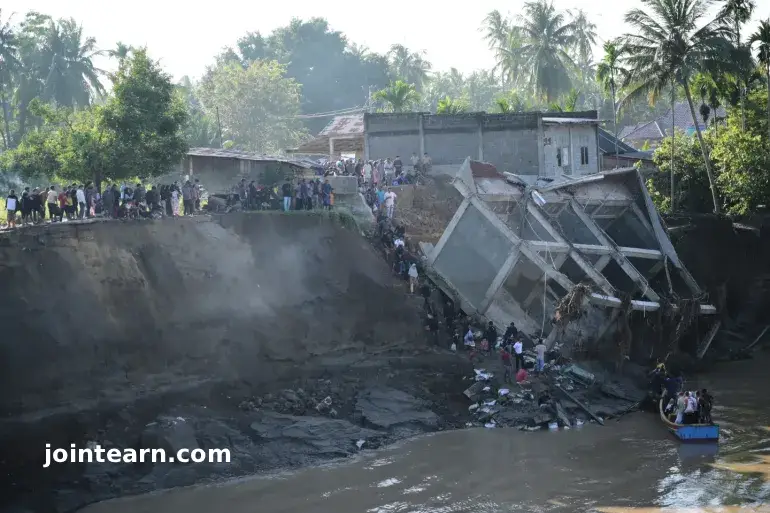
Indonesia is facing one of its most destructive natural disasters in recent years, as the death toll from massive flooding and landslides across Sumatra continues to rise. After a week of relentless, cyclone-driven rainfall, authorities confirmed on Saturday that at least 248 people have died with more than 100 still missing, as emergency teams battle dangerous conditions to reach isolated communities.
The unprecedented rainfall, triggered by a rare tropical storm that formed in the Malacca Strait, has also caused widespread devastation across Malaysia and Thailand, pushing the regional death toll to around 400 people.
Search and Rescue Efforts Continue Across West Sumatra
Indonesia’s National Disaster Management Agency (BNPB) reported that the greatest losses so far have occurred in West Sumatra, where swollen rivers and landslides swept through villages, destroying homes, roads, and bridges.
BNPB chief Suharyanto said that the confirmed number of casualties is expected to grow as rescuers continue to reach previously inaccessible locations.
West Sumatra’s disaster agency spokesperson, Ilham Wahab, provided updated figures late on Friday, confirming 61 deaths and 90 missing persons across the province. The disaster has also displaced more than 75,000 residents, with more than 106,000 people affected overall.
Rising Toll in North Sumatra and Aceh
Further north, 116 deaths have been recorded in North Sumatra after floodwaters inundated entire districts, sweeping through mountainside communities and submerging thousands of structures.
In Aceh province, authorities confirmed at least 35 fatalities, with assessments still underway in remote areas where communication lines and transport routes have been severely damaged.
Regional Impact: Malaysia and Thailand Also Hit Hard
The same weather system unleashed widespread flooding across Southeast Asia:
- Thailand reported more than 145 deaths in eight southern provinces, with over 3.5 million people affected by rising waters.
- Malaysia confirmed two deaths but continues to monitor extensive flooding in several states.
The severity of this storm has caught many communities unprepared, as tropical systems rarely develop in the Malacca Strait. Meteorologists say the combination of warm sea temperatures and unusual atmospheric patterns helped fuel the storm’s strength.
Infrastructure Damage Complicates Relief Efforts
In Indonesia’s hardest-hit regions, the disaster has crippled critical infrastructure. Roads have been washed out, bridges have collapsed, and power and communication lines remain down in multiple areas.
This has severely limited the ability of rescue teams to deliver aid and evacuate stranded families. With many communities accessible only by air, Indonesia has deployed relief aircraft to transport food, clean water, and medical supplies to districts such as Central Tapanuli in North Sumatra.
Local officials warn that rebuilding could take months, as the structural damage spans entire towns and agricultural areas.
A Humanitarian Crisis Across Three Countries
As floodwaters begin to recede in some areas, the focus is shifting toward recovery, shelter support, and the search for the missing. Tens of thousands remain displaced across Indonesia, staying in temporary shelters while awaiting aid.
Humanitarian organizations are urging regional coordination and increased funding to support the massive number of affected households, especially in rural areas where resources are limited.
The Indonesian government is expected to announce further assistance measures as assessments continue.


Leave a Reply