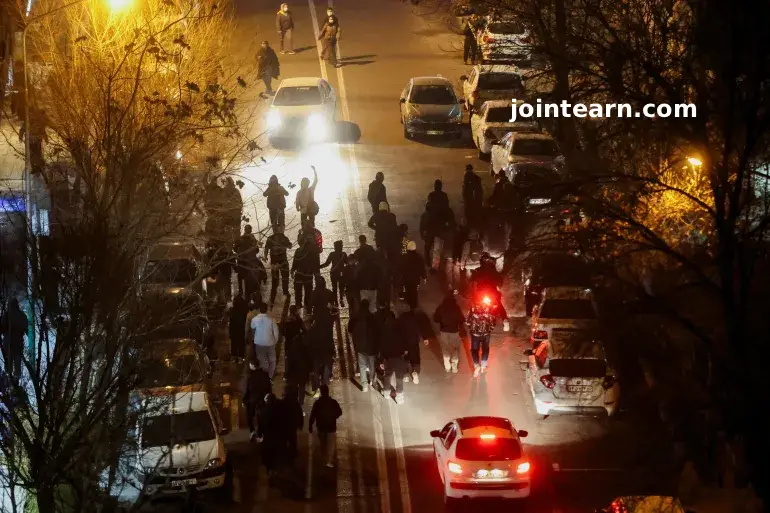
Iranian authorities have increasingly blamed foreign intelligence agencies for stirring unrest in the country, amid a wave of protests triggered by economic hardship and political grievances. Officials allege that foreign operatives, particularly from Israel and the United States, are actively involved in destabilizing the Islamic Republic.
On Monday, President Masoud Pezeshkian shifted focus from domestic economic struggles and internal dissent to longstanding geopolitical adversaries. Speaking on state broadcaster IRIB, he accused external actors of “training people inside and outside the country” and bringing “terrorists from outside” to escalate demonstrations, citing attacks on bazaars in Rasht and arson at mosques.
Israel and the US: Alleged Covert Operations
Iranian claims center on alleged covert operations by Israel, including the deployment of agents and resources within Iranian territory to influence protests. Far-right Israeli Heritage Minister Amichai Eliyahu acknowledged in an interview that Israeli operatives were active in Iran following the June 2025 ‘Rising Lion’ military operation, although he stopped short of stating that regime change was the goal.
Israeli media, including Channel 14, have reported that “foreign agents” played a role in supplying weapons to protesters, contributing to clashes that led to security force casualties. Former US Secretary of State and CIA Director Mike Pompeo confirmed the presence of Israeli agents on Iranian streets via social media, jokingly wishing “Happy New Year to every Mossad agent walking beside” protesters.
“I assume there are Israeli agents on the ground, reporting back on the situation from the streets, particularly now that the internet in Iran is down,” said Ahron Bregman, King’s College London expert on Israeli intelligence.
Historical Context of Israeli Operations in Iran
Israel has a long history of covert operations targeting Iran, particularly its nuclear and missile programs. Past operations have included:
- Assassinations of nuclear scientists and high-profile officials.
- Embedding agents and weapons systems within Iranian territory.
- Coordinating drone attacks and surveillance from inside Iran.
During the June 2025 conflict, Israel reportedly used its network to track and target Iranian scientists while also preparing drones on Iranian soil. Analysts say these operations have likely provided Israel with detailed intelligence as protests and civil unrest intensify.
“My assumption is that the Mossad is active in Tehran behind the scenes,” said Bregman. “Israeli officials are unusually quiet, with clear instructions not to be seen to be involved.”
Domestic Impact of Protests
The protests, fueled by a combination of economic hardship, corruption, and sanctions, have eroded Iran’s internal cohesion, creating opportunities for foreign intelligence infiltration. Crippling sanctions, a collapsing currency, and fatalities among demonstrators have exacerbated societal tensions, making the environment increasingly volatile.
Defense analyst Hamze Attar noted that foreign actors are likely prioritizing visibility and exposure for protesters, enabling them to share footage and amplify their message globally.
“Principally, they’re going to try to provide the demonstrators with what they need most: exposure,” Attar said. “In the chaos, protesters are unlikely to care about which countries are supporting them—they just want to be seen.”
Geopolitical Implications
Iran’s accusations reflect heightened tensions in the Middle East, where Israel perceives Iran as its primary regional threat due to Tehran’s nuclear ambitions and support for anti-Israel groups. Israeli Prime Minister Benjamin Netanyahu has repeatedly warned of Iran’s potential to develop nuclear weapons and has framed Iranian influence as a threat to regional stability.
Political scientists and analysts warn that such allegations and covert operations could escalate the conflict further, potentially destabilizing the region and heightening the risk of international confrontation.
“Israelis are desperate for any sign of a masterplan to counter threats from Iran,” said political scientist Ori Goldberg.
Conclusion
Iran’s claims underscore the complex intersection of domestic unrest and foreign interference, highlighting how protests can become entangled with global geopolitics. The involvement of Israel and the US—whether through intelligence operations or logistical support—illustrates the stakes of civil unrest in Tehran for both regional security and international diplomacy.
As the situation evolves, analysts warn that foreign intervention may intensify tensions, while domestic grievances continue to fuel widespread dissatisfaction among Iranians.


Leave a Reply