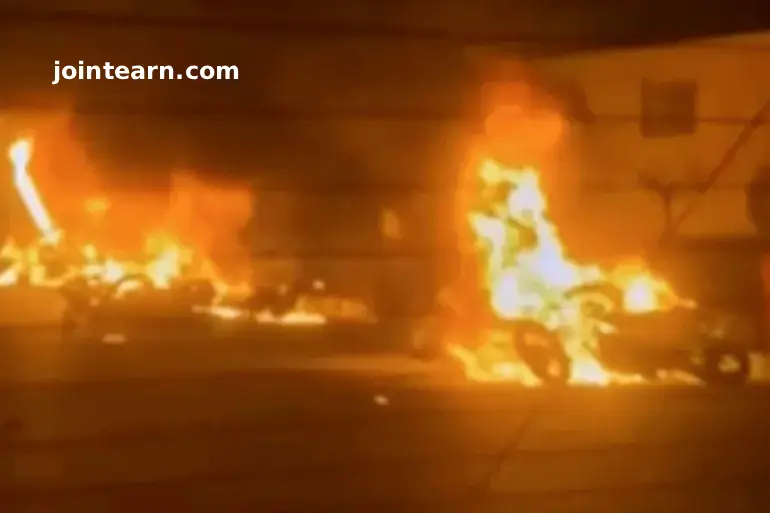
Tehran, Iran – Escalating tensions between Iran and the United States are raising fears of renewed conflict as nationwide protests in Iran continue to grip the country. Iranian officials have warned that Tehran is prepared for war after US President Donald Trump threatened military action in response to the crackdown on demonstrators.
The unrest, which began in late December 2025, has spread from Tehran to cities across Iran, fueled by soaring inflation, plummeting currency values, and economic hardship. Demonstrators are demanding social and economic justice, while authorities have sought to distinguish between citizens with legitimate grievances and “terrorist agents” allegedly instigated from abroad.
UN Reports on Escalating Violence
UN human rights spokesperson Jeremy Laurence, citing UN sources in Iran, stated that “hundreds” of people may have died since the protests began. The semiofficial Tasnim news agency reported 109 security personnel killed, while opposition groups claim the death toll among protesters is much higher.
Laurence emphasized, “This cycle of horrific violence cannot continue. The Iranian people and their demands for fairness, equality, and justice must be heard.” The UN also expressed concern over expedited judicial proceedings and the use of the death penalty against protesters, as well as the labeling of demonstrators as “terrorists.”
Iran Alleges Foreign Interference
Iran’s intelligence agency reported seizing US-made arms and explosives from alleged militant groups operating in multiple homes across the country. State media claimed these groups, linked to Israel, had entered Iran via its eastern borders with the intention of sabotage and assassination.
Top Iranian military officials, including Commander Abdolrahim Mousavi, accused the US and Israel of deploying ISIL operatives inside Iran to carry out attacks. Foreign Minister Abbas Araghchi told Al Jazeera that authorities recorded orders given to “terrorist agents” abroad, instructing them to target police and protesters to spread chaos.
Araghchi warned that Iran is ready for military confrontation if the US tests its resolve. “If Washington wants to test the military option it has tested before, we are ready for it,” he said. “But we hope they choose the wise option of dialogue.”
US Prepares Diplomatic and Military Options
The US administration is reportedly preparing a range of diplomatic and military responses. Vice President JD Vance and Secretary of State Marco Rubio are presenting President Trump with options spanning dialogue to direct military action, according to William Martin, Vance’s communications director.
Hardline voices, such as Republican Senator Lindsey Graham, are urging Trump to intensify pressure on Iran, advocating for strikes targeting infrastructure linked to the protests but stopping short of a ground invasion.
President Trump has also threatened 25 percent tariffs on countries engaging in trade with Iran, prompting a strong rebuke from China, which condemned unilateral sanctions and vowed to defend its economic interests.
Internet Blackouts and Security Crackdowns
Iran’s internet has been severely restricted for over 100 hours, with connectivity dropping to approximately 1% of normal levels, according to the cybersecurity monitor NetBlocks. Mobile users were briefly able to make international calls, though SMS and global internet access remain largely blocked.
Security forces have maintained a heavy presence in central Tehran, with riot police equipped with helmets, body armor, shotguns, and tear gas launchers. Government offices and banks have been affected by the unrest, with operations disrupted by fires and communication outages.
Despite restrictions, authorities claim that hundreds of thousands rallied in support of the government, portraying these demonstrations as evidence of public backing. Officials continue to stress that while they understand the economic hardships faced by citizens, political unrest will not be tolerated.
Implications for US-Iran Relations
The protests and subsequent crackdown have brought Iran and the US to a dangerous tipping point. Analysts warn that military escalation could result in severe regional consequences, while diplomatic efforts are ongoing through channels including communications between Iranian authorities and US special envoy Steve Witkoff.
The unfolding situation underscores the fragile balance in the Middle East, the risks of foreign intervention, and the enduring impact of domestic economic pressures on geopolitical stability.


Leave a Reply