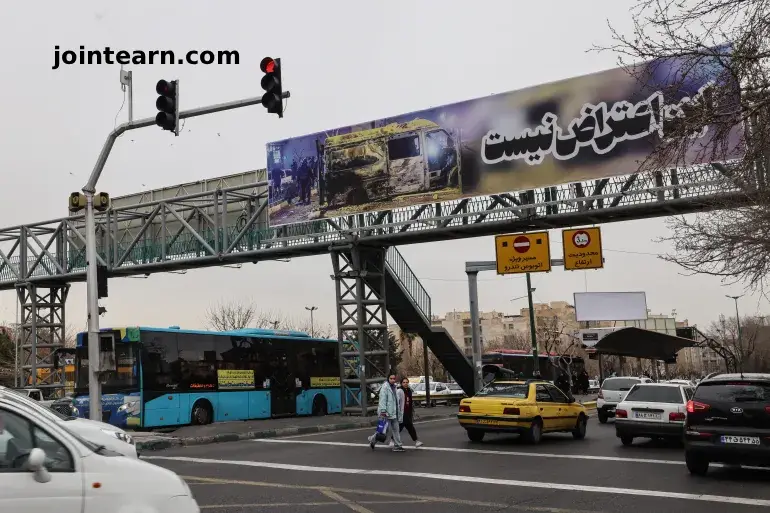
Iranian authorities report that at least 3,000 people have been arrested in the aftermath of weeks of antigovernment demonstrations, as the streets of Tehran and other cities remain largely calm. The mass protests, which erupted in late December over rising inflation and the steep devaluation of Iran’s currency, appear to have largely subsided under a heavy security presence and a nationwide internet blackout.
Calm on the Streets, But Tensions Persist
On Friday, Tehran and other major cities were relatively quiet, with visible security deployments and limited public gatherings. Despite the calm, residents remain anxious over the potential for renewed unrest.
Al Jazeera’s reporter in Tehran, Tohid Asadi, noted that public sentiment is mixed:
“Many Iranians are frustrated by the ongoing internet shutdown and worried about the possibility of escalation, even though the protests have largely subsided.”
According to the online monitoring group NetBlocks, the nationwide internet blackout has entered its eighth consecutive day, following cuts imposed at the height of the protests last week.
Human and Economic Toll
The protests have been fueled by soaring inflation and economic hardship. Thousands took to the streets in anger over worsening living conditions, prompting a harsh government crackdown.
- Human rights organizations estimate that more than 1,000 protesters have been killed since demonstrations began.
- The Iranian government claims that at least 100 security officers were also killed in protest-related attacks.
Al Jazeera has not independently verified these figures, and Amnesty International has warned that mass unlawful killings may have occurred on an unprecedented scale.
Government Response and Arrests
Iranian authorities have labeled protesters as “rioters” and accused foreign powers, including the United States and Israel, of fueling unrest. The arrest of 3,000 people, combined with the internet blackout and a heavy security presence, has largely quelled public demonstrations.
The government appears to be focusing on domestic containment and sending warnings to international actors, while balancing the optics of diplomacy.
U.S. Response and Trump’s Involvement
The situation briefly raised fears of a wider confrontation with the United States after President Donald Trump threatened potential military action if protesters continued to be killed.
However, Trump later softened his stance, praising Iran’s decision to cancel the execution of hundreds of protesters:
“I greatly respect the fact that all scheduled hangings, which were to take place yesterday (over 800 of them), have been cancelled by the leadership of Iran. Thank you!”
Steve Witkoff, Trump’s special envoy to the Middle East, added that he hopes “a diplomatic resolution” can reduce tensions between Washington and Tehran.
Expert Analysis: Mixed Signals and Economic Pressure
Roxane Farmanfarmaian, lecturer at the University of Cambridge specializing in the Middle East, described the U.S. approach as sending mixed signals, making it difficult for Iran to gauge the red lines in potential negotiations.
She emphasized that Iran’s current priority appears to be domestic stabilization, including economic recovery, which poses a more immediate threat to the regime than external pressure.
Historical Context
These protests mark the largest antigovernment demonstrations since the 2022-2023 movement triggered by the death of Mahsa Amini in police custody over alleged dress code violations. The unrest reflects persistent economic grievances, human rights concerns, and dissatisfaction with government policies.
International Concerns and Calls for Accountability
Amnesty International has called for investigations into alleged mass killings and urged the global community to hold perpetrators accountable. The combination of internet shutdowns, mass arrests, and heavy security deployments underscores the difficulty of obtaining reliable information from within Iran.
Al Jazeera’s Asadi reported that Iranian authorities are attempting to manage the situation both domestically and internationally, keeping channels for diplomacy open while signaling readiness for any scenario.
Key Takeaways
- At least 3,000 protesters have been arrested following weeks of unrest in Iran.
- Internet access remains blocked nationwide, limiting communication and information flow.
- Iran reports heavy security deployment to maintain calm in Tehran and other cities.
- Human rights organizations report potentially over 1,000 protester deaths, while the government cites over 100 security officer fatalities.
- Trump praised Iran for halting executions and emphasized a potential diplomatic resolution.
- Analysts warn that Iran’s primary focus is economic stabilization and preventing renewed unrest.


Leave a Reply