Tehran, Iran – Iranian authorities are intensifying their crackdown on protesters, promising severe punishment for those detained during recent nationwide demonstrations. The government is also seizing assets of individuals who supported the protests, claiming these confiscations will cover damages caused during the unrest. Meanwhile, the country remains largely cut off from the internet as officials continue to restrict communication and control the narrative.
Judiciary Promises Harsh Action Against ‘Rioters’
Judiciary chief Gholam-Hossein Mohseni-Ejei emphasized that the crackdown is only beginning. In a post on X (formerly Twitter) on Monday, he wrote:
“Our main work at the judiciary about the recent developments has just started. If, without justification, we grant leniency to someone who is not deserving of leniency, then we have acted contrary to justice.”
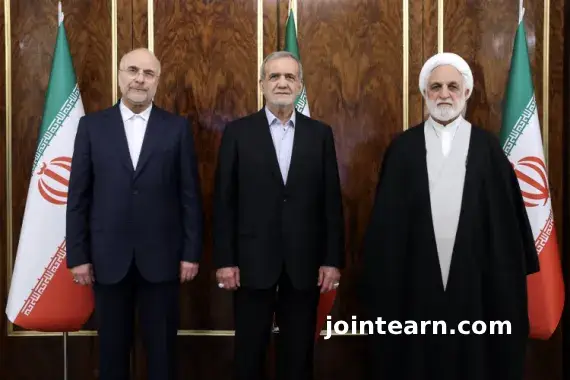
Ejei, alongside President Masoud Pezeshkian and parliament chief Mohammad Bagher Ghalibaf, met on Monday to discuss the aftermath of the protests. A joint statement released by state media declared that “murderers and terrorist seditionists” will face decisive action, while those allegedly manipulated by foreign powers could potentially benefit from Islamic compassion.
The protests, which began on 28 December 2025 with shopkeepers in downtown Tehran, have resulted in tens of thousands of arrests across multiple cities. Iranian authorities maintain that the unrest was supported and funded by the US and Israel.
Arrests Across the Country
Recent state announcements indicate further arrests in Kerman, Isfahan, Mazandaran, Shiraz, and Bandar Anzali, targeting alleged “leaders of riots” accused of violence against government buildings, mosques, and civilians.
Hardline police chief Ahmadreza Radan warned that protesters who were “tricked” have three days to turn themselves in to receive reduced sentences. He added that many detainees had confessed to committing violence, murder, and looting, and state television has aired numerous confessions, with faces blurred to maintain anonymity.
Asset Confiscation to Cover Damages
Authorities are seizing the assets of individuals perceived as supporters of the protests. Mohammad Movahedi Azad, head of the prosecutor general’s authority, stated:
“Based on the law, the damages of recent riots must be demanded from the backers of the ‘monarchy sedition’ and these people must be held to account.”
Reports indicate that the assets of prominent businessmen, including cafes and major food brands, were confiscated to offset damages incurred in Tehran. Former footballer Voria Ghafouri, previously arrested in 2022 for supporting nationwide protests, also had one of his cafes seized.
Tensions With the US
Former US President Donald Trump has repeatedly commented on the unrest, at one point calling for Iranians to “take over” government institutions and claiming foreign assistance. Trump later called for the end of Iran’s 37-year leadership under Supreme Leader Ayatollah Ali Khamenei, prompting sharp rebukes from Iranian authorities.
The Guardian Council, Iran’s constitutional watchdog, stated that Trump’s statements constitute a “red line” and warned of “heavy costs and serious consequences” for any transgression against the supreme leader. Parliament chief Ghalibaf criticized Trump for using his “non-existent credibility to extend chaos, insecurity and killings in Iran.”
Internet Blackout and Media Restrictions
Iran continues to enforce a digital blackout, with most of the population cut off from the internet. Officials have signaled that limited reconnections are experimental, possibly testing tighter control over communications.
The chief executive of Irancell, one of Iran’s largest mobile and internet providers, was replaced after operators reportedly failed to fully implement the nationwide shutdown on 8 January. Additionally, state media reported brief satellite broadcast disruptions, with images of protests briefly appearing before the feed was restored.
Authorities have also confiscated copies of the reformist Ham-Mihan daily newspaper, citing coverage of the protests as the reason.
Supreme Leader’s Statement on Casualties
In an unusual acknowledgment, Supreme Leader Ayatollah Ali Khamenei admitted that “several thousands” were killed during the protests but blamed foreign agents, not Iranian security forces, for the violence. Authorities continue to claim that US and Israeli backing played a central role in inciting unrest.


Leave a Reply