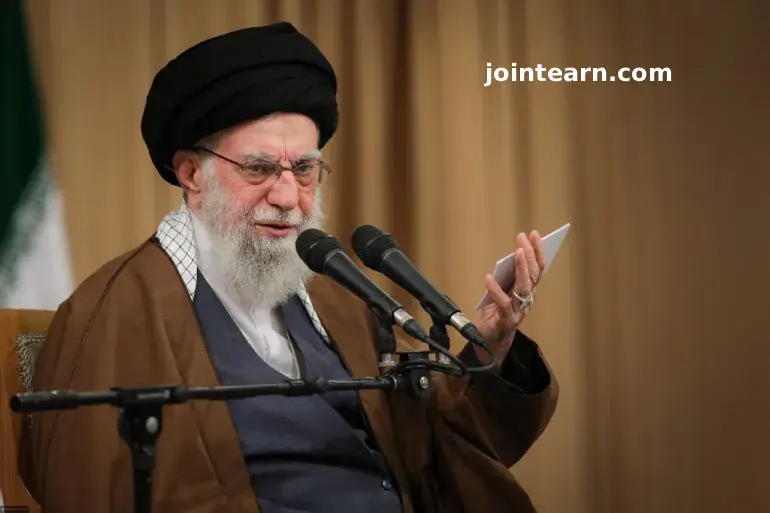
Iran’s Supreme Leader Ayatollah Ali Khamenei has accused actors linked to the United States and Israel of orchestrating weeks of anti-government protests in Iran, claiming the unrest resulted in the deaths of “several thousands” of people and caused widespread destruction across the country.
Speaking on Saturday, Khamenei said the demonstrations, which began in late December amid mounting economic pressure, were ultimately transformed into a foreign-backed campaign aimed at destabilising Iran.
“Those linked to Israel and the United States caused massive damage and killed several thousands,” Khamenei said, according to Iranian state media.
The remarks mark the first time Iran’s highest authority has publicly referenced casualty figures in the thousands, significantly raising the stakes in the government’s narrative surrounding the protests.
Iran Blames Foreign Powers for Escalation of Protests
Iranian officials have increasingly blamed foreign adversaries for the unrest, alleging that what began as domestic demonstrations over inflation, currency devaluation, and economic hardship was later “hijacked” by violent actors directed from abroad.
Khamenei went further than previous statements, accusing US President Donald Trump of direct involvement and describing him as a “criminal”.
“The latest anti-Iran sedition was different,” Khamenei said. “The president of the United States personally became involved.”
According to Khamenei, this level of foreign interference distinguished the recent protests from earlier episodes of unrest in Iran.
‘We Will Not Drag the Country Into War’
Despite the accusations, Khamenei said Iran would seek to avoid open military escalation beyond its borders. However, he warned that those deemed responsible for the violence would ultimately face consequences.
“We will not drag the country into war,” he said, “but we will not let domestic or international criminals go unpunished.”
Iran’s leadership has repeatedly insisted that its response is focused on internal stability, while reserving the right to respond to what it sees as coordinated external aggression.
Conflicting Death Toll Figures Amid Information Blackout
Reporting from Tehran via satellite, Al Jazeera correspondent Resul Serdar said Khamenei’s comments largely reaffirmed Iran’s long-standing position, but introduced a significant new claim regarding the scale of casualties.
“One thing that is new in his speech is that for the first time he is actually giving a sense of the numbers of people killed,” Serdar said. “He is saying that the violent protesters have killed thousands of people.”
There is no independently verified death toll. Iranian officials had previously acknowledged hundreds of deaths, including members of the security forces.
However, some international human rights groups have suggested the numbers could be far higher. The US-based group HRANA has claimed that an additional 3,000 people may have been killed during the unrest, though these figures remain unconfirmed.
Khamenei’s statement is the first to publicly suggest casualty levels in the thousands from within Iran’s top leadership.
Arrests, Destruction, and Official Narrative
Iranian authorities say approximately 3,000 people have been arrested since the protests began.
Khamenei also accused demonstrators of extensive destruction, including the burning of more than 250 mosques and medical facilities, claims echoed by state media.
According to Iran’s official account, protests initially erupted peacefully on December 28 in several cities. Authorities say the government acknowledged public grievances and sought to address economic pressures, but later alleged that violent groups took control of the demonstrations.
“These protests were later hijacked by violent elements who were receiving orders from outside powers,” Serdar reported, summarising the government’s position.
Officials claim participants were trained, financed, and equipped by foreign actors, with Khamenei placing the US president “at the centre of this plot”.
Internet Restrictions and Gradual Restoration
The protests coincided with a near-total internet blackout that lasted more than a week, limiting access to independent reporting and social media platforms.
On Saturday, Iran’s semi-official Fars News Agency reported that short messaging services (SMS) had been restored nationwide as part of a phased rollback of communication restrictions.
The move follows growing domestic and international pressure over the blackout, which critics say hindered emergency communication and transparency.
Broader Regional and International Implications
The protests and Iran’s response have intensified US-Iran tensions, with Washington repeatedly criticising Tehran’s handling of the unrest while denying any role in fomenting violence.
Khamenei’s remarks suggest Tehran is positioning the protests within a broader geopolitical confrontation, framing domestic instability as part of an international effort to weaken Iran.
Analysts say the evolving narrative could influence Iran’s future approach to diplomacy, internal security, and regional strategy, particularly as economic challenges persist.


Leave a Reply