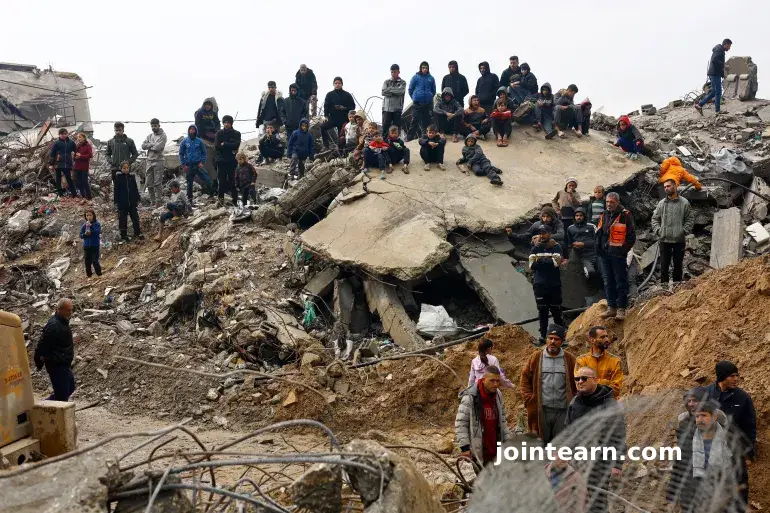
Tensions between Israel and Hamas have intensified as both sides accuse each other of obstructing the second phase of the US-brokered ceasefire agreement in Gaza, raising fresh doubts over the durability of the fragile truce.
The exchange of blame came on Sunday, a day after the killing of Raed Saad, a senior Hamas commander, in an Israeli strike near Gaza City. Hamas described the attack as a serious violation of the ceasefire, while Israel said Palestinian armed groups were failing to meet key commitments under the agreement and attempting to rebuild military capabilities.
Hamas Accuses Israel of Violating Ceasefire Terms
In a video statement, Khalil al-Hayya, Hamas’s chief in Gaza, confirmed Saad’s death and accused Israel of undermining the ceasefire through continued military operations and targeted killings.
According to al-Hayya, Israel’s actions threaten the future of the peace plan brokered by the United States.
“The ongoing Israeli violations of the ceasefire agreement, including the assassinations that targeted Raed Saad and others, endanger the entire agreement,” he said.
He urged international mediators, particularly US President Donald Trump, to pressure Israel into fully adhering to the ceasefire and halting what Hamas describes as unilateral military actions.
Ceasefire Phases and Sticking Points
The current truce, which began on October 10, was structured in two main phases:
- Phase One called for a halt in major hostilities, the exchange of living captives and prisoners, the return of the remains of the dead, and expanded humanitarian aid access to Gaza.
- Phase Two is intended to include a full Israeli withdrawal from Gaza, Palestinian disarmament, and a formal declaration ending the war.
Hamas argues that Israel has failed to meet the spirit of phase one, citing daily attacks and restrictions on humanitarian aid. Gaza authorities claim that since the truce began, Israel has carried out hundreds of strikes, resulting in significant loss of life and damage across the enclave.
Israel Points to Captive Remains and Security Concerns
Israel, meanwhile, says it cannot proceed to the second phase until Hamas fulfils all its obligations, including the return of the remains of Ran Gvili, described as the last Israeli captive yet to be handed over.
Prime Minister Benjamin Netanyahu defended the strike that killed Saad, portraying the Hamas commander as a key figure involved in rebuilding armed capabilities inside Gaza.
Netanyahu accused Saad of overseeing efforts to smuggle and replenish weapons, calling such actions a direct breach of the ceasefire framework.
“These activities amount to a complete violation of the principles Hamas claims to have accepted under the Trump peace plan,” Netanyahu said, adding that Israel would not tolerate attempts at what he called “remilitarisation” during a ceasefire.
Growing Strain Between Israel and the United States
The dispute has unfolded amid reports of quiet friction between Israel and the United States, Israel’s closest ally and the main sponsor of the ceasefire agreement.
Israeli media outlets have reported that Washington is urging Israel to move swiftly toward the second phase of the deal, while Netanyahu’s government maintains that unresolved issues—particularly the return of Gvili’s remains—must be addressed first.
Netanyahu acknowledged that the first phase of the agreement is nearing completion but insisted that Israel would determine its own course of action.
“We are working intensively to secure the return of Ran Gvili, including efforts in Cairo and elsewhere,” he said.
‘We Decide’: Netanyahu Emphasises Israeli Autonomy
In remarks widely interpreted as a response to international pressure, Netanyahu stressed that Israel would act independently in safeguarding its security interests.
“Our policy will remain very forceful and independent,” he said.
“We decide on the actions. We decide on the responses. We decide what must be done to ensure the security of Israel and its soldiers.”
Uncertain Path Ahead for Gaza Truce
As accusations continue to fly, the future of the Gaza ceasefire remains uncertain. With humanitarian conditions in Gaza still dire and political pressure mounting on all sides, mediators face growing challenges in keeping the agreement on track.
Whether the ceasefire advances to its second phase—or collapses under renewed hostilities—will likely depend on the ability of both parties, and their international backers, to resolve the escalating disputes over compliance, security, and trust.


Leave a Reply