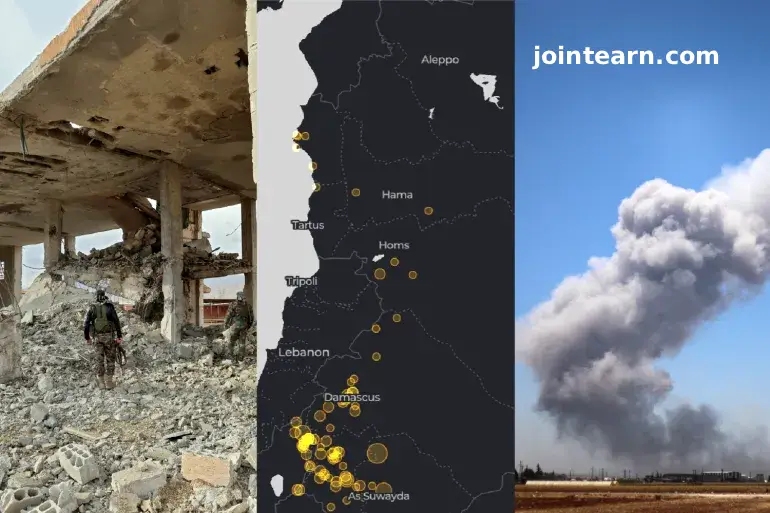
Analysis of ACLED data shows nearly two Israeli strikes per day since the fall of Damascus
One year after the dramatic collapse of the al-Assad government, Israel has sharply intensified its military operations in Syria, carrying out more than 600 air, drone, and artillery attacks between December 2024 and November 2025. The data, collected by the Armed Conflict Location and Event Data (ACLED) project, shows an average of almost two Israeli attacks per day.
This surge came during a period of major instability inside Syria, following the fall of the al-Assad dynasty after 54 years in power.
Where the attacks were concentrated
Most Israeli strikes were recorded in Syria’s southern regions:
- Quneitra: at least 232 attacks, the most of any governorate. The area borders the Israeli-occupied Golan Heights.
- Deraa: 167 attacks focused on former regime military sites and suspected weapons convoys.
- Damascus governorate: at least 77 attacks, including 20 inside Damascus city itself.
Israel has targeted airports, air-defence systems, aircraft, and other key infrastructure.
Why Israel says it’s attacking
Israel has carried out strikes in Syria for years, usually saying it aims to block Iranian military influence and prevent weapons transfers.
Since al-Assad was overthrown, Israel now claims it is trying to stop “extremist” groups from gaining advanced weapons—recently using the label for Hayat Tahrir al-Sham (HTS), the opposition group that played a major role in the offensive that toppled the Assad regime.
Just days after Damascus fell, Israel also announced it had destroyed over 80% of Syria’s air-defence systems, declaring full air superiority to prevent the new Syrian state from posing a threat.
Meanwhile, Syria’s new president, Ahmed al-Sharaa, has repeatedly said he wants no conflict with Israel and will not allow foreign groups to use Syrian territory to launch attacks.
Israeli forces seize additional Syrian territory
Following the regime’s collapse, Israeli troops crossed into the Syrian side of the Golan Heights, breaching the 1974 UN-brokered ceasefire agreement. Israel has since set up multiple outposts and expanded its presence into villages and areas of the UN-monitored demilitarised zone.
International reaction has been strong.
The UN and several Arab governments condemned Israel’s territorial advances as violations of both international law and Syrian sovereignty.
Despite this, Israeli officials say they will stay in the area indefinitely, arguing that the expansion is necessary to protect Israeli communities along the border.
Scale of occupation
- Golan Heights (long-term occupation): 1,200 sq km — roughly the size of New York City or Greater Manchester
- UN buffer zone: 235 sq km — similar to Baltimore
- Additional Syrian land occupied in 2024–25: 420 sq km — about the size of Denver


Leave a Reply