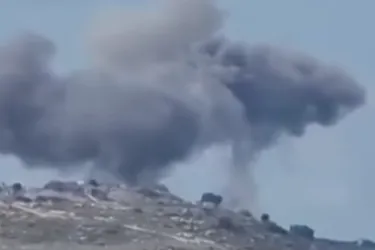
Israeli air strikes have targeted multiple locations across southern and eastern Lebanon, escalating tensions and drawing sharp criticism from the United Nations and human rights organizations. Sites hit include al-Jabour, al-Qatrani, al-Rayhan, Buday, Hermel, and Wadi Al-Qusayr near Deir Siryan, marking the latest attacks since the ceasefire took effect in late 2024.
Israel Targets Hezbollah Sites
According to Israeli officials, the operations targeted Hezbollah operatives and weapons facilities, aiming to pressure the group into surrendering its arsenal of long-range missiles, drones, and precision-guided munitions. Hezbollah, however, has categorically refused to disarm, while continuing to assert influence in other regions of Lebanon.
The strikes follow recent Israeli claims of killing three Hezbollah members and the targeted assassination of Haytham Ali Tabatabai, Hezbollah’s top military commander in southern Beirut. The group has vowed retaliation, though the timing remains undisclosed.
Humanitarian Impact and Civilian Casualties
The military campaign in 2025 has caused extensive damage across Lebanon. According to the Armed Conflict Location and Event Data Project (ACLED), Israeli forces conducted nearly 1,600 strikes from January through November.
- UN reports indicate at least 127 civilians killed since the ceasefire, including children.
- Human Rights Watch documented systematic targeting of construction and reconstruction equipment, destroying over 360 bulldozers and excavators, hindering efforts to rebuild bombed residential areas.
- The latest strikes killed three civilians and displaced more than 64,000 people, leaving many unable to return to their homes.
One reconstruction site owner told researchers he now clears rubble manually, fearing further attacks on heavy machinery.
Diplomatic Efforts Amid Rising Tensions
Despite ongoing violence, diplomatic initiatives continue. Lebanon and Israel recently sent civilian envoys to the ceasefire monitoring committee for the first time in decades. Additionally, Western and Arab ambassadors, including from the United States and Saudi Arabia, toured southern border areas with General Rodolph Haikal of the Lebanese Armed Forces to assess security and border control efforts.
Lebanese authorities have committed to removing Hezbollah’s armed presence south of the Litani River by year-end, while the group insists it will maintain arms elsewhere.
Lebanese President Joseph Aoun emphasized a diplomatic approach to halt strikes, and Prime Minister Nawaf Salam called for stronger verification mechanisms to monitor both Israeli violations and Lebanese military actions. However, officials warn that even direct talks may not prevent further attacks, as tensions remain high.
Conclusion
The recent Israeli strikes in Lebanon highlight the fragility of the current ceasefire and the ongoing humanitarian crisis. International observers, including the UN and Human Rights Watch, continue to monitor the situation, warning that attacks on civilian infrastructure may constitute war crimes. With Hezbollah refusing to fully disarm and Israel maintaining aggressive operations, Lebanon faces a prolonged period of instability.


Leave a Reply