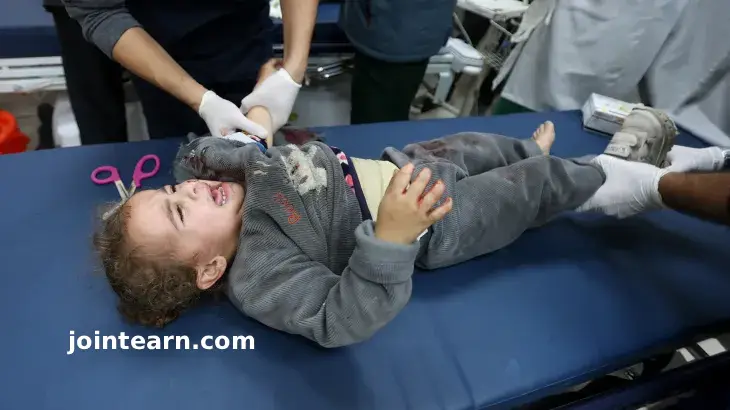
Gaza, January 6, 2026 – Israeli forces carried out intense air and artillery strikes in southern Gaza on Monday, killing at least two Palestinians, including a five-year-old girl, despite a US-brokered ceasefire in place since October. The attacks, which targeted a tent in the al-Mawasi area housing displaced families, have brought the Gaza death toll since the truce to at least 422, according to Gaza health authorities.
Casualties and Humanitarian Impact
The Nasser Medical Complex in Khan Younis reported that four additional Palestinians, including children, were wounded in Monday’s tent strike. The Palestinian Civil Defence confirmed that a collapsed home in the central Maghazi camp killed a 29-year-old father and his eight-year-old son, highlighting the dangers of damaged infrastructure and ongoing Israeli military operations.
Medical and rescue teams are struggling to respond due to fuel shortages and lack of equipment, while most of Gaza’s two million residents now live in tents, makeshift shelters, or partially destroyed buildings. Palestinian officials have emphasized that the destruction of homes and infrastructure continues to exacerbate the humanitarian crisis.
Israeli Military Justification
The Israel Defense Forces (IDF) claimed the strike targeted a Hamas fighter planning an imminent attack, although no evidence was provided to substantiate the claim. Israeli forces also reported additional operations against individuals who crossed the so-called “yellow line”, an informal boundary established during the ceasefire, as well as strikes against Hezbollah and Hamas positions in southern and eastern Lebanon.
Despite the ceasefire agreement, Israeli forces continue near-daily attacks and restrict the flow of humanitarian aid, leaving large sections of Gaza devastated. According to Palestinian officials, approximately 88% of buildings have been damaged or destroyed since the start of the conflict.
Ceasefire and Rafah Crossing
The ceasefire, mediated by the United States, included phased agreements for prisoner exchanges, humanitarian aid, and the reopening of Gaza’s Rafah crossing with Egypt. While Hamas has released all remaining living captives and Israel has freed nearly 2,000 Palestinian detainees, humanitarian aid continues to be delayed, and the Rafah border remains largely closed.
Israeli media reported that authorities are considering reopening the crossing in both directions, a shift from the previous policy limiting movement only for exit to Egypt. Regional governments, including Egypt and Qatar, have criticized Israel’s restrictions, warning against what they termed the ethnic cleansing of Gaza.
For residents, the crossing represents more than travel: it is a lifeline for survival, education, and medical access. Tasnim Jaras, a student in Gaza City, said she hopes the crossing opens so she can continue her studies, while Moaeen al-Jarousha, wounded in the conflict, emphasized the urgent need for medical treatment abroad.
Life Under Occupation
Al Jazeera correspondent Hani Mahmoud reported from Gaza City that Palestinians have long awaited the crossing to open. “For many families, this isn’t about travel, it’s about survival,” Mahmoud said. “Parents are asking about medical access they haven’t had for years, and students see this as a chance to continue their education. Families hope to reunite with loved ones separated for too long.”
Meanwhile, Israel continues to control 53% of Gaza, and ongoing demolitions in neighborhoods like eastern Zeitoun exacerbate the humanitarian crisis.


Leave a Reply