Israeli authorities are advancing plans to construct 9,000 new housing units in the Atarot area of occupied East Jerusalem, a move that international observers and Palestinian advocacy groups say will further undermine the possibility of a contiguous Palestinian state. The development is planned on the site of the abandoned Qalandiya airport and is seen as part of Israel’s broader strategy to expand settlements in key areas of East Jerusalem and the West Bank.
Atarot Settlement Plan
The proposed Atarot neighborhood would stretch from Ramallah and Kafr Aqab in the north through the Qalandiya refugee camp, ar-Ram, Beit Hanina, and Bir Nabala, creating an Israeli enclave in the heart of densely populated Palestinian communities. According to Peace Now, this development is reminiscent of the controversial E1 plan, which was designed to fragment Palestinian territories and prevent the establishment of a future Palestinian state.
“This is a destructive plan that, if implemented, would prevent any possibility of connecting East Jerusalem with the surrounding Palestinian area and would, in practice, prevent the establishment of a Palestinian state alongside Israel,” Peace Now stated.
The Atarot settlement plan has been in preparation since early 2020, when Israel’s Housing Ministry submitted it to the Jerusalem municipality for approval. While bureaucratic processes were completed, objections from Israel’s Environmental Protection and Health Ministries delayed progress. Past U.S. administrations, including that of Barack Obama, also opposed the plan.
International and Local Concerns
The expansion of Israeli settlements in East Jerusalem and the West Bank continues to draw international condemnation. Critics argue that these moves violate international law and the principles of a two-state solution, as they physically separate Palestinian communities and consolidate Israeli control over strategic areas.
The Israeli government classifies much of the Atarot plan area as “state land”, allowing construction without approval from Palestinian landowners. The Netanyahu government has accelerated multiple settlement initiatives across occupied Palestinian territories while simultaneously supporting military actions in Gaza and the West Bank.
Recent Developments and Security Measures
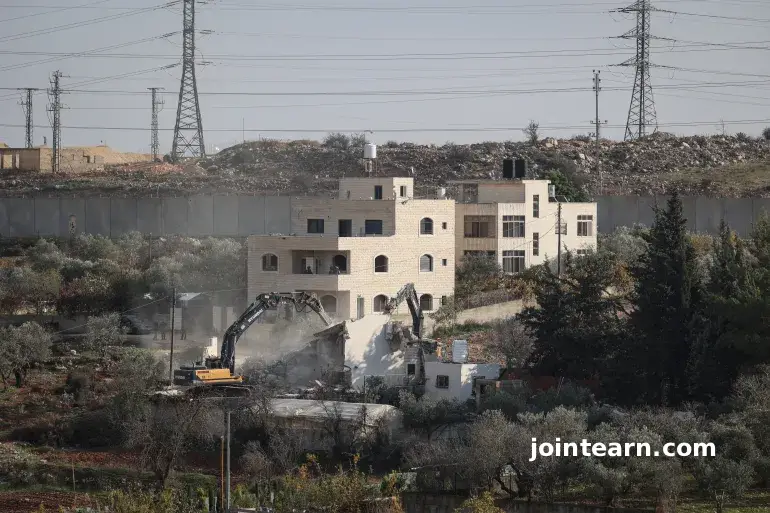
Israeli authorities have continued demolitions and arrests in the West Bank. Operations in towns like Biddu, Ein Yabrud, and Nur Shams refugee camp have seen residential buildings demolished, vehicles burned, and hundreds of Palestinians arrested. These actions have drawn criticism for targeting Palestinian civilians while facilitating settlement expansion.
In addition, the Israeli security cabinet recently approved plans to formalize 19 illegal settlements across the West Bank, signaling continued government commitment to expanding settlements despite international pressure.
Implications for Palestinian Statehood
Experts and advocacy groups argue that the Atarot settlement project and similar initiatives further diminish the viability of a future sovereign Palestinian state. By establishing large Israeli enclaves in key areas, connectivity between Palestinian communities is increasingly restricted, complicating peace negotiations and regional stability.
“The far-right government is seizing every moment to bury chances for a future of peace and compromise,” Peace Now noted.
The international community continues to monitor these developments closely, emphasizing that settlement expansions undermine long-term prospects for peace in the Israeli-Palestinian conflict.


Leave a Reply