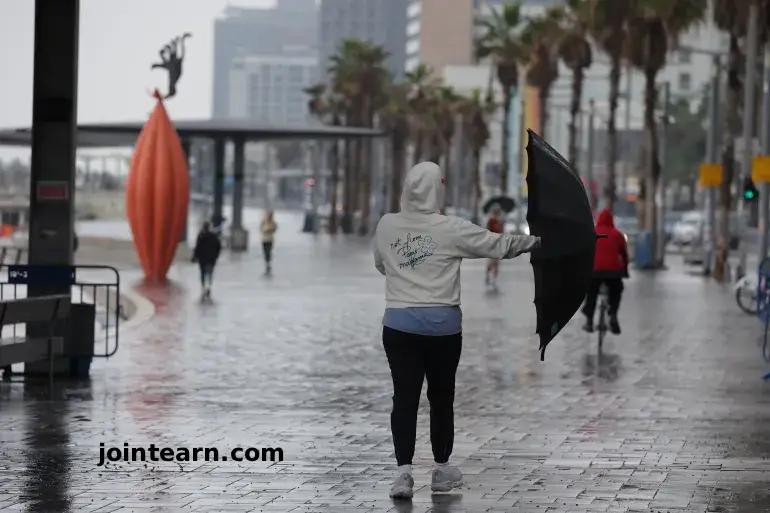
Israel is bracing for heavy rainfall, flash floods, and strong winds as Storm Byron approaches, with the Israel Meteorological Service warning of up to 150mm (5.9 inches) of rain in coastal areas and wind gusts reaching 90 km/h (56 mph). While cities across the country implement emergency measures, many Palestinian citizens of Israel—especially those in unrecognised Bedouin communities—are left without basic support and resources.
The Israeli army has issued extensive safety guidelines, cancelling all leave until Friday morning, halting outdoor training exercises, and restricting soldiers to “operational” and “essential” activities. Government ministries, including the Ministry of Energy and Infrastructure, are coordinating to ensure uninterrupted electricity and emergency services during the storm.
Disparities in Preparedness
While major Israeli cities and recognised towns in the Negev are taking precautions—such as opening shelters and reinforcing emergency teams—approximately 30,000 Palestinian citizens living in unrecognised Bedouin communities face severe risks. These communities lack access to basic utilities like electricity, water, and proper infrastructure. Many of their homes are under demolition orders, leaving them particularly vulnerable to flooding and storm damage.
Local officials have highlighted longstanding discrimination. Omar al-Asam, head of the Tal al-Sabe Council, condemned police actions blocking the town’s main entrance and assaulting a resident, describing it as evidence of systemic racism against Arab citizens in the Negev.
This tension reflects a broader legal and social framework in Israel. The nation-state law and government policies have reinforced preferential treatment for Jewish citizens, with critics arguing that Palestinian citizens face institutional discrimination akin to apartheid. In recent years, some right-wing politicians have called for restricting political participation for non-Jewish citizens, including attempts to expel members of the Knesset.
Storm Byron’s Impact on the West Bank
The occupied West Bank is also at risk from Storm Byron, particularly in areas like the Hebron hills. Youssef Abu Saadah, head of the meteorological service in Palestine, warned that rainfall from the storm could exceed one-third of the average annual precipitation, creating a significant flood risk downstream in the Negev.
Palestinians in the West Bank are unable to collect rainwater due to long-standing restrictions, meaning much of the storm’s runoff will flow into Israel, exacerbating risks for vulnerable communities. Authorities in Palestinian areas are urging residents to take precautions, but resources are limited, leaving many communities exposed to flooding and infrastructure damage.
Humanitarian Concerns
The storm highlights both environmental and social inequalities in Israel and the occupied territories. While government resources focus on Jewish-majority areas, Palestinian citizens and unrecognised communities are left largely without aid. Human rights organisations have repeatedly criticized these policies, noting the disproportionate impact on vulnerable populations during natural disasters.
As Storm Byron progresses, the coming days will test Israel’s emergency response and further underscore the challenges faced by marginalized Palestinian communities in the Negev and West Bank.


Leave a Reply