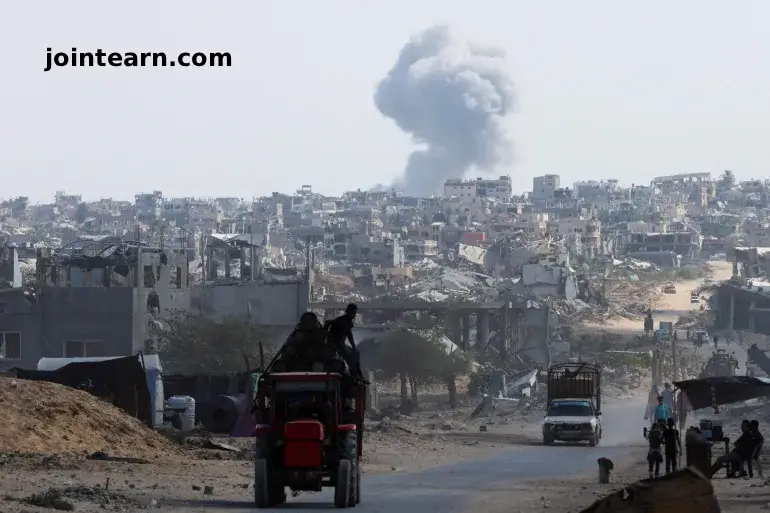
Israeli arms manufacturers recorded unprecedented financial growth in 2024, as global demand for Israeli-made weapons surged despite mounting international criticism over Israel’s military actions in Gaza. According to official figures released by Israel’s Ministry of Defence, the country’s defence exports rose by 13 percent year-on-year, reaching a historic high of nearly $15 billion, cementing Israel’s position as one of the world’s top arms exporters.
This dramatic increase occurred during Israel’s devastating military campaign in Gaza, which has drawn widespread condemnation and legal scrutiny, including allegations of genocide and war crimes brought before international courts.
Weapons Marketed as “Battle-Tested”
Israeli defence firms have increasingly marketed their weapons systems as “battle-tested,” a term used to describe military equipment that has been deployed in real combat situations. Many of these systems were used during Israel’s war on Gaza, making them more attractive to foreign buyers seeking proven battlefield effectiveness.
Missiles, rockets, and air-defence systems accounted for the largest share of exports in 2024. These weapons were sold to a wide range of countries, with European states emerging as the largest buyers, receiving more than half of all Israeli arms deliveries last year. The Asia-Pacific region, led by India, followed closely, while the United States accounted for a smaller but still significant share.
Israel now ranks among the top 10 arms-exporting nations globally, competing with major players such as the United States, Russia, and France.
Growth Amid International Legal Challenges
The boom in Israeli arms exports came at a time when the country faced unprecedented legal pressure on the international stage. South Africa filed a case against Israel at the International Court of Justice (ICJ), accusing it of committing genocide against Palestinians in Gaza. Meanwhile, the International Criminal Court (ICC) issued arrest warrants for Israeli Prime Minister Benjamin Netanyahu and former Defence Minister Yoav Gallant on allegations of war crimes.
Despite these developments, arms sales continued to rise.
Author and investigative journalist Antony Loewenstein, who has extensively researched Israel’s military technology industry, argues that Israel’s success lies in its ability to sell not only weapons but also a model of military impunity.
“Israel sells the idea of getting away with it,” Loewenstein said, noting that this perceived immunity from accountability is appealing to other governments seeking similar capabilities.
Ethical and Legal Concerns Over Arms Trade
Israeli arms trade expert Shir Hever has warned that countries purchasing Israeli weapons are fully aware of the legal and ethical implications of their actions. Under international law, third-party states may be obligated to halt military cooperation with countries accused of committing war crimes or crimes against humanity.
“Buyers know that a genocide is taking place,” Hever said, emphasizing that continued arms trade may place importing countries in violation of international legal standards.
Nevertheless, demand from Europe grew sharply in 2024. Exports to European countries rose to 54 percent of Israel’s total defence sales, up from 36 percent in 2023, reflecting a significant shift in regional procurement strategies.
Impact on Palestinians in Gaza
While Israeli defence companies celebrate record profits, Palestinians in Gaza continue to endure the devastating consequences of the weapons being exported. Survivors have shared harrowing testimonies of attacks that killed family members and destroyed entire neighborhoods.
One such survivor, Kareem al-Birawi, described a drone attack on the Osama Ben Zaid School in Jabalia, where his mother and three siblings were killed.
“I saw the drone enter the room,” he recalled. “There was a red flash, smoke, then an explosion. After the screaming, everything went silent.”
These accounts underscore the human cost behind the commercial success of Israel’s arms industry.
Surveillance Technology and Artificial Intelligence Exports
In addition to conventional weapons, Israel is a major exporter of surveillance systems, artificial intelligence tools, and facial recognition technology. These technologies are widely deployed across the occupied West Bank and have been used extensively in Gaza, contributing to what critics describe as a comprehensive surveillance regime.
Former Palestinian detainee Ahmad Lubbad described how Israeli authorities demonstrated intimate knowledge of his personal life during interrogation, including phone numbers, addresses, and social connections.
“After what I experienced, I am convinced we are watched all the time,” Lubbad said. “We are totally exposed.”
These technologies are increasingly marketed abroad, raising serious concerns about privacy, human rights, and the global spread of digital surveillance tools developed in conflict zones.
Growing Pushback and Restrictions
Despite rising demand, not all countries have embraced Israeli arms imports. Some governments, including Spain, have imposed restrictions or suspensions on military trade with Israel, citing humanitarian and legal concerns.
As scrutiny intensifies, pressure is mounting on importing countries to reconsider their defence relationships with Israel, particularly as civilian casualties and allegations of violations of international law continue to grow.
Conclusion
Israel’s record-breaking defence exports in 2024 highlight a stark contradiction: while arms companies reap financial rewards, the weapons fueling those profits are directly linked to widespread civilian suffering and ongoing legal challenges. As global debate intensifies over accountability, ethics, and international law, Israel’s arms trade stands at the center of a growing moral and political storm.


Leave a Reply