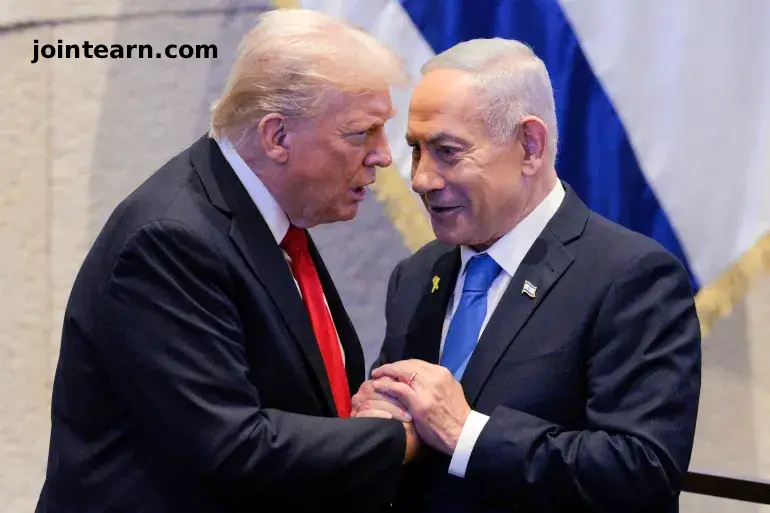
Israeli Prime Minister Benjamin Netanyahu has indicated that a security agreement with Syria is possible, but he has outlined strict conditions, including the establishment of a demilitarized buffer zone from Damascus to Jabal al-Sheikh (Mount Hermon).
Netanyahu’s comments came on December 2, 2025, following remarks by U.S. President Donald Trump, who has been pushing for a non-aggression pact between Israel and Syria. Trump praised the new Syrian government under President Ahmed al-Sharaa and expressed hopes for “a long and prosperous relationship” between the two nations.
Netanyahu’s Conditions for an Agreement
The Israeli prime minister emphasized that any deal would require Syrian authorities to create a buffer zone covering strategic locations in southern Syria, including approaches to Jabal al-Sheikh. Israel currently occupies parts of the region, which it expanded into after the fall of former Syrian President Bashar al-Assad in December 2024.
“We hold these areas in order to ensure the security of Israel’s citizens, and that is what obligates us,” Netanyahu said while visiting wounded soldiers in central Israel.
“With goodwill and an understanding of these principles, it is possible to reach an agreement with the Syrians, but we will stand by our principles in any case.”
The Israeli demands have faced sharp criticism. Gideon Levy, columnist for Haaretz, described Netanyahu’s position as overreaching, arguing that a security zone should only be established on Israeli territory, not by taking additional land from Syria. Levy accused Netanyahu of seeking to maintain ongoing conflict in the region, citing similar policies in Gaza and Lebanon.
Background of Israel-Syria Relations
Israel captured the Golan Heights from Syria during the 1967 war and later annexed it—a move recognized by the United States but rejected by most of the international community. In the past year, Israel expanded its presence further into Syrian territory, seizing areas including the entirety of Jabal al-Sheikh. Israeli military operations have continued despite Syria’s insistence that it does not seek confrontation. Most recently, an Israeli raid in Beit Jinn, southwest of Damascus, killed 13 people.
U.S. Efforts to Broker Peace
The Trump administration has been actively engaged in mediating between Israel and Syria. US Special Envoy Tom Barrack visited Damascus, meeting Syrian Foreign Minister Assad al-Shaibani to discuss potential security agreements. President Trump has praised al-Sharaa’s fledgling government, highlighting efforts to unify Syria after years of civil war and sectarian divisions.
“The new President of Syria, Ahmed al-Sharaa, is working diligently to make sure good things happen, and that both Syria and Israel will have a long and prosperous relationship together,” Trump said.
However, Israeli media reports suggest that talks have largely stalled due to Netanyahu’s insistence on maintaining Israeli territorial gains and securing an aerial corridor to Iran through Syria for potential future air operations.
Regional Implications
Netanyahu’s proposed deal and continued territorial demands underscore the complex geopolitical tensions in the Middle East, involving Israel, Syria, Iran, and the United States. Analysts suggest that while a formal agreement may be technically possible, significant hurdles remain, particularly regarding sovereignty, security, and regional influence.


Leave a Reply