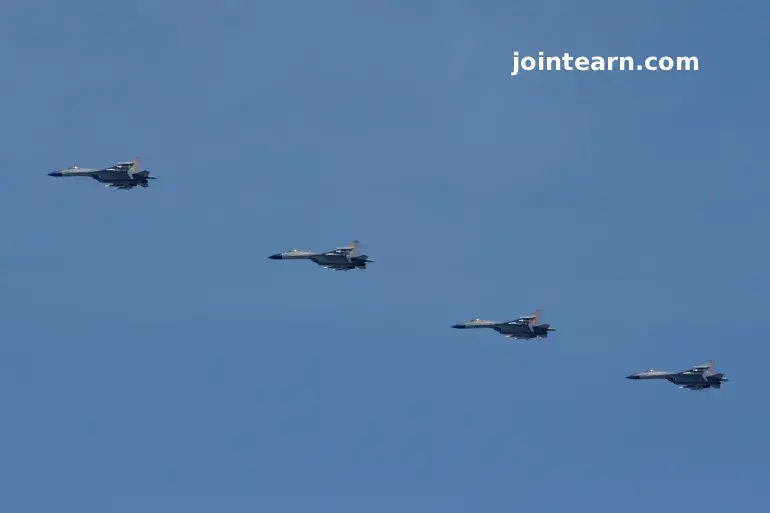
Japan has summoned China’s ambassador following a serious military incident in which Chinese fighter jets allegedly locked fire-control radar onto Japanese aircraft twice, escalating tensions between the two East Asian powers.
The Japanese Ministry of Foreign Affairs described the incident, which occurred over international waters southeast of Okinawa’s main island, as extremely dangerous and “extremely regrettable.” Japan alleges that Chinese J-15 fighter jets, operating from the Liaoning aircraft carrier, directed radar beams at Japanese jets scrambled to shadow the vessel—a claim firmly denied by the Chinese embassy.
Why Radar Lock Matters
In military aviation, illuminating aircraft with radar signals indicates a potential attack. This forces the targeted planes to take evasive maneuvers and represents one of the most threatening actions a fighter jet can perform. Japan’s move to summon Ambassador Wu Jianghao signals the seriousness of the situation and underscores rising tensions in Sino-Japanese relations.
Diplomatic Strains Over Taiwan
The radar-lock incident comes amid a backdrop of increasingly strained relations following remarks by Japanese Prime Minister Sanae Takaichi last month. Takaichi stated that a Chinese invasion of Taiwan would be a “survival-threatening situation” for Japan, implying that Tokyo could intervene militarily to defend the self-ruled island.
Beijing, which claims Taiwan as its territory, responded angrily:
- Summoning the Japanese ambassador
- Filing complaints to the United Nations
- Advising Chinese citizens to avoid travel to Japan
- Reinstating a ban on Japanese seafood imports
- Canceling cultural events involving Japanese performers and films
Analyst Zichen Wang of the Center for China and Globalization told Al Jazeera that Takaichi’s remarks “to Beijing’s ears, is a blatant intervention into China’s domestic affairs,” highlighting the sensitivity of the Taiwan issue in bilateral relations.
Accusations and Military Movements
Both sides have traded conflicting accounts of the weekend incident:
- Chinese Navy: Japanese F-15s repeatedly approached the carrier’s training area, endangering flight safety.
- Japanese Government: Claims were unfounded; Japanese jets were merely monitoring Chinese movements.
Japan reported that the Liaoning carrier conducted roughly 100 take-offs and landings while sailing east into the Pacific past the Okinawa Islands. Chief government spokesman Minoru Kihara stated that Japan would “respond calmly but firmly and continue to monitor the movements of Chinese forces in the waters around our country.”
The Chinese embassy countered, demanding that Japan stop smearing and slandering, restrain frontline actions, and prevent similar incidents in the future.
Strategic Context
Japan hosts the largest foreign deployment of US military forces, including thousands of Marines stationed in Okinawa. Washington has expressed support for Tokyo in the dispute, though US President Donald Trump, preparing for trade talks with Beijing next year, has largely remained neutral in this specific military dispute.
The radar-lock incident and ensuing diplomatic escalation reflect broader strategic tensions in East Asia, particularly concerning Taiwan, maritime security, and military operations in the East China Sea and surrounding waters.


Leave a Reply