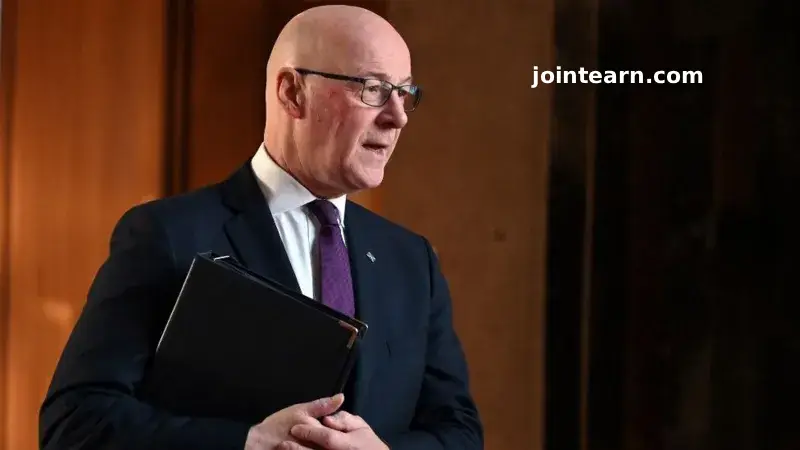
Scotland’s First Minister John Swinney has stated he would support sending Scottish troops to Ukraine as part of a peacekeeping force — but only if a credible peace agreement is reached, and the deployment serves to uphold lasting peace and security in the region. Swinney made the comments during an interview on the Political Thinking with Nick Robinson podcast, underscoring his belief that Western Europe’s long period of peace may be under renewed threat.
Support for Peacekeeping Role in Ukraine
Swinney, leader of the Scottish National Party (SNP), made it clear that he would consider deploying soldiers from an independent Scotland if two conditions were met:
- A peace agreement between Ukraine and Russia that is accepted by the Ukrainian people.
- The deployment is part of an effort to secure and reassure peace on the ground rather than engage in combat.
He told the podcast:
“If there’s a peace agreement that is acceptable to the people of Ukraine… and part of that involves the deployment of troops from this country … then I would support that.”
Swinney’s remarks come amid broader European and NATO discussions about what a post‑conflict security framework might look like if and when Russia and Ukraine reach a negotiated settlement.
Concerns Over NATO and Global Stability
During the interview, Swinney also voiced concern about the future strength of NATO and the overall security of Western Europe. He pointed to recent events — including debates in other capitals over future troop deployments — as signs that the stability enjoyed since the end of World War II may be weakening.
He referred to his own family history, noting that his uncle, Cpl Tom Hunter, was posthumously awarded the Victoria Cross during World War II. Swinney said that personal connection to past conflict makes the threat of renewed large‑scale warfare “much closer to home” and more real.
Context: Wider UK and European Planning for Peacekeeping
Swinney’s comments echo broader conversations among European leaders about deploying foreign troops to Ukraine after a ceasefire.
In recent diplomatic efforts, the United Kingdom and France reached a declaration of intent to deploy forces to Ukraine as part of security guarantees should a peace agreement be achieved. A summit in Paris brought together dozens of nations to discuss post‑conflict security arrangements, including establishing multinational military hubs in Ukraine.
British Prime Minister Sir Keir Starmer has said that any deployment of UK troops would be subject to parliamentary approval and would focus on security and stabilization rather than combat operations.
Reaction and Implications
Swinney’s willingness to support a future Scottish contribution reflects a nuanced approach: he supports deterring Russian aggression and protecting Ukrainian sovereignty, but only in a context where peace has been agreed and the mission is clearly defined.
His stance comes amid ongoing international debates about the role Western militaries should play in supporting Ukraine’s sovereignty and securing stability in the region after years of conflict. It also highlights political considerations for Scotland’s defence policy in the context of independence discussions.


Leave a Reply