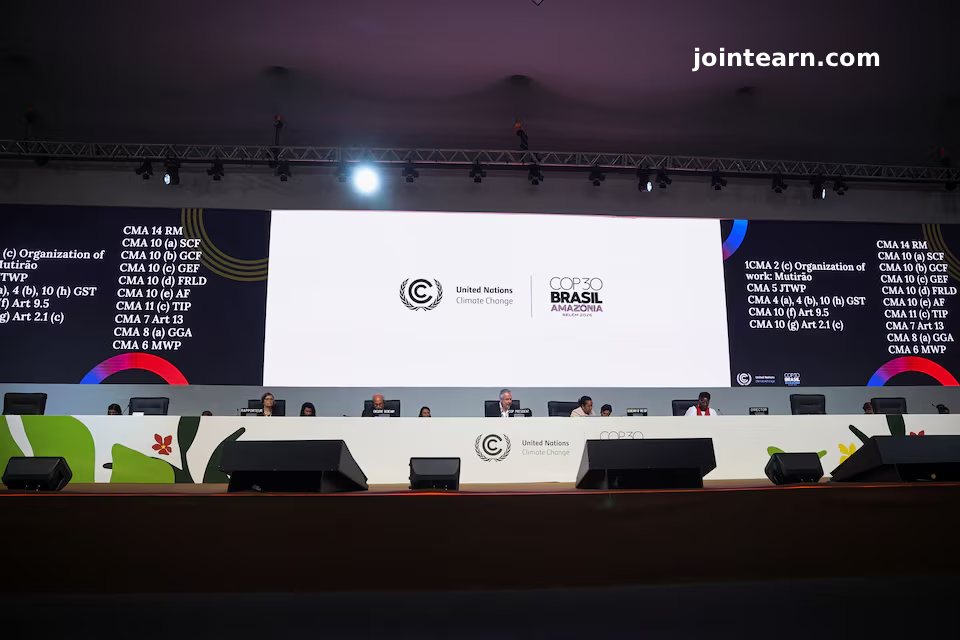
The COP30 climate summit in Belem, Brazil, concluded with a compromise deal that many observers deemed tentative and limited, highlighting both progress and persistent challenges in global climate action. While wealthy nations committed to tripling climate adaptation funding, most countries’ core demands—particularly reducing reliance on fossil fuels—were largely ignored.
Fossil Fuel Interests Stall Global Climate Progress
Brazilian President Luiz Inácio Lula da Silva opened the summit with calls for a roadmap to advance a COP28 pledge to move away from fossil fuels. However, oil-rich nations and other fossil fuel-dependent countries blocked any mandatory commitment.
Instead, COP30 introduced a voluntary plan for countries to adopt if they choose. This follows the pattern set in previous summits, including COP27 in Egypt and COP29 in Azerbaijan, where funding commitments advanced but the root causes of climate change—coal, oil, and gas—were largely unaddressed.
The International Energy Agency (IEA) reported mid-summit that demand for fossil fuels is likely to continue rising through 2050, countering prior expectations of a rapid transition to renewable energy.
Global Unity and Wealthy Countries’ Responsibilities
The summit emphasized the importance of showing global climate unity, particularly the responsibility of historically high-emission wealthy nations. Yet to secure a deal, negotiators abandoned nearly all ambitious emission-cutting targets.
The COP30 presidency expressed frustration over the absence of the United States, the world’s largest economy and historical polluter, which emboldened fossil fuel interests and highlighted structural weaknesses in global climate negotiations. Calls for reform grew louder as concerns about the veto power of a few countries intensified.
China and India Take Strategic Roles
China, although its President Xi Jinping did not attend, played a significant role behind the scenes. The country emphasized its readiness to deliver clean energy technologies, including solar panels, batteries, and electric vehicles. Chinese clean tech companies were prominently featured at the summit, showcasing their role in global decarbonization.
India also flexed diplomatic muscle, while South Africa linked climate initiatives to its G20 summit agenda, highlighting the growing influence of emerging economies in shaping climate policy.
Amazon Forests and Indigenous Rights Under Pressure
Hosting COP30 in the Amazon rainforest brought attention to the critical role of forests and Indigenous peoples in combating climate change.
While the summit announced approximately $9.5 billion in forest funding—including nearly $7 billion for Brazil and $2.5 billion for Congo—there was no roadmap for meeting the 2030 zero-deforestation pledge, and Indigenous rights received limited recognition.
Protests erupted at the summit, with demonstrators demanding greater attention to forest protection and Indigenous stewardship. Many expressed frustration at their voices being sidelined during official negotiations.
Challenges to Climate Science and Policy Guidance
COP30 also weakened global consensus around climate science. The summit’s final text no longer recognized the UN Intergovernmental Panel on Climate Change (IPCC) as the sole authority on climate science, instead referencing other regional and developing-country reports.
This approach, coupled with the sidelining of fossil fuels and emission reduction targets, left climate scientists’ warnings largely unaddressed. Experts worry that this may undermine evidence-based policymaking and delay meaningful action on climate change.
Outlook from COP30
COP30 highlighted both the progress and limitations of global climate governance:
- Wealthy nations committed to tripling adaptation funding, a critical step for vulnerable countries.
- Voluntary measures, rather than binding agreements, dominated discussions on fossil fuel reduction.
- Emerging economies like China, India, and South Africa are increasingly influential in shaping outcomes.
- Forest conservation and Indigenous rights remain under-prioritized, despite hosting the summit in the Amazon.
While COP30 did not achieve sweeping emission cuts, it reinforced the need for continued international cooperation, climate finance, and renewable energy transitions to avoid escalating climate risks.


Leave a Reply