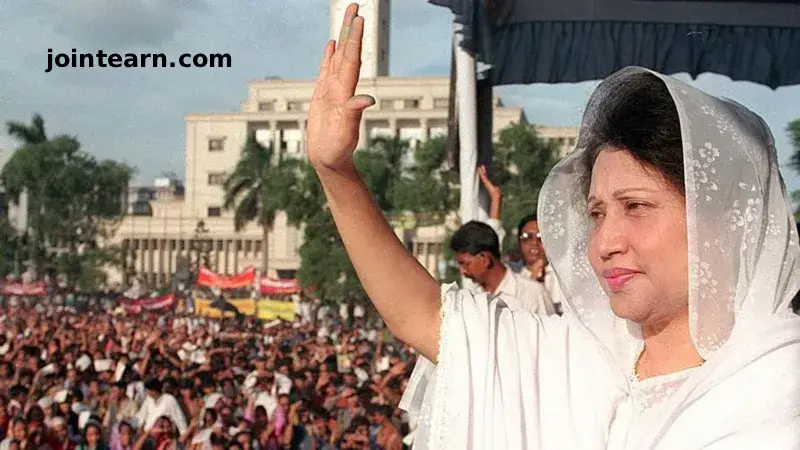
Khaleda Zia, who has died aged 80, was Bangladesh’s first female prime minister and a central figure in the country’s modern political history. She rose to prominence after the assassination of her husband, President Ziaur Rahman, in 1981.
Early Life and Political Rise
Born in 1945 in Dinajpur, then part of British India, Khaleda married Ziaur Rahman at 15. After her husband became president in 1977, she kept a low profile until his assassination in 1981. At age 36, she became a widow and soon entered politics, joining her late husband’s Bangladesh Nationalist Party (BNP) and later becoming its vice-chairman.
During the military dictatorship that began in 1982, Zia campaigned against military rule, was repeatedly placed under house arrest, and earned a reputation as an uncompromising leader.
Premiership
After the fall of the military government in 1990, Zia led the BNP to victory and was sworn in as prime minister in 1991, overseeing the return to a parliamentary system. Her first term included reforms such as making primary education free and mandatory.
Although she lost the 1996 election to her longtime rival, Sheikh Hasina, Zia returned to power in 2001 in coalition with Islamist parties. During her second term, she advanced women’s education and political representation, introducing quotas for female MPs.
Years in Opposition and Legal Battles
Following political unrest in 2006, Zia faced corruption and extortion charges, spending years in prison and house arrest. She denied wrongdoing, calling the charges politically motivated. After the 2024 change in government, she was acquitted and allowed to travel for medical treatment.
Death and Legacy
Khaleda Zia died in Dhaka on 30 December 2025 after months of declining health. She is survived by her elder son, Tarique Rahman, seen as the likely next leader of the BNP. Her younger son, Arafat Rahman, passed away in 2015.
Zia’s life was marked by triumph, tragedy, and political resilience, making her one of Bangladesh’s most influential leaders and a pioneering female figure in South Asian politics.


Leave a Reply