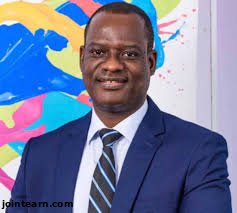
Taiwo Oyedele, the Chairman of the Presidential Fiscal Policy and Tax Reforms Committee, has stated that Lagos State has the potential to generate up to N1 trillion annually from property tax if it is effectively harnessed. He made this revelation at the Tax Reform Summit 2026, which was themed, “From Reforms to Results: The Lagos Implementation Roadmap”.
Property Tax as an Untapped Revenue Source
Oyedele emphasized that property tax is an underutilized yet stable revenue source for states and local governments. He explained that with around two million taxable properties in Lagos, each valued at an average of N100 million, imposing a 0.5% tax would yield a significant N1 trillion annually. This substantial amount could be reinvested into the development of local communities.
“Proper property enumeration, accurate valuation, transparency, and predictable enforcement are key to success,” Oyedele stated.
Calls for Data Quality and Harmonized Revenue Collection
Oyedele further stressed the importance of data quality in fiscal planning, pointing out that the number of active taxpayers in Nigeria is below 10 million, even though it should align more closely with Lagos’ population size. He urged Lagos to take the lead in improving tax data quality to enhance fiscal planning and implementation.
Additionally, Oyedele called for collaboration in the ongoing tax reforms, proposing a harmonized revenue collection system through the Lagos State Internal Revenue Service (LIRS) to eliminate inefficiencies and create a more streamlined process for tax collection.
Technological Integration and Service Delivery
Technology also featured prominently in Oyedele’s remarks. He stressed the need to leverage technology for greater transparency in tax collection and service delivery. This, he suggested, would align better with citizens’ expectations and contribute to the growth of Lagos State’s economy.
Governor Sanwo-Olu’s Support for Tax Reforms
Governor Babajide Sanwo-Olu of Lagos echoed Oyedele’s sentiment, underscoring the importance of effective implementation of tax reforms at the state level for the success of Nigeria’s broader tax reform agenda. Sanwo-Olu described tax reform as a critical aspect of governance reform, focusing on simplicity, transparency, digital efficiency, and fairness. He added that tax revenue would be used to fund critical infrastructure, healthcare, education, and security as part of the THEMES+ Development Agenda.
Future Plans for Revenue Collection
Special Adviser Abdul-Kabir Ogungbo also highlighted the state’s plans to establish a standardized revenue portal across all local governments. The portal will be integrated with the national identification systems to enhance the tax collection process and improve governance.
Ogungbo noted that despite Lagos’ disproportionate economic contribution to Nigeria, the state’s budget still remains under N5 trillion, which is insufficient to meet its large-scale developmental needs. He called for a collective effort to reach sustainable revenue targets between N10 trillion and N15 trillion annually, which would help meet the growing needs of Lagos’ population of over 30 million residents.


Leave a Reply