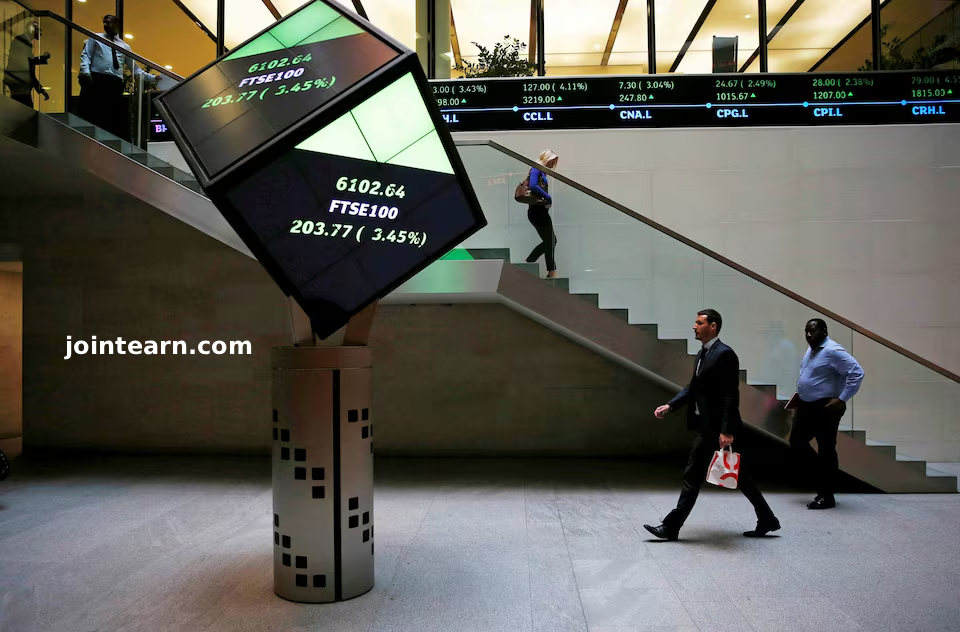
London’s stock market edged lower on Thursday, with the FTSE 100 index down about 0.3% as a slump in major oil stocks weighed on broader investor sentiment. The domestically focused FTSE 250 index also fell about 0.4%, reflecting weakness in energy and retail stocks amid mixed economic signals.
Oil Sector Weakness Holds Back Market
Shares in major oil producers dipped as energy investors contended with bearish forecasts and oversupply concerns. Shell shares slid around 2.6% after the company narrowed its production guidance and flagged a loss in its chemicals division, while BP also fell modestly, dragging on the blue‑chip index’s performance.
Weakness in crude and energy prices has recently pressured oil‑related stocks, with prior sessions also showing declines in oil majors that have weighed on the index’s broader gains.
Defence Stocks Surge to New Highs
In contrast to oil’s drag, the defence sector reached a record high, powered by rising geopolitical tensions and expectations of increased military spending. Major defence contractors led gains, with BAE Systems jumping over 6%, while other defence names also advanced on the day.
The rally in defence stocks mirrors a broader trend seen across European markets, where aerospace and defence shares have benefited from heightened investor interest in the sector.
Mixed Signals from Household and Consumer Stocks
On the corporate front, a number of well‑known UK companies saw share price declines:
- Associated British Foods plunged more than 11% after warning that annual profits would fall due to weaker sales at its Primark fashion chain and weaker demand in its food business.
- Greggs shares dropped around 7.7% as the bakery chain warned that subdued consumer confidence could limit profit growth for the year.
- Tesco also fell nearly 5%, despite reporting a 3.2% rise in UK Christmas sales and forecasting full‑year profit at the upper end of guidance.
These movements illustrate mixed sentiment among retail and food‑related stocks, where operational challenges appear to temper investor enthusiasm.
UK Housing Market Shows Slower Growth
Adding to the caution, UK house prices showed modest annual growth of only 0.3% in December, the slowest pace since March 2024, according to Halifax. This suggests continued pressure in the domestic property market amid economic and tax uncertainty.
What This Means for Investors
- Energy sector performance remains a key influence on the FTSE 100, with oil stocks historically carrying large index weights.
- Defence names are providing defensive support and acting as a counterweight amid geopolitical risk appetites.
- Consumer and retail sectors show divergence, with both fundamentals and sentiment impacting valuations.
Overall, the index’s retreat follows a strong run in early January, including a recent record high, as markets digest mixed global data, geopolitical developments, and company‑specific news.


Leave a Reply