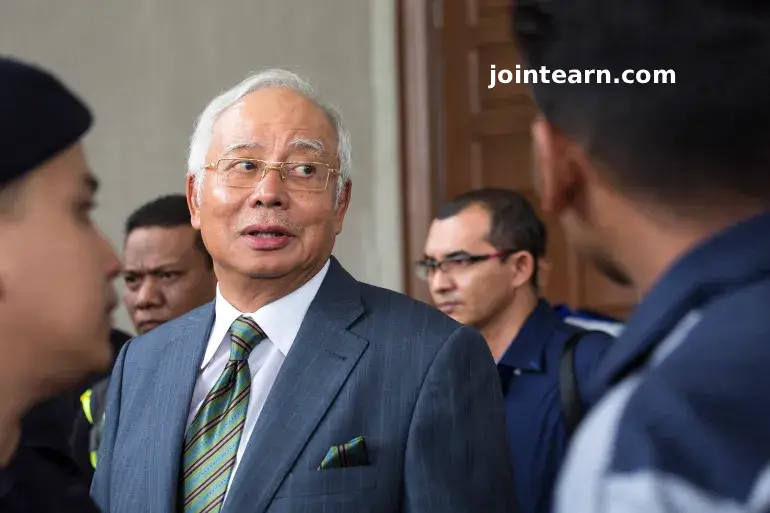
Kuala Lumpur, Malaysia — Former Malaysian Prime Minister Najib Razak has been found guilty of abuse of power and money laundering by the Kuala Lumpur High Court in his second major trial linked to the infamous 1Malaysia Development Berhad (1MDB) scandal. The ruling, delivered on Friday, adds a new chapter to a saga that has rocked Malaysian politics and captured international attention.
Najib Razak’s Verdict: What We Know
Najib, 72, faces 21 counts of money laundering and four counts of abuse of power, relating to the illegal transfer of approximately 2.2 billion Malaysian ringgit ($543 million) from the state-owned wealth fund into his personal accounts over a decade ago. While sentencing has yet to be delivered, each charge carries a potential prison term of 15 to 20 years.
This latest conviction comes after his first 1MDB trial, which began in April 2019. In 2020, Najib was convicted for embezzling $9.9 million, resulting in a 12-year prison sentence, later commuted to six years following a partial royal pardon. Legal proceedings across both trials have spanned seven years, involving testimony from 76 witnesses, including Najib himself.
Najib’s Defense and Judge’s Response
Supporters of Najib, who gathered at the court on Friday, insist the charges are politically motivated. Najib has consistently maintained that he was misled by advisers, including fugitive Malaysian financier Jho Low, who is widely accused of orchestrating the 1MDB fraud and remains at large.
However, Judge Collin Lawrence Sequerah rejected these claims, stating:
“The contention by the accused that the charges against him were a witch hunt and politically motivated were debunked by the cold, hard and incontrovertible evidence against him that pointed towards the accused having abused his own powerful position in 1MDB, coupled with the extensive powers conferred upon him.”
Najib also previously claimed that he believed the funds received were a donation from the late Saudi King Abdullah, a defense the court dismissed.
What Is 1MDB?
1Malaysia Development Berhad (1MDB) is a sovereign wealth fund established in 2009 to promote Malaysia’s economic development through foreign investment and partnerships. Najib served as Prime Minister, Finance Minister, and 1MDB chairman from 2009 to 2018, giving him significant authority over the fund. Prosecutors argued that Najib abused these positions to transfer vast sums of state money to personal accounts, using the funds for luxuries including:
- His superyacht Equanimity
- High-end properties in Malaysia and abroad
- Financing the Hollywood film The Wolf of Wall Street
Najib’s Current Status
Najib is currently serving time in Kajang Prison, Selangor, following his first 1MDB conviction. His initial release was scheduled for August 2028, though this second conviction may extend his time behind bars once sentencing is finalized.
Najib’s Public Statements
In a letter and previous statements, Najib expressed remorse over the scandal but continued to deny knowledge of the illegal fund transfers:
“It pains me every day to know that the 1MDB debacle happened under my watch as minister of finance and prime minister. For that, I would like to apologise unreservedly to the Malaysian people.”
Despite the apology, Najib maintained that the money transferred to him was a donation and that he had been misled by officials and Jho Low.
Implications for Malaysian Politics
The 1MDB scandal has been a watershed moment in Malaysian politics, contributing to Najib’s 2018 electoral defeat by veteran politician Mahathir Mohamad. The guilty verdict underscores Malaysia’s ongoing fight against high-level corruption and is likely to influence political discourse as the country continues to confront governance and accountability challenges.
Global Reach of the 1MDB Scandal
1MDB has drawn international attention, with related prosecutions and investigations in countries including the United States, Switzerland, and Singapore. The case has highlighted how financial oversight and anti-corruption measures are crucial to prevent state resources from being misappropriated.


Leave a Reply