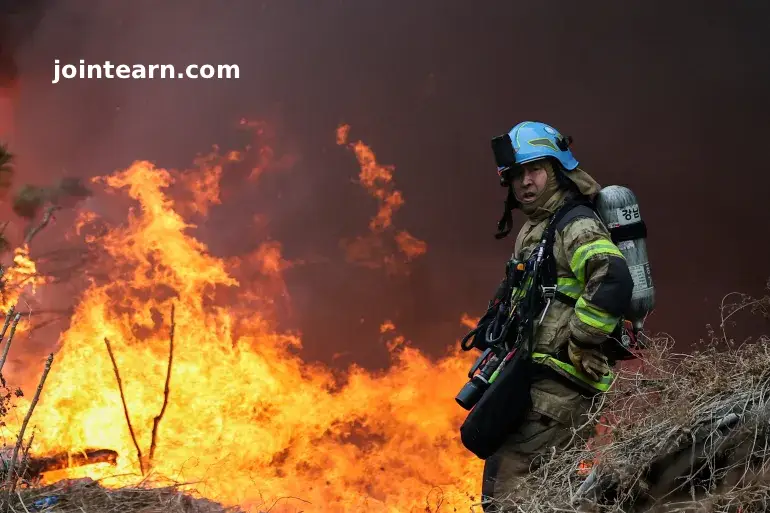
Seoul, South Korea – Hundreds of firefighters battled a major blaze on Friday in Guryong Village, one of the last remaining shantytowns in the South Korean capital, situated on the fringe of the affluent Gangnam district. The fire forced the evacuation of dozens of residents and drew attention to long‑standing social and urban inequalities in the city.
Major Blaze Breaks Out in Guryong Village
The fire erupted shortly after 5 a.m. local time in District 4 of Guryong Village, prompting authorities to initially issue a Level 1 alert before escalating the response to the second‑highest fire alert level as flames spread. Nearly 300 firefighters and dozens of vehicles were deployed to contain the blaze.
Emergency services evacuated residents amid fears that the fire could spread to nearby hillsides. The blaze originated in a dense area of makeshift housing, where homes are built close together from highly flammable materials including vinyl sheets, plywood, and styrofoam, creating conditions that enable fires to spread rapidly.
No Casualties, But Dozens Displaced
Officials reported no immediate casualties, but at least 47 residents from 32 households were evacuated from the affected area, with authorities worried about further spread. About 258 people in total were displaced by the fire, and emergency shelters were set up at nearby schools as families sought refuge.
The fire was brought under control and fully extinguished about eight hours after it started. A total of 324 firefighters and 106 vehicles were involved in tackling the blaze.
Guryong Village: A Symbol of Urban Inequality
Guryong Village is a makeshift settlement originally formed in the 1970s and 1980s by families displaced by extensive redevelopment projects, including preparations for the Asian Games and the 1988 Seoul Olympics. Many residents built homes without permits on the edge of Gangnam, now one of Seoul’s wealthiest districts known for high-end real estate.
Today, Guryong stands as a powerful image of economic disparity in South Korea, with roughly 336 households still living there despite ongoing plans to redevelop the area into modern housing.
Firefighting Challenges and Response
Fire authorities raised the alarm when the blaze threatened to spread to nearby hills, mobilising resources quickly in an effort to protect both lives and the surrounding community. Helicopters were considered for aerial support, but heavy haze and poor visibility in the early morning prevented their use.
South Korea’s Safety Minister Yun Ho‑jung ordered a full mobilisation of all available personnel and equipment, emphasising the priority of ensuring no one was left behind and minimising further damage.
Fire’s Aftermath and Investigation
Authorities have launched a formal investigation into the cause of the fire, which may relate to electrical issues or combustible construction materials common in older informal settlements. Firefighters searched remaining structures to ensure there were no victims left inside, and smoke continued to linger over parts of the village following the blaze.
Guryong’s Future and Ongoing Redevelopment
Guryong Village has been the focus of redevelopment discussions for years, with city planners aiming to transform the site into high‑rise residential buildings. While many residents have moved out, others remain reluctant or unable to relocate, raising questions about housing equity and support for low-income communities.
The fire highlights the broader challenges faced by informal settlements in modern urban settings, where high real estate prices and redevelopment pressures coexist with vulnerable populations living in unsafe conditions.


Leave a Reply