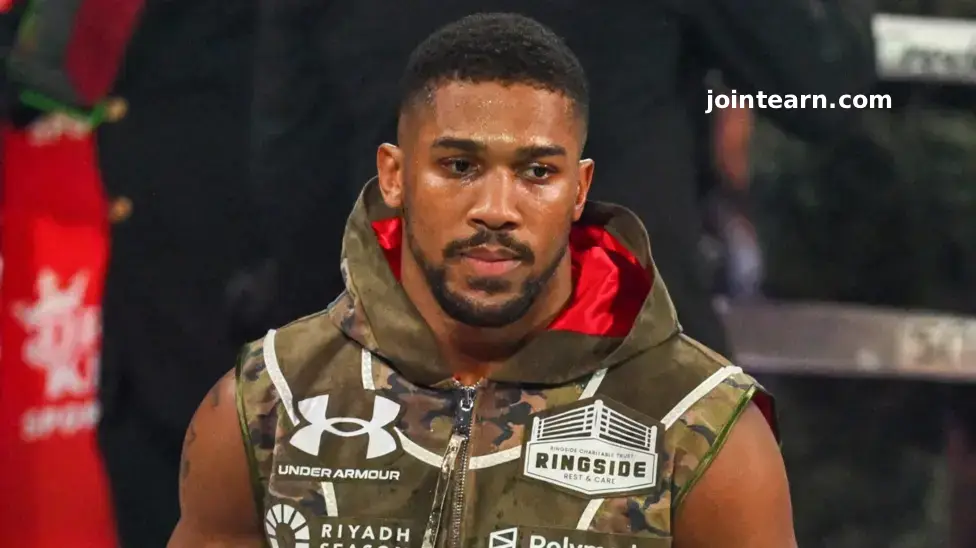
British heavyweight boxer Anthony Joshua has taken a tentative step back into the gym just weeks after a tragic car crash in Nigeria that claimed the lives of two of his closest friends and long-time team members.
The former world heavyweight champion, now 36, returned to light training 19 days after the accident, sharing footage on social media that showed him working on pads and exercising, accompanied by the words “mental strength therapy.”
Joshua sustained minor physical injuries in the crash, but the emotional impact has been profound following the deaths of Sina Ghami and Latif ‘Latz’ Ayodele, both integral members of his inner circle.
Tragedy in Nigeria That Shook Joshua’s Team
The incident occurred on 29 December near Lagos, when the vehicle Joshua was travelling in collided with a stationary truck on a major road. Ghami and Ayodele were killed in the crash, while Joshua survived with non-serious injuries.
Ghami was Joshua’s strength and conditioning coach, while Ayodele worked closely with him as a trainer and trusted confidant. Both men were considered family within Joshua’s camp and had been part of his journey at the highest level of professional boxing.
At the time of the crash, Joshua was on holiday in Nigeria, just 10 days after defeating Jake Paul in a high-profile bout in Miami on 19 December.
Joshua’s Emotional Tribute to His Fallen Friends
In the days following the tragedy, Joshua paid a heartfelt tribute on Instagram, reflecting on the bond he shared with Ghami and Ayodele.
“I didn’t even realise how special they are,” Joshua wrote.
“I’ll just be walking with them and cracking jokes with them, not even knowing God kept me in the presence of great men.”
He also acknowledged the wider impact of the loss:
“100% it’s tough for me, but I know it’s even tougher for their parents.”
The tribute underlined the depth of the personal loss and explained why any return to boxing would take time.
‘Mental Strength Therapy’: A Symbolic Return to the Gym
Nineteen days after the crash, Joshua posted short clips on Snapchat, showing himself training lightly in the gym. One video featured the caption “mental strength therapy”, suggesting the session was as much about emotional recovery as physical preparation.
The footage marked Joshua’s first public indication that he is slowly rebuilding routine and structure after the trauma — though it does not signal an imminent return to competition.
Eddie Hearn: ‘He Needs Time in Every Way’
Joshua’s promoter Eddie Hearn has urged patience and sensitivity, stressing that boxing decisions are far from the priority right now.
Speaking to Sky Sports, Hearn made clear that Joshua’s well-being comes first.
“He will need his time physically, mentally, emotionally, spiritually before he makes a decision on his future,” Hearn said.
“I do think he will want to return to boxing, but that will be his decision when the time is right.”
Hearn emphasised that discussions about Joshua’s next fight are not happening.
“It is certainly not a conversation I’ll be having with him any time soon.
The only conversation is ‘are you OK?’”
He also highlighted the invisible toll such trauma can take:
“Sometimes we find people will give that facade of being OK, but what happened to him is not normal and heartbreaking for all involved.”
What’s Next for Anthony Joshua?
Joshua’s return to training does not mean a return to the ring is imminent. Instead, it appears to represent a coping mechanism — a way to process grief through familiar routines and discipline.
Hearn believes any future decision will come directly from Joshua himself.
“When the time is right, he will make his decision and you will hear it from him.
That is the only voice you should listen to.”
For now, Joshua remains one of the most recognisable figures in heavyweight boxing, but his immediate focus is on healing, not headlines.
A Champion Facing a Different Kind of Fight
Anthony Joshua has faced adversity throughout his career — defeats, criticism, and pressure on the global stage. But this moment is different.
Returning to the gym under the banner of “mental strength therapy” reflects a fighter dealing with loss, trauma, and grief, rather than preparing for an opponent.
Whether Joshua ultimately returns to the ring or not, his latest step shows resilience of a different kind — one measured not in rounds or belts, but in recovery, reflection, and respect for those he has lost.


Leave a Reply