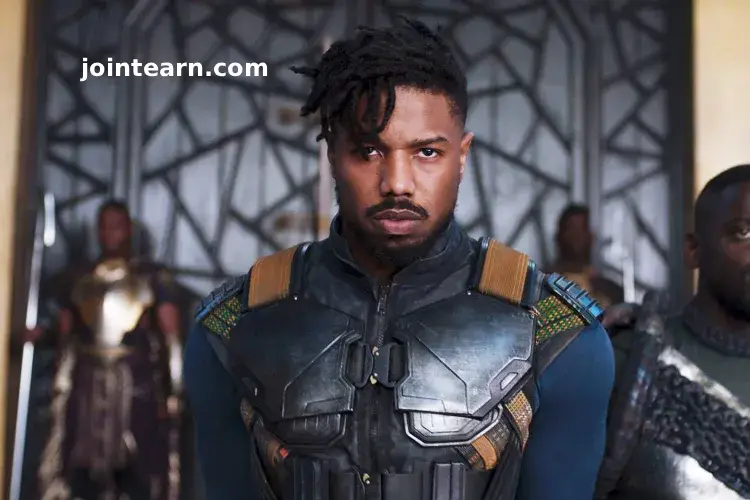
Michael B. Jordan is candidly reflecting on how one of the most iconic roles of his career had a deeper emotional impact than he expected — and how that experience ultimately led him to therapy and a broader commitment to mental wellness.
In a revealing interview on CBS Sunday Morning that aired on Jan. 4, the 38-year-old actor discussed portraying Erik Killmonger in Marvel’s blockbuster Black Panther (2018), explaining that the role stayed with him long after filming wrapped.
Michael B. Jordan Says Killmonger Was Hard to Let Go
Speaking with CBS correspondent Tracy Smith, Jordan explained that playing Killmonger — the film’s complex antagonist and cousin to Chadwick Boseman’s T’Challa — affected him emotionally in ways he didn’t initially anticipate.
“Yes, it kind of stuck with me for a bit,” Jordan admitted. “And, you know, went to therapy and talked about it.”
Killmonger is portrayed as a highly skilled black-ops mercenary driven by trauma, rage and a desire to reclaim what he believes was taken from him. While the character became a cultural phenomenon and one of Marvel’s most celebrated villains, Jordan revealed that embodying those emotions took a personal toll.
“I found a way to kind of just decompress,” he added, noting that at the time he was still learning how to emotionally separate himself from his characters.
Therapy Led to Self-Discovery Beyond Acting
While therapy initially began as a way to process his work on Black Panther, Jordan said it quickly evolved into something much more meaningful.
“It spiraled into a bigger conversation and self-discovery,” he said.
The experience reshaped how Jordan views mental health support, especially for men, whom he believes are often discouraged from seeking help.
“I think therapy is necessary for people — especially men,” he said. “I think it’s good for them to go and talk.”
Jordan emphasized that he feels no shame about opening up.
“That’s something I’m not ashamed of at all, and very proud of,” he said. “It definitely helped me trying to be a good communicator and a well-rounded person, inside and out.”
Therapy Has Played a Role in Other Projects Too
Black Panther wasn’t the only project where therapy became part of Jordan’s creative process. In 2023, his Creed III costar Tessa Thompson revealed that the two participated in couples therapy sessions — not personally, but in character — to prepare for their roles as Adonis and Bianca Creed.
“The line sometimes between character and us gets blurred,” Thompson told Refinery29, explaining how deeply actors can internalize their roles.
She added that the experience was unexpectedly meaningful, saying therapy can be useful even when relationships are strong, as a way to sharpen communication and understanding.
Over the years of working together across the Creed franchise — which began in 2015 — Thompson said their conversations naturally extended beyond the screen and into real-life reflections.
Michael B. Jordan’s Career Continues to Soar
Jordan is currently generating Oscar buzz for his critically acclaimed dual performance in the 2025 film Sinners, where he plays twin brothers Smoke and Stack. The demanding role further highlights his emotional range — and the importance of having tools to process intense material.
Beyond acting, Jordan has also spoken openly about life priorities. In a February 2025 GQ interview, he shared that he’s intentionally pushing back his timeline to start a family, focusing instead on building a solid foundation in his career and personal growth.
“I want to be the best dad,” he said, explaining that taking the time now allows him to fully show up later in life.
Normalizing Mental Health Conversations
By speaking openly about therapy, Jordan continues to help normalize mental health discussions — particularly among men — in an industry and culture that often values toughness over vulnerability.
His message is clear: seeking support isn’t a weakness, but a powerful step toward self-awareness, balance and long-term well-being.


Leave a Reply