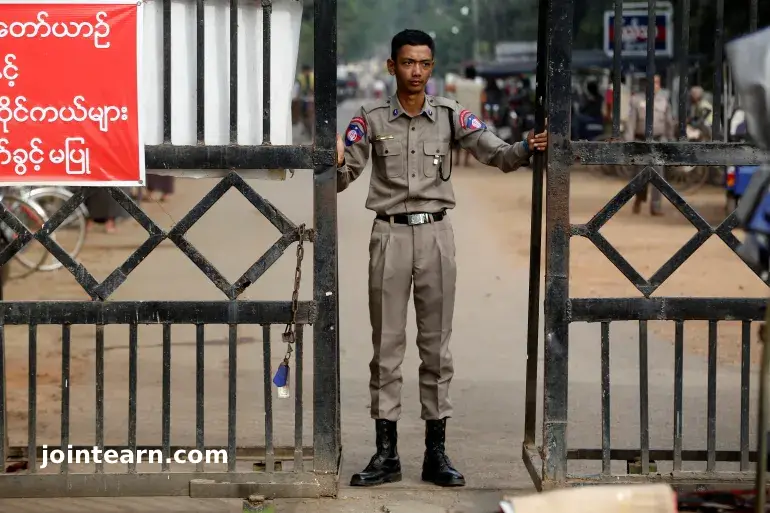
Myanmar’s military rulers have granted amnesty or dropped charges for 8,665 prisoners ahead of the country’s December elections, according to state media reports. The move includes sentence reductions for 3,085 people convicted of spreading “fake news” or causing public fear, and charges dropped against 5,580 individuals still at large, though it is unclear how many of these are political detainees.
The announcement comes as Myanmar prepares for polls scheduled for December 28, 2025, which the military has promoted as a return to normalcy following its 2021 coup, which triggered civil conflict and widespread international condemnation.
Prisoner Releases Begin
An official at Yangon’s Insein Prison, speaking on condition of anonymity, said releases would begin immediately but did not provide details about the number of inmates or specific identities. In past amnesties, releases have often taken several days to complete.
Outside the prison, dozens of families gathered to welcome released friends and relatives, some of whom had been detained since the military takeover. Among those freed was Kyi Toe, former head of the information committee for Aung San Suu Kyi’s National League for Democracy (NLD). Kyi Toe avoided political commentary but expressed solidarity with Suu Kyi, who remains in military detention in Naypyidaw serving a 27-year sentence.
Election Context
The military government claims the amnesty is designed to allow eligible voters to participate “freely and fairly” in the upcoming elections. However, critics argue the polls will not meet international standards of fairness due to the absence of free media and the arrest of most leaders from Suu Kyi’s dissolved NLD party.
Mark Farmaner, director of Burma Campaign UK, praised the release of prisoners but warned that the military is using political detainees for “public relations purposes” to create a “fake narrative of reform.”
Political Prisoners in Myanmar
According to the Assistance Association for Political Prisoners (AAPP), around 22,708 political detainees, including Aung San Suu Kyi, remain in detention as of late November 2025. Insein Prison has long served as the main facility for political prisoners in Myanmar, many of whom have endured harsh conditions and limited access to legal representation.
Despite the amnesty, the military’s continued suppression of dissent and imprisonment of opposition figures underscores ongoing concerns over human rights violations in Myanmar and the credibility of the country’s electoral process.


Leave a Reply