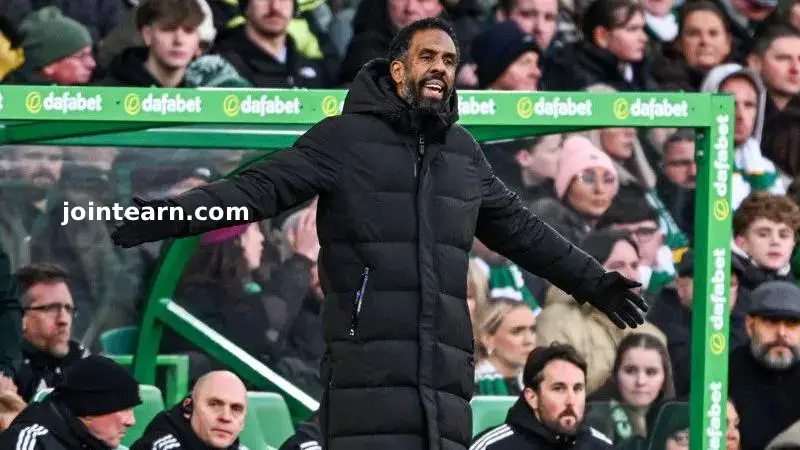
When a football manager is sacked, the natural instinct is to search for the turning points – the key defeats, the missed chances, the precise moment when everything began to unravel.
In the case of Wilfried Nancy at Celtic, that exercise is unnecessary. There was no dramatic collapse, no sudden shift in momentum, no pivotal afternoon when belief drained away. From the moment he was appointed, this was a gamble that looked misguided, ill-judged and, ultimately, doomed.
Nancy’s short and chaotic tenure did not represent a plan gone wrong. It represented the absence of a plan altogether.
A Gamble That Never Made Sense
Nancy arrived at Celtic Park with a reputation built more on aesthetics than achievement. A relative rookie, coming off an underwhelming spell with Columbus Crew, where his side finished seventh in Major League Soccer, he was handed one of the most demanding jobs in British football.
The appointment was driven largely by Paul Tisdale, then head of football operations, whose enthusiasm for modern theory and “process-driven” thinking appeared to outweigh any serious consideration of context, culture, or consequence.
Tisdale, who rarely communicated with supporters or media during his brief but influential time at the club, championed Nancy to the Celtic board. In doing so, he presided over one of the most damaging recruitment decisions in the club’s modern history.
If Nancy’s appointment ranks among Celtic’s greatest managerial blunders, then Tisdale’s role in enabling it places him at least equal in responsibility – if not greater.
Eight Games, Two Wins, Zero Authority
Nancy’s reign lasted just 33 days, producing two wins from eight matches. Even those victories were deeply unconvincing – one against bottom-placed Livingston, the other against a 10-man Aberdeen, who would soon sack their own manager.
There was no sense of momentum, no visible tactical clarity, and no evidence that players believed in what they were being asked to do. Instead, there were bewildered expressions, positional confusion, and a growing disconnect between ideas and execution.
The low point came in a 3-1 home defeat to Rangers, preceded by a 2-0 loss to Motherwell. On the eve of that Old Firm match, Nancy infamously told journalists to “do your job” while insisting that winning was not the sole priority during his so-called “process”.
At Celtic, that mindset was fatal.
Philosophy Without Reality
Nancy spoke about “building castles in the sky”, about patience, about long-term vision. He appeared to believe that Celtic Park was a laboratory for experimentation rather than a pressure cooker where results are mandatory and scrutiny relentless.
He dismantled the stabilising work done by Martin O’Neill, who would ultimately outlast him as interim manager, and replaced it with a system players struggled to understand and fans rejected outright.
The notion that Celtic supporters would tolerate short-term failure in exchange for abstract promises betrayed a fundamental misunderstanding of the club’s culture.
Accountability Avoided, Silence Maintained
Now that Nancy has gone, the expectation is familiar: silence.
Those responsible for appointing him will retreat behind carefully worded statements. There will be no press conferences, no apologies, no public acceptance of responsibility. Supporters, once again, will be left to piece together events from the outside.
This lack of transparency has become a defining feature of Celtic’s modern governance. It fuels alienation, frustration, and mistrust – not just among the most vocal elements of the support, but among ordinary fans who simply want clarity and ambition.
A Club Losing Its Way Off the Pitch
The Nancy episode is not an isolated failure. It is part of a broader pattern that stretches well beyond the dugout.
Since Hogmanay, Celtic have lost:
- A manager
- A head of football operations
- A chairman, with Peter Lawwell forced out amid hostility from sections of the support
This level of upheaval reflects a club drifting strategically and culturally. Communication has broken down. Fans feel disconnected. Despite sitting on nearly £80m in cash reserves, Celtic appear reluctant to articulate – or act upon – a coherent long-term vision.
There is growing concern that the club’s ambition has shrunk to a single objective: stay ahead of Rangers and hope for something in Europe.
Rodgers, Respect, and a Loss of Dignity
Former manager Brendan Rodgers openly challenged that mentality. His departure was handled with what many saw as unnecessary coldness, culminating in public criticism from major shareholder Dermot Desmond.
Rodgers had flaws, but the manner of his exit left scars. So too did the quiet departure of John Kennedy, a servant of the club for 27 years, who received barely a mention in official communications.
These moments have raised uncomfortable questions about dignity, respect, and institutional memory at Celtic.
Missed Opportunities On and Off the Field
Celtic’s lack of a visible long-term strategy is evident beyond football operations.
The club could:
- Complete stadium expansion to create an 80,000-seat European fortress
- Build a world-class museum celebrating its historic legacy
- Invest in a modern, elite-level scouting and analytics network
Instead, it has chosen caution and complacency.
Meanwhile, rivals such as Hearts, backed by Tony Bloom and Jamestown Analytics, are embracing data-driven models that threaten to reshape the domestic landscape.
Celtic assumed their dominance was unassailable. The Nancy gamble was born of that arrogance.
Back to the Future with Martin O’Neill
In the aftermath, Celtic have turned once again to Martin O’Neill. It is a logical short-term move. He will bring structure, authority, and clarity. Players will know their roles. Stability will return.
But the fact that the board had to reach backwards rather than forwards is telling. It underlines a leadership group that reacts rather than plans.
On Monday, Celtic corrected two mistakes that should never have been made. The real challenge now lies deeper.
This episode should force profound introspection at Celtic Park. It should prompt difficult questions about governance, ambition, and identity.
Above all, it raises one fundamental issue:
Is Celtic still thinking like a great football club – or merely behaving like a comfortable one?


Leave a Reply