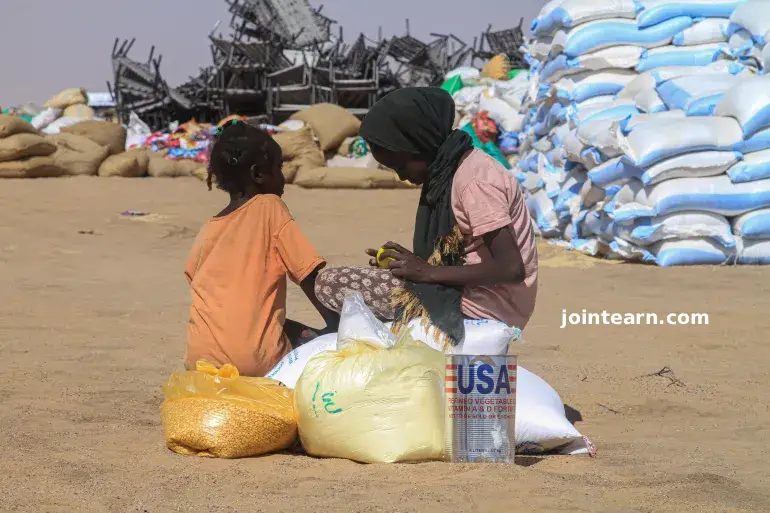
A growing breakdown in the global order is pushing the world’s most vulnerable populations into deeper humanitarian crises, with Sudan and Palestine identified as the countries at greatest risk, according to the International Rescue Committee’s (IRC) 2026 Emergency Watchlist released on Tuesday.
The annual report ranks the 20 most severe humanitarian crises worldwide, warning that intensifying conflicts, political paralysis, and shrinking international aid budgets are creating what the IRC describes as a “new world disorder”—a departure from the post-World War II rules-based international system.
Global Disorder Replacing Rules-Based Order
According to the IRC, today’s humanitarian emergencies are being shaped by geopolitical rivalries, shifting alliances, and transactional diplomacy, often at the expense of civilian protection. These dynamics, the report argues, have weakened international cooperation and undermined responses to major crises.
“Disorder begets disorder,” said David Miliband, president of the IRC. “This year’s Watchlist is both a record of immense human suffering and a warning. Without urgent action from global leaders, 2026 could become the most dangerous year yet for people living in crisis.”
UN Paralysis Deepens Crises in Sudan and Palestine
The report highlights a surge in vetoes at the United Nations Security Council (UNSC) as a key factor stalling effective international action.
- Sudan: Russia has repeatedly blocked efforts to push for a ceasefire.
- Palestine: The United States vetoed multiple Gaza truce resolutions before backing a US-led peace plan earlier this year.
These political deadlocks, the IRC says, have allowed conflicts to persist with little accountability, worsening humanitarian conditions on the ground.
Disproportionate Impact on the World’s Most Vulnerable
Although the 20 countries on the Emergency Watchlist represent just 12 percent of the global population, they account for 89 percent of the nearly 300 million people worldwide who need humanitarian assistance.
The report paints a stark picture:
- 117 million people are forcibly displaced globally
- 40 million face life-threatening levels of severe hunger
- Humanitarian funding has dropped by roughly 50 percent, leaving aid agencies unable to meet soaring needs
This widening gap between needs and resources has pushed many emergency responses to breaking point.
Sudan Tops the List for a Third Consecutive Year
Sudan ranked first on the IRC’s watchlist for the third year in a row, as the country continues to be devastated by fighting between the national army and the Rapid Support Forces (RSF).
The conflict, now nearing its third year, has:
- Killed an estimated 150,000 people
- Displaced more than 12 million
- Left 33 million people in need of humanitarian aid
- Pushed 207,000 people into catastrophic levels of food insecurity
The IRC report points to the role of regional backers, accusing unnamed actors of fueling the war by enabling arms flows into the country while Sudan’s gold resources are exported abroad.
While the report does not name specific states, the United Arab Emirates has been widely accused of backing the RSF, a claim the UAE has consistently denied.
The IRC described the situation in Sudan as one of “impunity on a dangerous scale”, where violations continue with little international consequence.
Palestine Ranks Second Amid Gaza and West Bank Crises
Palestine ranked second on the watchlist for the third consecutive year, as civilians face overlapping crises in Gaza and the occupied West Bank.
The IRC cited:
- Israel’s military campaign in Gaza, which authorities say has killed more than 70,000 people
- Worsening humanitarian conditions due to widespread destruction
- Rising settler violence in the West Bank
Although a ceasefire agreement was reached in October under a US-backed peace plan endorsed by the UNSC, the report said nearly 800 Israeli attacks had still occurred afterward, killing around 400 people.
Even if fighting remains at reduced levels, the IRC warned that Gaza’s population will continue to endure extreme hardship, with much of the territory’s infrastructure destroyed.
By late 2025:
- 641,000 people in Gaza were experiencing famine or catastrophic food insecurity
- Aid access remained severely restricted due to tight controls and militarized delivery systems
Deadliest Year for Humanitarians
The report also described the past year as the deadliest on record for humanitarian workers, citing attacks on schools, hospitals, and other essential civilian infrastructure, particularly in Gaza.
Overall, the IRC concluded that systemic impunity—enabled by geopolitical paralysis—has allowed civilian suffering to escalate across multiple conflict zones.
A Stark Warning for 2026
The IRC’s 2026 Emergency Watchlist serves as a warning that without renewed political will, sustained funding, and accountability, humanitarian crises will continue to worsen.
As global attention fragments and aid budgets shrink, millions of people in conflict-affected regions face a future marked by hunger, displacement, and insecurity—hallmarks, the IRC warns, of a rapidly unfolding new world disorder.


Leave a Reply