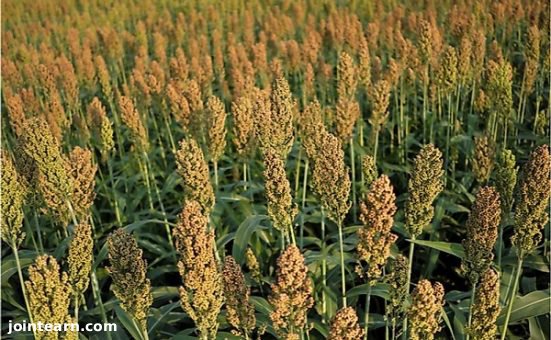
Nigeria’s sorghum sector is entering a transformative phase, driven by scientific research, growing industrial demand, and renewed policy focus. Experts project that annual sorghum production may exceed seven million tonnes, thanks to efforts by the Institute for Agricultural Research (IAR), Ahmadu Bello University, and local brewery operators aiming to boost cultivation and conserve foreign exchange.
Sorghum has become a multi-billion-dollar commodity, as global beer manufacturers increase demand for its use in brewing. According to Statista, Nigeria produced around seven million metric tonnes of sorghum last year.
Speaking with The Nation, Prof. Ado Yusuf, Executive Director of IAR, highlighted the institute’s recent breakthroughs, which include developing special sorghum varieties tailored to northern Nigeria’s unique challenges.
“Our varieties are designed not merely for a singular pest. We consider various production limitations and create varieties that correspond to those challenges,” he explained.
Security-Driven Crop Innovation
Prof. Yusuf emphasized that traditional sorghum grows to about 2 meters, which can create concealment opportunities for criminals in regions facing insecurity. To address this, IAR has developed a shorter variety, around 1 meter tall, improving visibility on farms while maintaining productivity.
“While we’re enhancing yields, our primary focus is resolving specific challenges, including security concerns, even as we introduce high-yield varieties,” he added.
Nutritional and Pest-Resistant Advances
In addition to productivity improvements, IAR has introduced biofortified sorghum enriched with iron, addressing anemia and low blood count issues. The institute has also created varieties resilient to pests and diseases like striga, further stabilizing national food production.
Sorghum remains a dietary staple in northern Nigeria, often consumed twice daily in forms such as porridge or chur. The new high-yield varieties, including SAMSORG 52, SAMSORG 53, and SAMSORG 54, can produce up to 1.3 tonnes per hectare, compared to 500 kilograms per hectare for older cultivars.
“When you compile all these elements—nutrition, yield, security, and pest resistance—you begin to see the substantial impact on national agriculture and food stability,” Prof. Yusuf noted.
With these innovations, Nigeria’s sorghum industry is poised for economic growth, improved nutrition, and enhanced food security, while also meeting rising industrial and export demand.


Leave a Reply