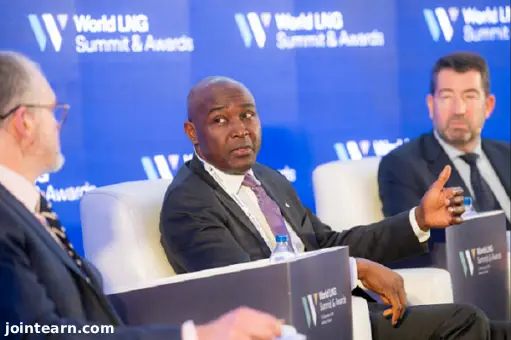
Nigeria LNG Limited (NLNG) has called on global energy leaders to adopt stronger collaborative strategies to stabilise liquefied natural gas (LNG) supply, improve affordability for developing economies, and sustain long-term energy expansion amid rising geopolitical uncertainty.
NLNG’s Managing Director and Chief Executive Officer, Dr. Philip Mshelbila, made the appeal while speaking on the theme “Energy Expansion in a Challenging Global Trade Environment” at the World LNG Summit & Awards in Istanbul, Turkey.
Mshelbila warned that without coordinated global action, ongoing fragmentation in global politics, supply chains and energy policies could widen the global energy gap, jeopardise energy security, and slow progress towards a balanced low-carbon future.
He said today’s market—shaped by geopolitical tensions, sanctions, and assertive national energy policies—requires a new framework for LNG contracting.
“To safeguard global energy security from the risks of geopolitics and unilateral policies, LNG contracts must evolve from simply defining volume and price to actively managing sovereign risk through diversified supply sources, flexible delivery routes, and adaptive contract terms,” he said.
The NLNG boss stressed that LNG expansion could stall unless structural challenges around supply availability, pricing, financing and decarbonisation are urgently resolved. He noted that volatile global prices continue to place enormous pressure on developing countries, pushing some back to cheaper but more carbon-intensive fuels such as coal.
Reflecting on global market dynamics since the 2022 supply shock, Mshelbila observed a rising demand for long-term LNG contracts, even as spot and short-term deals remain appealing. He said this dual approach reflects heightened uncertainty, with producers and buyers seeking security while remaining flexible.
Mshelbila highlighted three core pillars that must be strengthened for LNG to meet future demand—availability, affordability and decarbonisation. While gas is widely regarded as a transition fuel, he said its relevance would extend well beyond the transition era if these pillars are addressed.
He pointed to major supply-expansion projects in Qatar, the United States, and NLNG’s Train 7, which will add eight million tonnes per annum to Nigeria’s capacity. These investments, he said, are critical to meeting rising long-term global demand.
However, he underscored that affordability remains LNG’s biggest challenge, insisting that persistently high prices undermine developing economies and threaten global climate targets.
Now in its 25th year, the World LNG Summit remains one of the LNG industry’s most influential global gatherings, bringing together policymakers, financiers, buyers, producers and innovators to navigate the growing geopolitical, economic, and environmental uncertainties shaping the future of LNG.


Leave a Reply