North Korea Criticizes US-South Korea Nuclear Submarine Agreement, Warns of Regional “Nuclear Domino”
SEOUL, November 18, 2025 – North Korea has warned that South Korea’s plan to build nuclear-powered submarines with U.S. approval could trigger a “nuclear domino” effect in the region, escalating tensions and potentially sparking an arms race across East Asia.
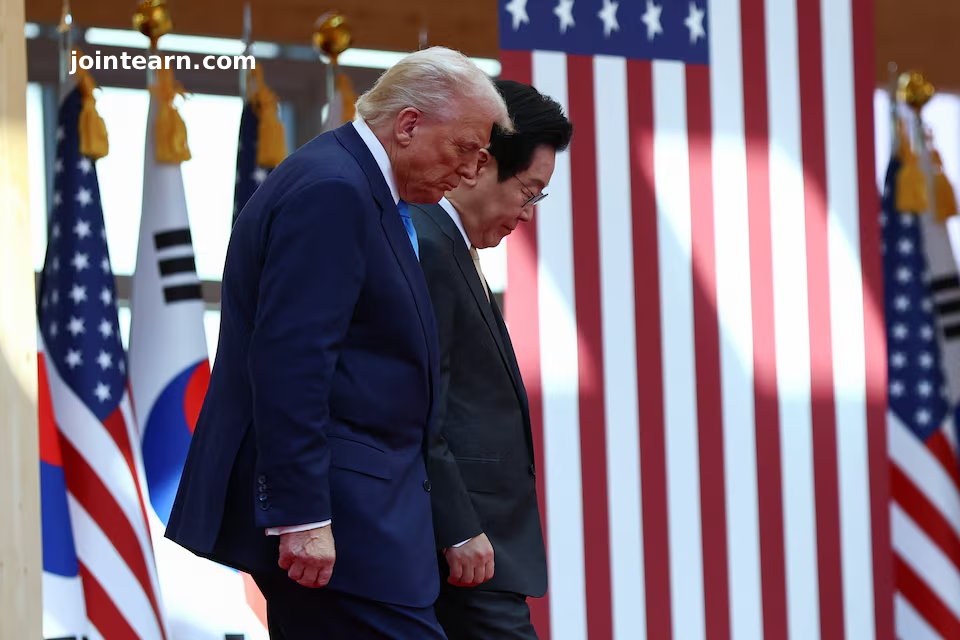
The comments come shortly after South Korea and the United States publicly released details of a bilateral agreement forged between President Lee Jae Myung and President Donald Trump at last month’s summit. The agreement reaffirmed the commitment of both nations to pursue North Korea’s complete denuclearization, while also authorizing South Korea to advance its nuclear-powered submarine program—a longstanding goal of Seoul’s defense strategy.
North Korea’s Response
State news agency KCNA described the agreement as revealing the “true colours of the confrontational will of the U.S. and the ROK”, accusing the two nations of hostility toward the Democratic People’s Republic of Korea (DPRK). KCNA further stated that the deal, combined with ongoing large-scale joint military drills, posed serious threats to North Korea’s security and could aggravate regional instability.
North Korea claimed that Seoul harbors secret ambitions to develop nuclear weapons, which the state warned would likely trigger a regional nuclear arms race. Analysts noted that Pyongyang’s commentary reflects its continued reluctance to engage in dialogue with the United States as long as Washington does not formally recognize it as a nuclear state.
South Korea’s Position
South Korea has emphasized that its nuclear-powered submarine program is strictly defensive. Presidential office spokesperson Kang Yu-jung said Seoul has no hostile intent toward North Korea, framing the initiative as a means to protect national security against potential threats, including China’s naval expansion and the North’s own ambitions in nuclear technology.
President Lee has repeatedly stressed that the submarines are essential for maintaining strategic readiness in response to the nuclear-armed North and other regional security challenges.
Context and Implications
North Korea’s warning adds to a series of geopolitical tensions in East Asia, highlighting the delicate balance of power involving the U.S., South Korea, North Korea, and China. Despite previous attempts at diplomacy—such as the three meetings between Donald Trump and Kim Jong Un during Trump’s first term—no comprehensive nuclear agreement has been reached.
Experts, including Hong Min from the Korea Institute for National Unification, suggest that North Korea’s rhetoric indicates an ongoing unwillingness to negotiate unless the U.S. recognizes its nuclear capabilities, potentially complicating future diplomatic efforts.
The development underscores growing concerns over nuclear proliferation and the potential for regional arms races, as nations in East Asia navigate security threats posed by both nuclear-armed North Korea and broader geopolitical rivalries.
Key Takeaways
- North Korea warns the US-South Korea nuclear submarine deal could trigger a “nuclear domino” effect.
- The agreement authorizes Seoul to build nuclear-powered submarines and reaffirmed commitments to denuclearize North Korea.
- KCNA accuses the U.S. and South Korea of hostility and confrontational policies.
- South Korea emphasizes the submarines are defensive, aimed at countering China and North Korean threats.
- Analysts note North Korea remains unwilling to engage in talks without nuclear recognition from the U.S.


Leave a Reply