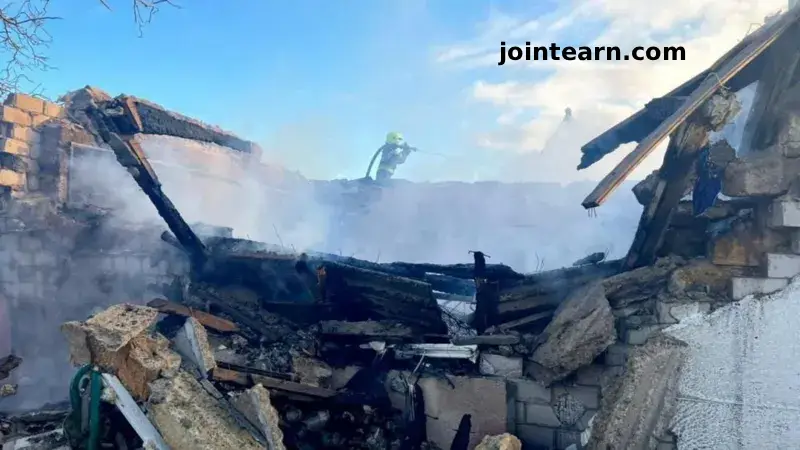
More than one million households in Ukraine were left without electricity following a wave of overnight Russian attacks targeting the country’s energy and industrial infrastructure, officials said.
Ukraine’s internal affairs minister, Ihor Klymenko, reported that five regions—Dnipropetrovsk, Kirovohrad, Mykolaiv, Odesa, and Chernihiv—were struck, causing fires and injuring at least five people. Emergency teams are working to extinguish fires and restore power.
Intensified Attacks Ahead of Winter
While Russia has previously targeted Ukrainian energy facilities throughout the war, attacks have intensified as winter approaches. Ukraine reported that over 450 drones and 30 missiles were launched in the latest strikes. Moscow claimed the use of Kinzhal hypersonic missiles, which can alter course mid-flight.
The Zaporizhzhia nuclear plant, located in Russian-controlled territory, temporarily lost all offsite power due to the attacks but is now reconnected. The plant is not operating but relies on a stable power supply to keep reactors cooled.
In Russia, a drone strike in Saratov damaged a residential building, killing two people.
Diplomatic Efforts and US-Led Peace Talks
Amid the attacks, US envoy Steve Witkoff is scheduled to travel to Germany to meet President Volodymyr Zelensky and European leaders, including UK Prime Minister Sir Keir Starmer, French President Emmanuel Macron, and German Chancellor Friedrich Merz, for peace negotiations.
The discussions will review a 20-point peace plan recently revised by Ukraine. One of the most contentious issues is control of eastern Ukrainian territory, with Kyiv refusing to cede occupied areas and Moscow insisting on taking the Donbas region unless Ukraine withdraws.
Zelensky has expressed skepticism over a US-proposed solution, which suggests a Ukrainian withdrawal from parts of the Donbas to create a “special economic zone” under Kremlin assurances of no further advancement.
Financial and EU Considerations
Ukraine faces severe financial pressure, needing an additional €135.7bn (£119bn; $159bn) over the next two years. EU nations have agreed to freeze approximately €210bn (£185bn; $247bn) in Russian assets, potentially to be redirected to support Ukraine. Russia has condemned this as theft.
The revised peace plan also proposes accelerated EU membership for Ukraine, potentially as soon as January 2027, though final approval from Washington is unclear.
Outlook
As the diplomatic push continues, Ukraine and its allies are negotiating security guarantees and funding mechanisms in anticipation of a potential peace deal, even as Russian attacks on energy infrastructure threaten civilian life during winter.


Leave a Reply