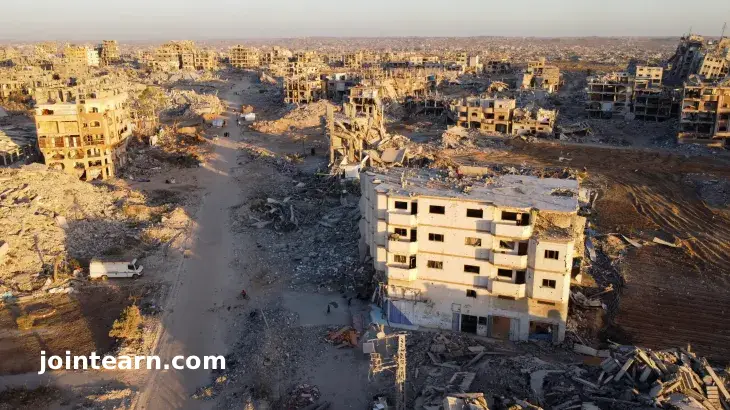
The economy of the occupied Palestinian territory, including Gaza and the West Bank, is experiencing its most severe collapse on record, according to a new report by the United Nations Conference on Trade and Development (UNCTAD).
The UN report highlights that two years of conflict and longstanding restrictions on movement and trade have erased decades of economic progress, leaving the region among the worst global economic contractions since 1960.
Widespread Damage and Economic Decline
UNCTAD noted that damage to infrastructure, productive assets, and public services has reversed years of socioeconomic gains. In Gaza, GDP fell by 83% in 2024, representing an 87% decline over two years, and GDP per capita dropped to just $161, one of the lowest in the world.
In the West Bank, restrictions on movement and trade, combined with the collapse of jobs and economic activity, have driven the territory into a historic downturn.
Impact of Fiscal Restrictions
The Palestinian Authority (PA) has also been affected by withheld fiscal revenues, limiting its ability to pay salaries, maintain public services, and support reconstruction efforts. UNCTAD reported that Israel has withheld $4 billion in tax revenues, worsening the economic crisis.
The UN emphasized that without immediate intervention, these restrictions and the effects of the conflict will trap the Palestinian economy in a long-term slump.
The Cost of Recovery
According to UNCTAD, rebuilding Gaza alone could cost more than $70 billion. Recovery to pre-conflict GDP levels could take decades, even with significant international aid.
The report calls for a comprehensive recovery plan, including:
- Coordinated international assistance
- Restoration of fiscal transfers
- Measures to ease constraints on trade, movement, and investment
UNCTAD stressed that the October 2025 ceasefire must hold for any meaningful recovery to begin.
Global Context
The UN report places the Palestinian economic collapse among the 10 worst globally since 1960, reflecting both the impact of ongoing conflict and systemic restrictions on economic activity. The steep downturn has heightened dependence on external aid and threatened the livelihood of millions of Palestinians.
Call to Action
UNCTAD urges immediate international intervention to halt the economic freefall, address humanitarian needs, and lay the groundwork for sustainable peace and development. Without such efforts, the Palestinian economy could face long-term stagnation, and recovery may be delayed for decades.


Leave a Reply