December 23, 2025 – Uvira / Washington, D.C. – Hopes for lasting peace in the eastern Democratic Republic of the Congo (DRC) were dashed this month as the M23 rebel group advanced on the strategic city of Uvira, despite a US- and Qatar-brokered peace deal signed in November. The offensive highlights the fragility of ceasefire agreements and raises concerns over a possible regional escalation.
M23 Seizes Uvira, Shattering Hopes
The city of Uvira, a key transport and economic hub in South Kivu province, was briefly captured by M23 before the group withdrew under US pressure. Analysts warn that the offensive expands M23’s control toward the mineral-rich Katanga region and places Rwandan proxies on Burundi’s doorstep.
- At least 400 people were killed and 200,000 displaced as fighting engulfed Uvira.
- Thousands fled into Burundi, which already hosts roughly 200,000 Congolese refugees.
- Reports from Doctors Without Borders (MSF) cite bombed villages, summary executions, and widespread sexual violence affecting civilians.
Fragile Peace Agreement
The US-Qatar peace deal, signed in Washington on December 4, included eight protocols, covering ceasefire monitoring, prisoner exchanges, and pledges by both Rwanda and DRC to halt support for armed groups. Despite these measures, the M23’s Uvira offensive occurred just days after the signing.
US officials, including Secretary of State Marco Rubio, condemned Rwanda for violating the deal, and Deputy Secretary Christopher Landau met with DRC Foreign Minister Therese Kayikwamba Wagner to discuss possible enforcement actions.
Analysts note that the agreement appears to favor Rwanda over Kinshasa, with weak enforcement clauses contributing to M23’s continued aggression.
Historical Context and Regional Tensions
The M23 insurgency traces its roots to ethnic tensions and the DRC’s historic conflicts:
- Formed from a Tutsi militia integrated into the Congolese army, M23 has repeatedly revolted over alleged marginalization.
- The group is accused by the US and UN of receiving Rwandan support, which Kigali denies.
- Past conflicts in the DRC involved neighbors such as Uganda, Rwanda, and Burundi, often over control of mineral-rich territories.
M23’s movements have exacerbated tensions between Rwanda and Burundi, with accusations of support for rebel groups fueling border closures and diplomatic clashes.
UN and Regional Responses
In response to the renewed violence, the UN Security Council extended the mandate of the MONUSCO peacekeeping mission for another year. The 11,000-strong force has struggled to protect civilians, particularly in areas like Ituri held by M23.
The East African Community (EAC) and Southern African Development Community (SADC) previously deployed peacekeepers from Kenya, South Africa, Tanzania, and Malawi, but the new M23 offensive has rendered these measures largely ineffective.
Humanitarian Toll
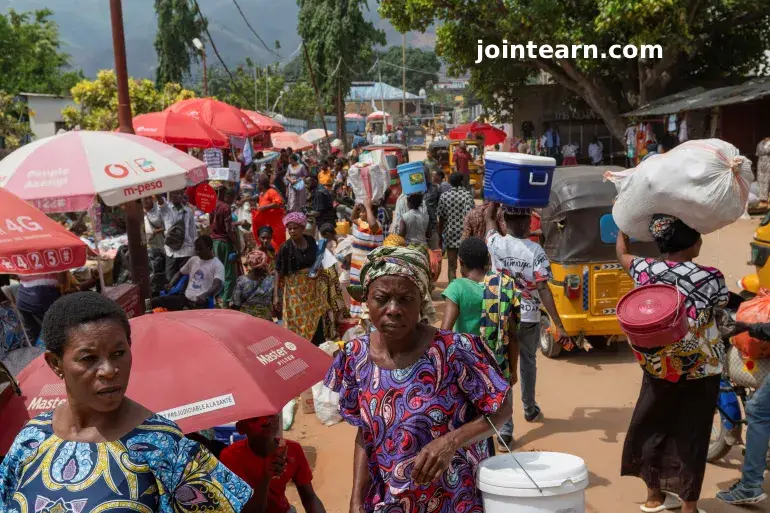
The ongoing conflict has displaced nearly one million people in eastern DRC and left civilians in profound despair. Local residents in Goma express the urgent need for safety and basic security, emphasizing the human cost of the political and military stalemate.
“People have suffered enough and need to breathe, to sleep knowing they will wake up tomorrow,” said Congolese lawyer and analyst Hubert Masomera. “They need to live in their homes without fear of a bomb falling on them.”
The M23 offensive underscores the fragility of peace efforts in eastern DRC, highlighting the risks of further regional escalation and a worsening humanitarian crisis.


Leave a Reply