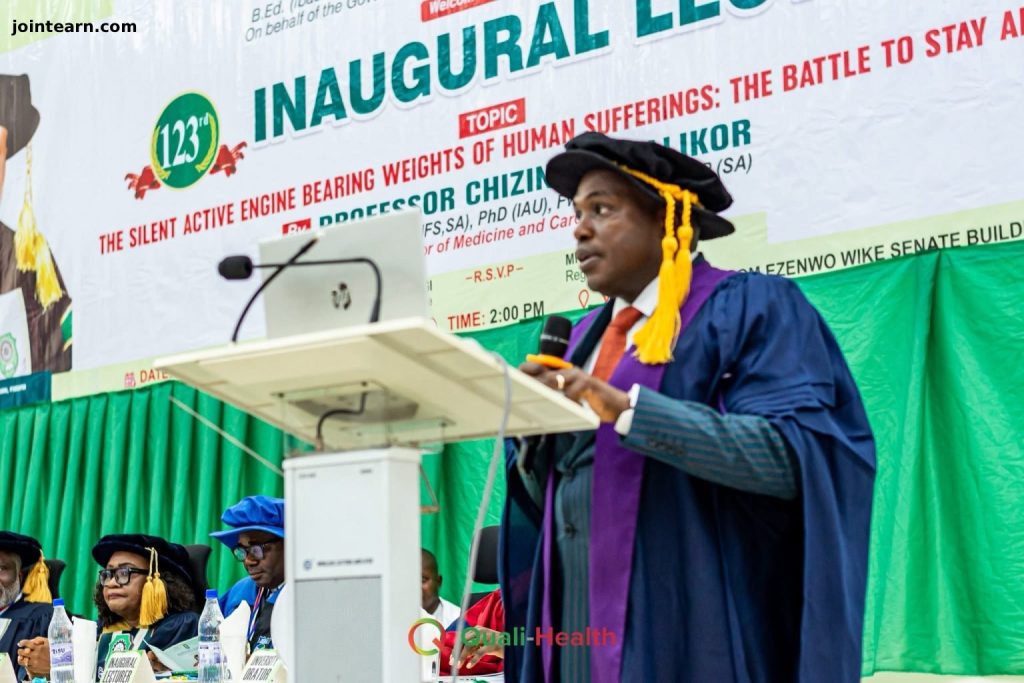
A consultant cardiologist, Professor Chizindu Alikor, has raised alarm over the increasing prevalence of hypertension among young Nigerians, warning that high blood pressure is “no longer a sickness for the old,” with even 18-year-olds now being diagnosed.
The warning came during the 123rd Inaugural Lecture of Rivers State University (RSU), where Professor Alikor, Chief Medical Director at Rivers State University Teaching Hospital (RSUTH), delivered a lecture titled: “The Silent Active Engine Bearing Weights of Human Sufferings: The Battle to Stay Alive.” He described the heart as a “silent active engine” that sustains life despite enormous pressures, emphasizing lifestyle choices as the greatest threat to heart health.
“Diet, stress, excessive salt, high sugar intake, obesity, poor diabetes management, and untreated hypertension are major contributors to cardiovascular diseases,” he said. To address these challenges, he proposed the Alikor Survival Network Model, a holistic approach involving individuals, families, and the healthcare system.
Young Adults and Rural Communities at Risk
Professor Alikor highlighted research showing high prevalence of cardiovascular risk factors in the Niger Delta, with 15% of people aged 18–39 showing risk factor clustering. He noted that urbanization and sedentary lifestyles have further worsened the problem, particularly in cities, and that men are disproportionately affected.
Heart Failure and Stroke Dominate
Heart failure and stroke remain the most common cardiovascular complications in the Niger Delta. Professor Alikor urged Nigerians not to ignore warning signs like palpitations and emphasized the importance of regular monitoring of blood pressure, blood sugar, and cholesterol. “Even highly educated individuals may walk around with dangerously high blood pressure without knowing it,” he warned.
He stressed dietary changes as a first line of defense: vegetables, fruits, legumes, and whole grains protect the heart, while salt, trans fats, and refined sugar are harmful. Regular home monitoring, he said, is essential to early detection and prevention.
Lifestyle Shift Fuelling Future Crisis
Professor Alikor cautioned that the rise in fast foods and decline in physical activity are accelerating cardiovascular risks. “Without intentional interventions, the next 10–20 years will see alarming increases in heart attacks and strokes,” he warned.
He presented the Alikor Health Care Survival Model as a framework for protecting individuals and communities. RSU Vice-Chancellor, Professor Isaac Zeb-Obipi, reaffirmed the university’s commitment to addressing societal challenges, noting that stress, poor infrastructure, and unhealthy lifestyles strain vital organs and reduce productivity.


Leave a Reply