Sudan’s civil war has reached a critical stage in the central Kordofan region, where Rapid Support Forces (RSF) artillery strikes have killed at least 16 civilians in the besieged city of Dilling, adding to a death toll that has exceeded 100 since early December. The attacks mark a dangerous shift in the conflict, moving from Darfur to Sudan’s strategic heartland, where the war’s outcome may be decisively determined.
According to the Sudan Doctors Network, RSF forces and their allies from the Sudan People’s Liberation Movement-North (SPLM-N) shelled residential areas over the past two days, targeting civilians, including women, elderly residents, and children. The monitoring group condemned the attacks as deliberate acts against non-combatants and urged the international community to pressure armed groups to halt assaults and allow humanitarian access.
Humanitarian Crisis Deepens
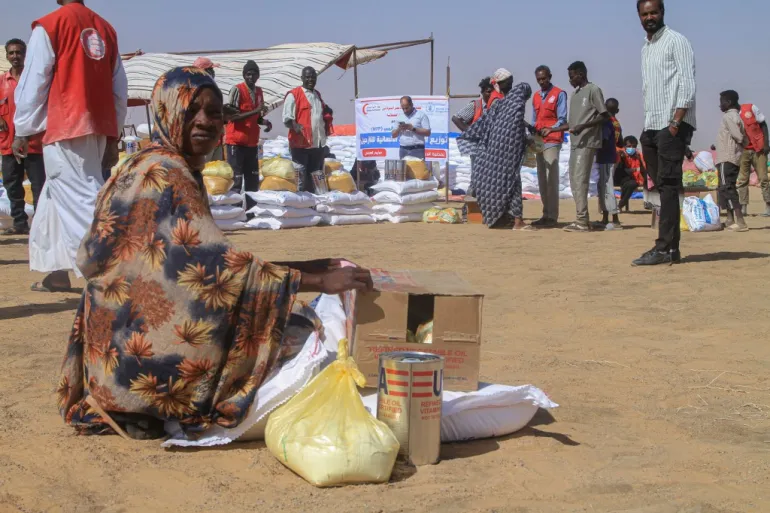
The bombardment has intensified the strain on health facilities already overwhelmed by cholera and dengue fever outbreaks. The prolonged siege of Dilling and other parts of Kordofan, now in its third year, has forced over 50,000 people to flee their homes across Kordofan’s three states since late October, after RSF forces captured a major army base and escalated operations.
Some 710 people have been displaced from Dilling alone, arriving in neighboring areas with nothing but the trauma of witnessing what UN refugee officials described as “unspeakable horrors.”
The violence has also prompted warnings from UN human rights chief Volker Turk, who said history is “repeating itself” in Kordofan, recalling mass atrocities in Darfur, particularly in el-Fasher.
Attacks on Peacekeepers and UN Operations
Earlier this month, six Bangladeshi UN peacekeepers were killed when drones struck their base in Kadugli, the capital of South Kordofan. UN Secretary-General Antonio Guterres stated that the attacks “may constitute war crimes,” leading to the evacuation of the UN logistics base in Kadugli due to deteriorating security.
Both the RSF and Sudanese Armed Forces (SAF) have been accused of committing systematic atrocities. A recent UN report detailed how the RSF killed more than 1,000 civilians during a three-day assault on the Zamzam displaced persons camp in Darfur in April, using sexual violence as a deliberate tool of terror.
Since the outbreak of Sudan’s civil war in April 2023, which pitted SAF chief Abdel Fattah al-Burhan against his former deputy Mohamed Hamdan “Hemedti” Dagalo, over 100,000 people have reportedly died, and 14 million have been displaced, making it the world’s largest ongoing humanitarian crisis, according to UN estimates.
Regional and International Response
Amid the escalating conflict, al-Burhan visited Cairo, where Egyptian President Abdel Fattah el-Sisi received him with full ceremonial honors. Egypt emphasized its “red lines” regarding Sudan’s territorial integrity, citing concerns over RSF attempts to establish a parallel government in Darfur. The Cairo government invoked its 1976 joint defense pact with Sudan, signaling readiness to act to protect national security.
Egypt has supported renewed US diplomatic efforts to negotiate a humanitarian ceasefire, with Secretary of State Marco Rubio coordinating with officials in the United Arab Emirates. Sudanese officials, UN experts, and conflict monitors have accused the UAE of backing the RSF, though Abu Dhabi has repeatedly denied such claims.
The RSF’s campaign in Kordofan reflects a broader pattern of violence and civilian targeting that has characterized Sudan’s civil war since its inception. International observers warn that without urgent interventions, the humanitarian toll will continue to rise, threatening regional stability and further deepening the crisis.


Leave a Reply