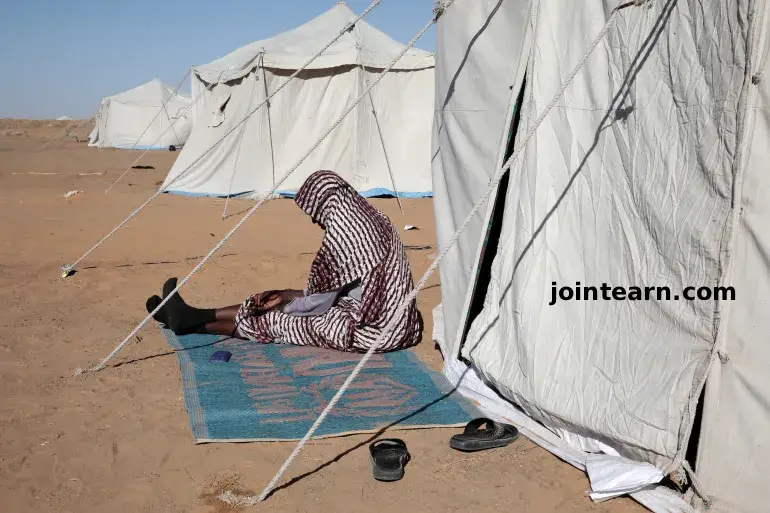
Sudan faces growing instability as the Rapid Support Forces (RSF) push into Kordofan, building on their recent victory in el-Fasher, Darfur. Analysts warn that the offensive could deepen ethnic divides, territorial fragmentation, and humanitarian crises, putting the country at risk of de facto partition.
RSF Momentum After Darfur Victory
The RSF, a paramilitary force accused of widespread human rights abuses, have gained the upper hand in Sudan’s more-than-two-year war with the Sudanese Armed Forces (SAF).
- Last month, RSF forces captured el-Fasher, killing at least 1,500 people and displacing thousands.
- The RSF now aims to expand their control over central Sudan, targeting cities like Babnusa and el-Obeid in Kordofan.
According to Sudanese political analyst Dallia Abdelmoniem, RSF leader Mohamed Hamdan Dagalo (“Hemedti”) is not content with Darfur alone; he seeks broader territorial control.
“The RSF has momentum, which they will carry on through with,” Abdelmoniem said.
While SAF soldiers currently hold Babnusa, maintaining control is increasingly challenging. If Babnusa falls, the RSF could advance toward el-Obeid, a crucial economic and transport hub, and ultimately threaten Khartoum.
Ceasefire Talks Amid Escalation
Despite ongoing mediation by the so-called Quad – Egypt, Saudi Arabia, the UAE, and the US – fighting has intensified.
- SAF leader Abdel Fattah al-Burhan rejected a proposed ceasefire, claiming it favored the RSF.
- RSF announced a three-month unilateral ceasefire but continued attacks on Babnusa.
Kholood Khair, director of Confluence Advisory, explained that international pressure may have unintentionally accelerated fighting:
“Each side will try to gain a territorial advantage before any mediation deal is finalized.”
The strategic importance of Kordofan is clear: the region contains agricultural, livestock, and petroleum resources, making control a key economic and military objective.
Risk of Political and Ethnic Fragmentation
Experts warn that Kordofan’s escalation highlights Sudan’s ethnic and political fractures:
- Both RSF and SAF increasingly rely on ethnic mobilization to recruit and maintain forces.
- Multiple armed groups, either aligned or independent, control discrete territories, compounding the risk of de facto fragmentation.
Abdelmoniem noted that some SAF elements may accept fragmentation of Darfur, prioritizing Arab-dominated regions, but warns that such a strategy is unsustainable politically.
“Without allied groups under their umbrella, the SAF cannot win, and public opinion will hold them accountable for losing parts of the country,” she said.
Retired Lt. Col. Omar Arbab believes formal partition remains unlikely due to complex alliances and diverse actors, though de facto divisions are already apparent.
Humanitarian Fallout
As RSF and SAF forces contest Kordofan, analysts warn of a looming humanitarian disaster similar to, or worse than, Darfur:
- Potential mass displacement of civilians
- Sieges and food shortages due to disrupted supply lines
- Reprisal killings fueled by overlapping tribal and ethnic affiliations
Kholood Khair emphasized that humanitarian access is already severely limited, with neither SAF nor RSF granting aid organizations entry into conflict zones. Unlike Darfur, Kordofan is landlocked, further complicating relief efforts.
“Access issues become even more heightened when you’re away from an international border,” she said.
Key Takeaways
- RSF forces are advancing in Kordofan, building on Darfur victories, and challenging SAF positions.
- Babnusa and el-Obeid are strategic targets linking RSF-controlled areas to the capital and economic hubs.
- Ceasefire talks mediated by the Quad have not halted fighting.
- Ethnicized warfare and multiple armed factions raise the risk of Sudan’s fragmentation.
- Humanitarian conditions are deteriorating, with restricted aid access and mass displacement likely.


Leave a Reply