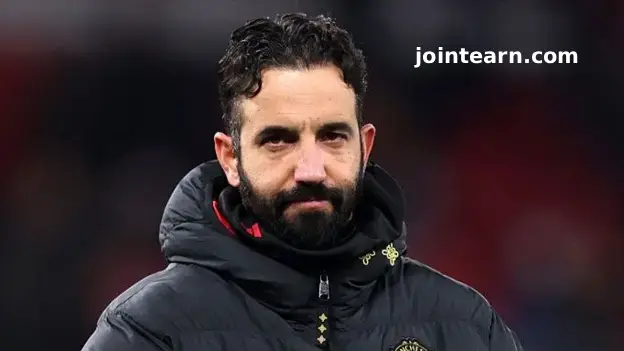
Manchester United head coach Ruben Amorim has refused to explain a cryptic comment he made regarding the club’s transfer budget, a stance that has intensified speculation about growing tension behind the scenes at Old Trafford.
Usually forthright and transparent in his dealings with the media, Amorim surprised reporters by shutting down repeated attempts to clarify remarks he made on Christmas Eve, comments that appeared to hint at limitations placed on his vision for the team.
“I have the feeling if we have to play a perfect 3-4-3, we need to spend a lot of money and we need time,” Amorim said at the time. “I’m starting to understand that is not going to happen. So maybe I have to adapt.”
Those words immediately raised eyebrows, particularly given United’s long-standing financial muscle and Amorim’s reputation as a coach wedded to tactical structure and positional discipline.
Tactical Shifts Add to the Confusion
In the days following the comment, Amorim’s actions only deepened the intrigue. United lined up with a back four in a narrow 1-0 win over Newcastle on 26 December, before switching back to a five-at-the-back system in a disappointing draw against bottom-placed Wolves just four days later.
The tactical flip-flopping has fuelled concerns among supporters that Amorim is being forced to compromise his philosophy due to recruitment constraints rather than footballing logic.
Behind the scenes, United officials had already privately conceded—on 23 December, the day before Amorim’s remark—that a move for Bournemouth forward Antoine Semenyo, valued at around £65m, was unlikely to materialise. Club sources stressed Semenyo was not being pursued as a wing-back, yet the collapse of the deal appeared to underline Amorim’s frustrations about squad suitability.
“I Don’t Want to Talk About That”
Ahead of United’s Premier League clash with Leeds United, Amorim was repeatedly pressed to explain why he seemed unclear about recruitment realities after joining from Sporting Lisbon in November 2024.
“I don’t want to talk about that,” he replied bluntly. “I just focus on the Leeds game.”
When asked again whether circumstances surrounding the transfer budget had changed, Amorim remained unmoved.
“I don’t want to talk about that.”
Then, after a brief pause—and just as a club media officer attempted to move the press conference along—the Portuguese coach added a pointed remark:
“But you are very smart, so…”
The cryptic aside only amplified speculation. It was widely interpreted as a suggestion that the answer was obvious, and that Amorim’s earlier comments spoke for themselves.
Recruitment Friction and Missed Targets
Manchester United have consistently maintained that any January signings must align with their long-term recruitment strategy, not short-term fixes. However, Amorim has already acknowledged that he and the club have not always been aligned on targets.
One notable example is understood to be the decision to sign Belgian goalkeeper Senne Lammens on deadline day instead of Aston Villa’s Emiliano Martinez, who was Amorim’s preferred option.
After the Newcastle win, Amorim publicly stressed the importance of the coach’s voice being heard in transfer discussions, arguing that he best understands the profiles required to execute his tactical ideas.
Fan Confidence Nosedives Amid Poor Home Form
The exchange comes at a precarious time for Amorim. Confidence among United supporters has sharply declined following a troubling run of results at Old Trafford.
That sequence has included:
- A defeat to Everton, despite the visitors being reduced to 10 men after eight minutes
- Home draws against West Ham and Bournemouth, both teams enduring lengthy winless runs
- The chaotic stalemate against Wolves, widely regarded as a low point
United sit sixth in the Premier League, having repeatedly missed opportunities to break into the top four. Alarmingly, they are just three points ahead of 12th-placed Fulham, highlighting the fragility of their position.
The club have made no secret of the fact that European qualification is the minimum expectation this season. Failure to achieve it would inevitably place Amorim’s future under intense scrutiny.
January Window Uncertainty Grows
United have already recalled Toby Collyer from his loan spell at West Brom, though the 22-year-old is still sidelined with a calf injury sustained in late November.
It had been anticipated that United’s hierarchy might authorise January arrivals if either Joshua Zirkzee—hooked at half-time against Wolves—or injured midfielder Kobbie Mainoo secured loan moves. However, Amorim dismissed suggestions of an imminent squad reshuffle.
“If you look at our squad, I think it’s impossible for someone to leave,” he said. “But they need to talk with Jason [Wilcox].”
Despite reported interest in midfield reinforcements, United’s leading targets—including Adam Wharton, Elliot Anderson, and Carlos Baleba—are considered unrealistic for a mid-season move.
Speculation has also linked the club with Ruben Neves, whose future at Al-Hilal is uncertain, and former academy graduate James Garner, now thriving at Everton.
Yet Amorim poured cold water on expectations of January business.
“We have no conversations in this moment to have any change in the squad,” he said.
A Silence That Speaks Volumes
Amorim’s refusal to elaborate on his earlier comments has done little to quiet concerns. Instead, it has reinforced the sense of a manager navigating internal constraints while trying to steady a faltering campaign.
Whether his cryptic remarks were a calculated message to the hierarchy or simply a moment of frustration, one thing is clear: Manchester United’s transfer strategy—and Amorim’s relationship with it—will define the coming months.


Leave a Reply