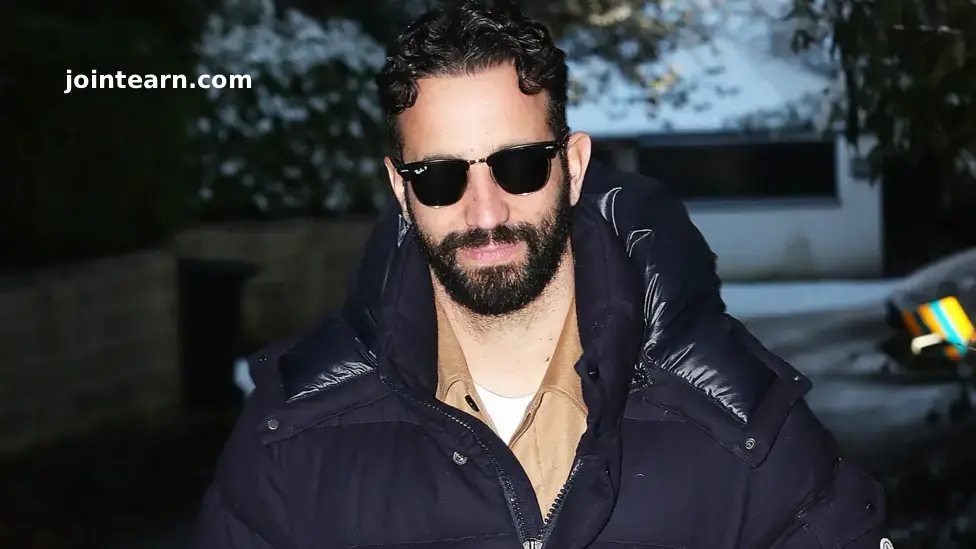
The defining image of Ruben Amorim’s brief and turbulent reign at Manchester United may not come from Old Trafford or a European night, but from a grim August evening in Grimsby. As United slumped to an astonishing 12–11 penalty shootout defeat in the Carabao Cup, becoming the first side in the club’s history to lose to a fourth-tier opponent, Amorim cut a forlorn figure in the dugout.
That moment proved prophetic. Just 14 months after his appointment, Amorim’s spell as Manchester United head coach ended in acrimony, controversy, and deep internal division.
A Promising Appointment That Quickly Unravelled
Amorim’s arrival was initially hailed as a forward-thinking move. United believed they were appointing a modern coach who could thrive within a new football structure rather than dominate it. Fresh from success at Sporting, the 40-year-old brought ideas, charisma, and a reputation as one of Europe’s brightest young tacticians.
But he also arrived with an unwavering commitment to his 3-4-3 system, and that rigidity soon became his undoing.
Despite repeated evidence that the squad was ill-suited to the formation, Amorim refused to compromise. He famously remarked that “even the Pope” could not convince him to change, a quote that would later be seen as emblematic of his stubbornness.
Tactical Inflexibility and Growing Internal Frustration
As results faltered, pressure mounted from all sides. Amorim repeatedly dismissed external criticism, but privately, club executives grew increasingly concerned.
The breaking point came in late December. After briefly reverting to a back four in a narrow win over Newcastle, Amorim inexplicably returned to a back three against Wolves—forcing Patrick Dorgu out of an effective attacking role and into an unfamiliar position.
The result? A 1–1 draw against a Wolves side with just two points all season, followed by boos from the stands and alarm bells ringing inside Carrington.
Technical director Jason Wilcox urged tactical flexibility. Amorim saw it as interference. United saw it as standard oversight.
Public Candour, Private Damage
One of Amorim’s defining traits was his openness with the media. He was compelling, articulate, and brutally honest—but often to his own detriment.
In the days leading up to his final match, a 1–1 draw with Leeds that left United sixth in the Premier League, Amorim made a series of comments hinting at fractures behind the scenes. His final press conference included a defiant statement that he “would not quit,” effectively forcing United’s hierarchy into a decision.
They chose to sack him.
Dressing Room Divisions and the ‘Bomb Squad’
Despite external turbulence, many players initially bought into Amorim’s methods. Training sessions were meticulous, detailed, and highly structured. Young talents like Kobbie Mainoo received granular instruction, down to foot placement and body shape.
But Amorim also alienated sections of the squad.
His decision to exile Marcus Rashford, Jadon Sancho, Antony, and Alejandro Garnacho—dubbed the “bomb squad”—raised eyebrows internally and damaged asset value. Garnacho’s marginalisation, in particular, left United with limited leverage when he pushed for a move to Chelsea.
Former captain Gary Neville openly questioned Amorim’s decisions, notably after deploying Mason Mount at left wing-back in a defeat at Brentford.
Recruitment, Responsibility, and a Shared Failure
United backed Amorim heavily, spending over £200m on new signings. But recruitment often contradicted his philosophy.
While Amorim pushed for Emiliano Martinez, the club refused, opting instead for younger goalkeeper Senne Lammens, backed by data and long-term planning. Elsewhere, United sold Scott McTominay only to spend more on Manuel Ugarte, who failed to feature in the Europa League final.
The failed pursuit of Antoine Semenyo—after promising him a left-wing role incompatible with a 3-4-3—highlighted the disconnect between coach and club vision.
The End at Carrington
By Monday morning, the situation had become untenable. Wilcox and chief executive Omar Berrada informed Amorim at Carrington that he had been relieved of his duties.
Despite United sitting sixth—roughly in line with pre-season expectations—the belief inside the club was that the squad could deliver significantly more with modest tactical adjustments.
Amorim’s refusal to adapt, combined with public criticism of players and resistance to internal feedback, sealed his fate.
Another Chapter in Manchester United’s Managerial Instability
Amorim now joins a growing list of managers who failed to restore United’s former glory: David Moyes, Louis van Gaal, Jose Mourinho, Ole Gunnar Solskjaer, Ralf Rangnick, and Erik ten Hag.
The spotlight now shifts firmly onto United’s hierarchy. From Sir Jim Ratcliffe’s “best in class” vision to the roles of Berrada and Wilcox, questions persist over decision-making, squad planning, and long-term strategy.
A new manager may arrive, but many inside and outside the club believe Manchester United’s problems run far deeper than formation or philosophy.


Leave a Reply