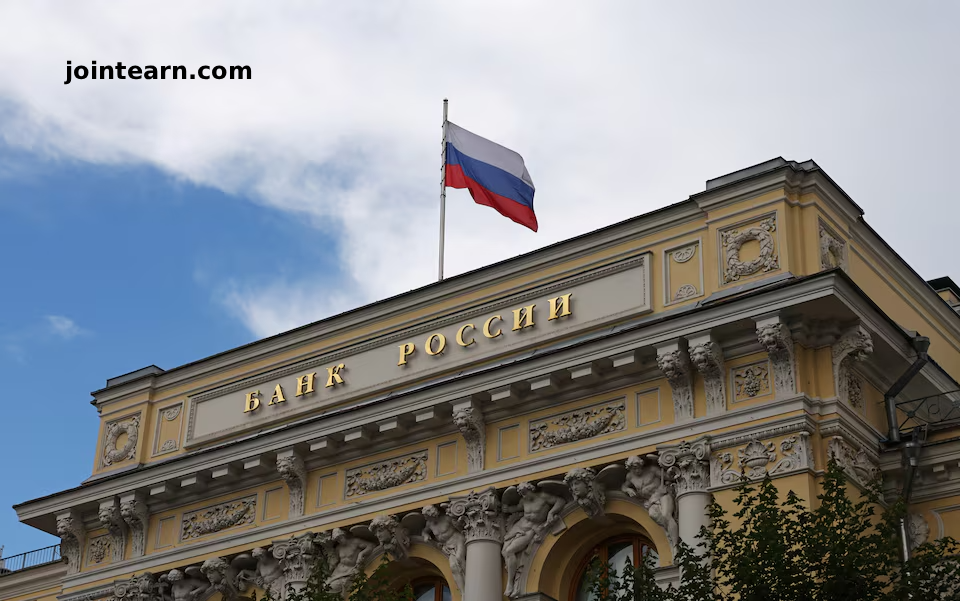
MOSCOW, Nov 27, 2025 – Russia’s central bank said on Thursday that a surge in global gold purchases—especially among emerging market central banks—is being fueled by the Group of Seven (G7) countries’ move to potentially seize or leverage Russia’s frozen sovereign assets.
Gold prices have been on an extraordinary tear in 2025, rising 59% year-to-date, marking the metal’s strongest annual performance since 1979. The precious metal hit an all-time record of $4,381 per troy ounce on Oct. 20, driven by safe-haven demand amid geopolitical conflict, uncertainty over U.S. trade policy, and doubts around global economic growth.
Emerging Markets Increase Gold Buying to Reduce Reserve Risk
In its Thursday statement, the Bank of Russia said that emerging market economies were accelerating gold purchases to rebalance their reserves and shield themselves from geopolitical and financial risks—risks highlighted by Western attempts to repurpose Russia’s frozen assets.
The central bank noted that global investors, too, were increasingly turning to gold as economic signals remain mixed.
“Demand for the precious metal continues to grow due to global growth uncertainty,” the Bank of Russia said.
“At the same time, gold is receiving additional support from steady buying by central banks in emerging markets, which are diversifying their international reserves amid G7 discussions on the use of frozen Russian assets.”
G7 Debates Fate of Russia’s $300 Billion in Frozen Assets
Since the invasion of Ukraine, roughly $300 billion in Russian sovereign assets have been frozen internationally.
Of that:
- €210 billion are held in Europe
- €185 billion sit in Euroclear, the Brussels-based securities depository at the center of the freeze
G7 nations have been exploring options including using the assets as collateral for loans to Ukraine, capturing profits generated by the frozen funds, or in more aggressive scenarios, seizing the assets outright. Moscow has repeatedly warned that any such move would undermine global trust in Western-controlled financial systems.
Russia’s Own Reserves Remain Strong
As debates continue, Russia’s own reserves remain substantial.
The country’s gold and foreign exchange reserves totaled $734.1 billion as of Nov. 14, according to the latest central bank data.
With geopolitical tensions rising and major economies questioning their exposure to dollar- and euro-denominated reserves, analysts say the global reallocation into gold could continue well into 2026.


Leave a Reply