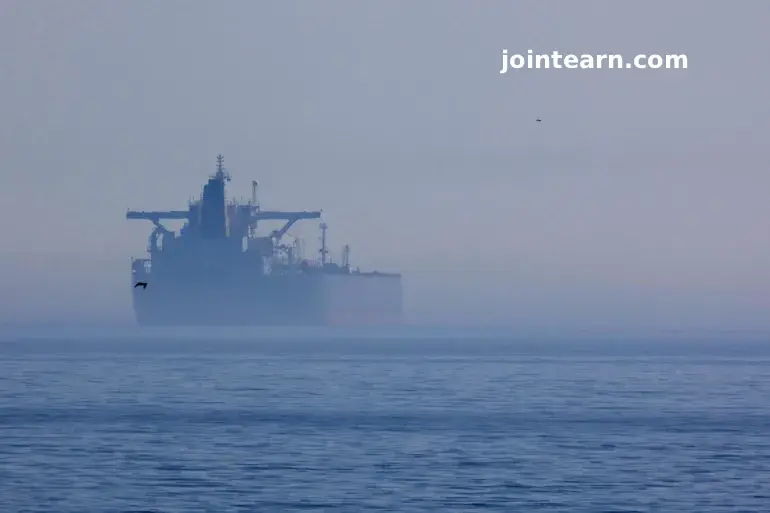
A Russian-flagged tanker sailing in the Black Sea has reportedly been struck near the Turkish coast, marking the third attack on vessels linked to Moscow within a single week. The incident highlights Ukraine’s escalating campaign against Russia’s so-called “shadow fleet” — a network of ships used to move sanctioned crude oil.
Ukraine Continues to Target Russia’s Sanctions-Evading Fleet
According to the Turkish Directorate General of Maritime Affairs, the vessel Midvolga-2 issued a distress report on Tuesday after coming under attack roughly 130km (80 miles) offshore. The ship, which was transporting sunflower oil to Georgia, did not request emergency assistance and is said to be heading safely toward the Turkish port of Sinop with all 13 crew members unharmed.
Local Turkish media reported that a kamikaze naval drone may have been used in the strike — a tactic Ukraine has increasingly relied on to hit distant targets in the Black Sea.
The incident comes shortly after Ukraine struck two other Russian-flagged tankers — the Kairos and Virat — last Friday. Kyiv says both ships were part of a covert logistics network helping Russia move oil in violation of international sanctions.
Ankara Warns of a ‘Dangerous Escalation’
The back-to-back attacks prompted a sharp reaction from Turkish President Recep Tayyip Erdoğan, who warned that targeting commercial vessels risks a serious escalation of the Russia-Ukraine conflict.
“We cannot condone attacks that endanger navigational safety, human life, and the marine environment — especially inside our exclusive economic zone,” Erdoğan said in a televised statement.
Turkey said it has already communicated its concerns to all relevant parties, including Ukrainian authorities.
A Turkish official told Reuters that diplomatic messages had been sent immediately following the latest strike.
The Shadow Fleet: How Russia Moves Sanctioned Oil
Ukraine has identified Russian oil exports as a key source of funding for Moscow’s war effort and has expanded its strikes on tankers, crude terminals, and refineries in recent months.
A report from the Centre for Research on Energy and Clean Air (CREA) found that in the first nine months of 2025 alone:
- 113 vessels belonging to Russia’s shadow fleet sailed under false flags
- They transported around 11 million tonnes of crude
- The shipments were valued at roughly €4.7 billion ($5.4bn)
These ships frequently change names, IDs, and registration flags to evade sanctions and insurance requirements.
Turkey Walks a Fine Diplomatic Line
As a NATO member, Turkey has supplied military equipment to Ukraine — including drones — yet it has refused to join Western sanctions on Russia. Throughout the war, Ankara has tried to maintain diplomatic channels with both sides, even hosting multiple rounds of peace negotiations since the full-scale invasion began in 2022.
Turkey insists that freedom of navigation in the Black Sea must be protected. The latest tanker attacks risk undermining that balance and could force Ankara into a more assertive stance.
Russia Calls the Attacks ‘Terrorism’
Moscow condemned the recent strikes, calling them “acts of terrorism” that threaten international shipping. Russia claims the attacks undermine the stability of maritime routes that many nations rely on.
Meanwhile, Ukraine continues to face heavy bombardment of its own energy infrastructure, strengthening Kyiv’s resolve to strike back at Russia’s oil supply chain. On Tuesday, Russian authorities reported that a Ukrainian drone triggered a fire at an oil facility in the Oryol region.


Leave a Reply