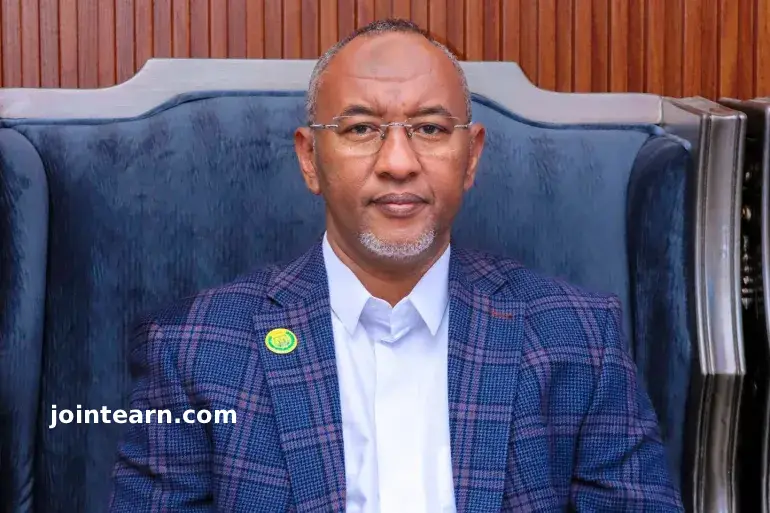
Hargeisa, Somaliland – A senior official from Somaliland’s ruling Waddani party has defended the breakaway region’s decision to establish diplomatic relations with Israel, dismissing widespread criticism from Arab and Muslim countries as hypocritical and politically motivated.
In an exclusive interview with Al Jazeera Mubasher on January 8, Hersi Ali Haji Hassan, chairman of the Waddani party, emphasized that Somaliland had “no choice” but to seek recognition from Tel Aviv after decades of international isolation.
“We are in a state of necessity for official international recognition. There is no choice before us but to welcome any country that recognises our existential right,” Hassan said.
Israeli Foreign Minister Visits Hargeisa
The comments come after a controversial visit by Israeli Foreign Minister Gideon Saar to Hargeisa, Somaliland’s largest city, marking the first such trip since Israel formally recognized the region’s independence in late December 2025.
The visit has sparked a diplomatic storm, with Somalia’s federal government denouncing the visit as a violation of sovereignty. Similarly, the Arab League and the Organisation of Islamic Cooperation (OIC) condemned the move, calling it a “separatist reality.”
Hassan, however, dismissed these statements:
“We have been an independent state for 34 years. The rejection of the Arab League does not matter to us at all. They did not accept us as a member … and we did not receive any attention from Arab countries.”
Strategic and Regional Considerations
Hassan highlighted that Somaliland’s engagement with Israel is part of a broader trend in the region, noting that other Arab nations—including Egypt, Jordan, Turkey, and the UAE—maintain political and economic ties with Israel.
Regional observers have raised concerns that Israel may seek a military foothold at the southern entrance to the Red Sea. When pressed on the possibility of an Israeli military base in Somaliland, Hassan neither confirmed nor denied such plans:
“We have started diplomatic relations… This topic [a military base] has not been touched upon now. Ask the question when the time comes… The question is untimely.”
Hassan stressed that current relations are focused on diplomatic and economic recognition, aimed at securing Somaliland’s long-sought legitimacy on the international stage.
Separating Politics from Religion
During the interview, Hassan was challenged on the ethical implications of aligning with Israel amid the ongoing conflict in Gaza, which has affected two million Palestinians. Hassan sought to separate political diplomacy from religious solidarity, emphasizing that Somaliland’s actions are pragmatic:
“We deal with Israel politically. Political dealing is not something religion forbids… Our stance on the Palestinian people is similar to the stance of Arab and Islamic countries. We are far from these problems. We are looking for international recognition… That is the key.”
He also referenced a US-brokered ceasefire in Gaza from October 2025, arguing that regional violence had been paused, making political engagement with Israel feasible.
The Path Forward for Somaliland
Hassan defended Somaliland’s approach as necessary after decades of isolation. For 34 years, the breakaway region has struggled to achieve international recognition, despite functioning as a de facto independent state.
The government of Somaliland views ties with Israel as a strategic step to break diplomatic isolation, attract investment, and secure a stronger role in regional geopolitics, especially given the Red Sea’s critical trade routes and strategic importance.
“We are in a state of necessity. Recognition is the key to survival and development for Somaliland,” Hassan concluded.


Leave a Reply