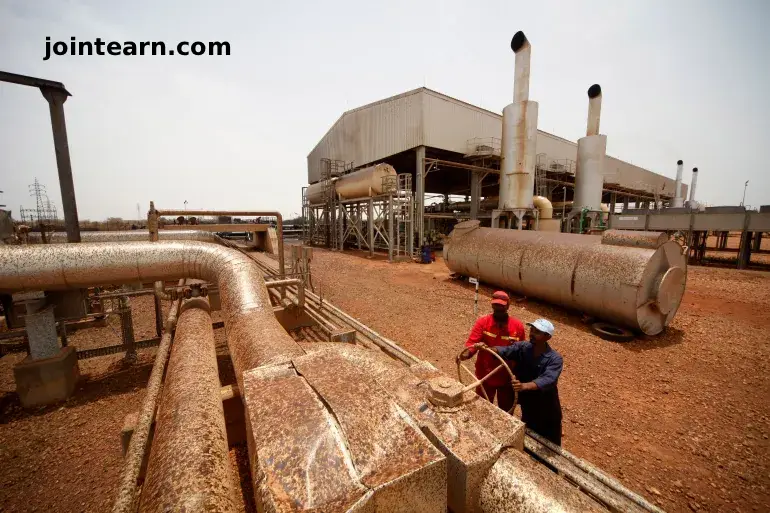
South Sudan’s military has been deployed to the Heglig oilfield, following an unprecedented agreement with Sudan’s warring factions to protect the region’s critical energy infrastructure from the ongoing civil war. The deployment comes after the paramilitary Rapid Support Forces (RSF) captured the strategic site on December 8, forcing Sudanese Armed Forces (SAF) units to retreat across the border into South Sudan, surrendering their weapons in the process.
The move reflects the growing spillover of Sudan’s internal conflict into neighboring South Sudan, highlighting the economic and strategic importance of the Heglig oilfield, which is Sudan’s largest oil-producing site and the main processing facility for South Sudanese crude.
Tripartite Agreement and Neutrality
South Sudanese forces entered the oilfield under a tripartite agreement involving President Salva Kiir, SAF chief Abdel Fattah al-Burhan, and RSF leader Mohamed Hamdan Dagalo (Hemedti). According to South Sudan People’s Defence Forces Chief of Staff Paul Nang, both Sudanese factions agreed to withdraw from the area, allowing South Sudanese troops to maintain strict neutrality.
The deployment was designed to neutralize Heglig from any combat operations and prevent sabotage, ensuring the safety of both the oilfield and its personnel. Tribal leaders also played a key role in facilitating coordination and evacuation of workers.
This operation builds on a previous oil and security cooperation agreement between Khartoum and Juba, which stipulates protection of oil fields, pipelines, pumping stations, and electricity interconnection projects vital for South Sudan’s energy sector.
Background: RSF Advance and Drone Attack
The RSF’s capture of Heglig came amid escalating fighting in Sudan’s Kordofan region, shifting the conflict’s center of gravity from Darfur. On the night before South Sudanese deployment, a deadly drone strike killed dozens, including three South Sudanese soldiers. Local reports indicated that seven tribal leaders and multiple RSF personnel were also killed in the attack.
Approximately 3,900 SAF soldiers crossed into South Sudan’s Rubkona County, surrendering tanks, armored vehicles, and artillery to South Sudanese authorities. Thousands of civilians have fled across the border, compounding the humanitarian crisis in the region.
Strategic and Economic Significance of Heglig
The Heglig oilfield is South Sudan’s primary oil export hub, with a central processing facility capable of handling up to 130,000 barrels per day of crude oil. The site also includes Block 6, Sudan’s largest producing field, making it critical for the economies of both countries.
Jan Pospisil, a South Sudan expert at Coventry University, explained the strategic calculus:
“From the SAF’s perspective, they don’t want the RSF to find another possible revenue stream, and it is better for South Sudan to take control of the area. The RSF can’t effectively defend against air attacks by the SAF, as we saw with this drone strike.”
The deployment prevents further destabilization of the oil sector while the conflict continues, preserving a vital revenue source for both nations.
Humanitarian Crisis and International Concerns
The fighting has triggered mass displacement, with the International Organization for Migration reporting more than 1,000 people fleeing South Kordofan province in just two days. Refugees at the Tawila camp continue to arrive, with some forced to sleep outdoors due to insufficient resources.
UN human rights chief Volker Turk expressed concern over the potential for mass atrocities in Kordofan, referencing RSF advances in the region as a repeat of previous atrocities in el-Fasher. The Global Centre for the Responsibility to Protect echoed this warning, highlighting the severity of the humanitarian crisis.
Medical groups in Darfur, including the Sudan Doctors Network, report severe overcrowding in RSF detention centers, with more than 19,000 detainees, including medical personnel. Cholera outbreaks and inadequate healthcare have resulted in multiple deaths weekly due to medical neglect.
Looking Ahead
The deployment of South Sudanese troops to Heglig represents a rare example of regional cooperation amidst a volatile civil war. By safeguarding the oilfield and ensuring neutrality, South Sudan is playing a critical role in preventing the conflict from spiraling further and in protecting one of the region’s most important economic lifelines.
International observers continue to monitor the situation closely, emphasizing the need to protect civilians, infrastructure, and cultural sites while preventing further escalation between the RSF and SAF.


Leave a Reply