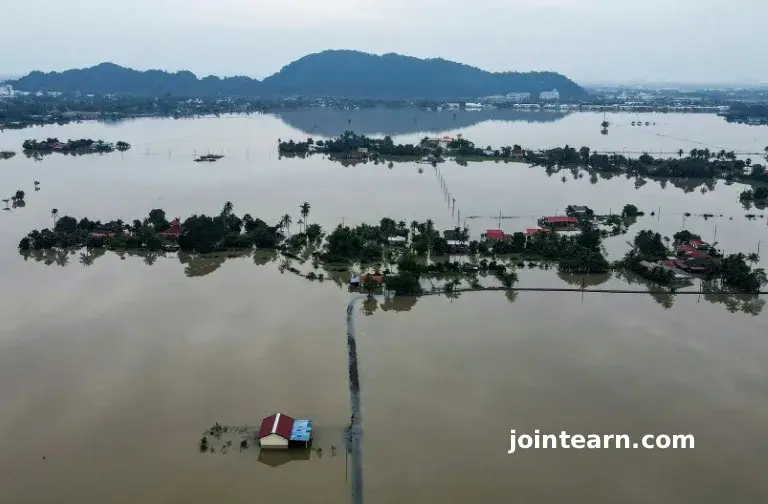
Flooding across Southeast Asia has claimed more than 150 lives over the past several days, with authorities scrambling to reach residents stranded in submerged homes or isolated by debris-blocked roads. The disaster has impacted Indonesia, southern Thailand, and northern Malaysia, leaving entire communities cut off from electricity and communications.
Indonesia: North Sumatra Hit Hard
The worst-hit region in Indonesia is North Sumatra, where flooding and landslides have killed at least 111 people, with nearly 100 others reported missing. North Sumatra police spokesman Ferry Walintukan said authorities are focusing on evacuation and assistance, but access to many affected areas remains difficult.
In Medan, residents waded through murky brown floodwaters that reached hip level, while others donned rain gear to navigate streets. Local officials are awaiting a break in the weather so helicopters can reach the most severely affected locations.
In West Sumatra, residents like 53-year-old Misniati recounted the harrowing struggle to reach loved ones as waters surged to chest level, leaving families sleepless and on constant alert throughout the night.
Contributing Factors
While the region’s monsoon season, typically occurring between June and September, usually brings heavy rainfall and occasional landslides, the severity of the current flooding has been exacerbated by a recent tropical storm.
Experts cite climate change as a factor in intensifying storms, with warmer temperatures increasing moisture in the atmosphere and producing heavier, more destructive rainfall events. Deforestation and overdevelopment, including palm oil plantations and mining, have also reduced natural water regulation, worsening flood impacts, according to Uli Arta Siagian of Indonesian environmental group WALHI.
Southern Thailand: Songkhla Province Overwhelmed
Thailand has also faced catastrophic flooding, particularly in Hat Yai and surrounding areas of Songkhla province, where floodwaters forced residents to climb onto rooftops awaiting rescue. At least 55 deaths have been reported, and the main hospital morgue has reached capacity, necessitating the use of refrigerated trucks to store bodies.
Residents described floodwaters reaching the second-floor ceilings, with shops and homes inundated waist-deep, leaving many with little choice but to flee to safety. The Thai government suspended Hat Yai’s district chief amid allegations of a slow response to the disaster.
Malaysia: Northern States Impacted
In northern Malaysia, heavy rain triggered by the same weather system caused flooding in Perlis state, resulting in two fatalities and forcing evacuations in multiple areas. The storm, now downgraded to a depression, continues to dump rain on already saturated ground, increasing the risk of further flooding and landslides.
Emergency Response and Challenges
Across the region, emergency responders face extreme difficulties reaching stranded residents. Roads and bridges have been destroyed, communication lines cut, and floodwaters blocked access to hospitals and relief centers. Authorities in all affected countries are working to provide temporary shelters, food, and medical care for thousands of displaced people.
The ongoing disaster highlights the urgent need for improved flood management, stricter urban planning, and increased attention to climate resilience measures in Southeast Asia.


Leave a Reply