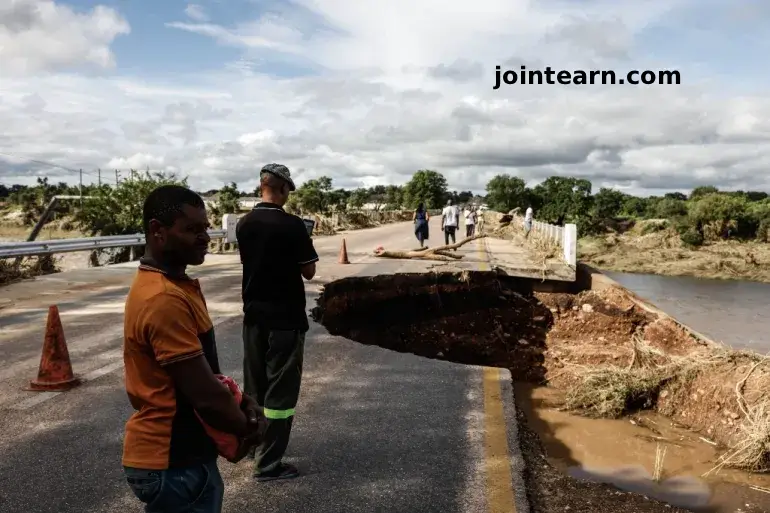
Torrential rains across Southern Africa have claimed the lives of more than 100 people, leaving hundreds of thousands displaced and triggering massive rescue operations. Governments in Mozambique, South Africa, and Zimbabwe are grappling with the aftermath of the flooding, as weather authorities warn that more destructive rains may still be on the way.
Devastating Rains Overwhelm Infrastructure and Communities
Weeks of heavy rainfall have battered the region, causing rivers to overflow, roads to collapse, and entire communities to become isolated. In South Africa, the northern provinces of Limpopo and Mpumalanga have been among the hardest hit. Officials reported at least 30 deaths in these areas alone.
Rescue efforts have been urgent and widespread. Army helicopters have been deployed to evacuate residents stranded on rooftops, trees, and flood-encircled neighborhoods. Security personnel were also forced to evacuate from a border checkpoint with Zimbabwe due to rising floodwaters.
President Cyril Ramaphosa toured the hardest-hit areas in Limpopo, reporting rainfall of around 400mm (16 inches) in less than a week. In one district, he revealed, “there are 36 houses that have just been wiped away from the face of the earth.” Limpopo Premier Phophi Ramathuba said that over 1,000 homes have been damaged, describing the situation as “so terrible.”
Zimbabwe Confronts Widespread Flooding and Damage
Across the border in Zimbabwe, the government’s disaster management agency reported at least 70 deaths since the start of the year. More than 1,000 homes have been destroyed, and schools, roads, and bridges have collapsed under the force of floodwaters.
Authorities have urged communities in low-lying regions to evacuate immediately. Emergency shelters have been set up to accommodate families displaced by the floods, which have left many vulnerable to disease and food shortages.
Mozambique Bears the Brunt of the Flood Crisis
Mozambique has been hardest hit, with the nation’s disaster management agency reporting 103 deaths linked to the severe rainy season. The fatalities include victims of flooding, lightning strikes, infrastructure collapse, and cholera outbreaks caused by contaminated water supplies.
More than 200,000 people have been affected nationwide, with thousands of homes damaged and tens of thousands evacuated to safer areas. Floodwaters have submerged over 70,000 hectares (173,000 acres) of crops, worsening food insecurity for small-scale farmers in a country already grappling with poverty and repeated cyclones.
Residents in the Boane district near the capital, Maputo, were seen being transported across flooded roads on military trucks, highlighting the scale of the humanitarian crisis.
La Niña and Climate Patterns Contribute to Flooding
Experts have linked the unusually severe rainfall to the La Niña phenomenon, which often brings heavier-than-average rains to Southern Africa. The United States Famine Early Warning System reported flooding in at least seven countries in the region, raising concerns about the impact on agriculture, water supplies, and livelihoods.
The crisis is further compounded by the region’s vulnerability to climate-driven disasters. Over the past decade, Southern Africa has faced a series of extreme weather events, including deadly cyclones, prolonged droughts, and severe storms, highlighting the fragility of infrastructure and disaster preparedness.
Tourist Sites and Wildlife Areas Affected
Even South Africa’s Kruger National Park, one of the country’s premier wildlife destinations, has been affected. Approximately 600 tourists and staff were evacuated from flood-impacted camps. While no injuries or deaths have been reported in the park, many areas remain inaccessible due to rivers bursting their banks.
Humanitarian Response and Ongoing Challenges
Humanitarian agencies, including the World Food Programme (WFP), are actively coordinating relief efforts, providing emergency food, shelter, and medical support. The widespread crop damage threatens food security, particularly for rural communities reliant on small-scale farming.
Authorities continue to monitor water levels, weather forecasts, and flood-prone areas. Governments have urged residents to remain vigilant, evacuate where necessary, and heed safety warnings as heavy rains continue across Southern Africa.


Leave a Reply