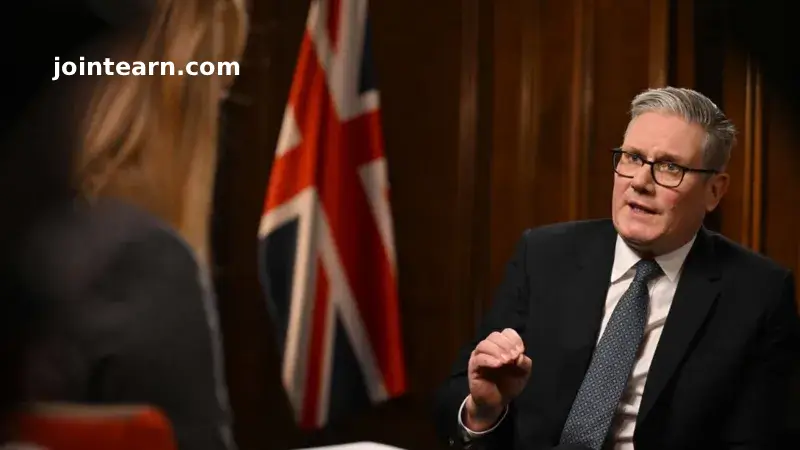
UK Prime Minister Sir Keir Starmer has expressed regret for welcoming British-Egyptian activist Alaa Abd El Fattah to the UK, following the resurfacing of old social media posts in which the activist appeared to endorse violence and make offensive statements about Zionists and white people. Speaking to the BBC’s Sunday with Laura Kuenssberg, Starmer described the posts as “abhorrent” and admitted he should have been made aware of them before facilitating Abd El Fattah’s entry.
The resurfaced posts, dating back to 2012, have prompted criticism from opposition parties, senior Labour MPs, and Jewish community leaders. Some have called for Abd El Fattah to be stripped of his British citizenship due to the nature of the posts.
Starmer’s Response
The prime minister reiterated that he did not know about Abd El Fattah’s social media history when he welcomed him to the UK after his release from an Egyptian prison on Boxing Day. He told the BBC:
“Of course I regret that. Those posts are abhorrent. As I’ve made clear, I didn’t know about those comments at the time of welcoming El Fattah to this country.”
Starmer confirmed he had launched a review to investigate what he described as a “failing in the system,” aimed at ensuring that similar oversights do not occur in future.
“I do think I should have been made aware and I wasn’t,” he said. “Yes, it’s a failing within the system. It shouldn’t have happened and I wasn’t very pleased about it when I found out, hence we’re taking remedial action.”
He added that Abd El Fattah’s case had been treated primarily as a consular issue, as the government has a duty to protect British nationals abroad. Starmer emphasized that previous prime ministers acted in the same way, intervening to secure his release from what human rights groups considered unfair detention in Egypt.
Background on Alaa Abd El Fattah
Alaa Abd El Fattah, 44, is a prominent Egyptian political dissident and dual British citizen, granted citizenship in December 2021 through his London-born mother. He had been imprisoned in Egypt for 12 years, with his latest conviction linked to sharing a Facebook post highlighting torture in the country.
His release followed years of campaigning by his family, supported by celebrities such as Judi Dench and Olivia Colman, as well as diplomatic lobbying by successive UK governments. Abd El Fattah flew to the UK to reunite with his 14-year-old son in Brighton.
Controversial Social Media Posts
After his arrival, Abd El Fattah’s social media posts from 2012 resurfaced, showing comments such as:
- “Killing any colonialists and specially Zionists is heroic, we need to kill more of them.”
- “I am a racist, I don’t like white people.”
- “Police do not have rights and we should kill them all.”
These posts prompted condemnation from the Board of Deputies of British Jews, whose senior vice-president, Adrian Cohen, said the posts posed a threat to British Jews and the wider public.
Shadow justice secretary Robert Jenrick stated that Abd El Fattah’s views were “extremist and incompatible with British values,” suggesting he should “live in Egypt or frankly anywhere else in the world.”
Reform UK leader Nigel Farage also criticized past governments for allowing Abd El Fattah into the UK, calling the situation an example of “opening our doors to evil people” and advocating for changes to citizenship laws to allow deportation.
Abd El Fattah’s Apology
Alaa Abd El Fattah has issued an apology, describing the comments as “expressions of a young man’s anger.” However, BBC News reported that shortly after his apology, he liked a Facebook post defending himself, which criticized media coverage as part of a “relentless smear campaign” by powerful international actors.
Experts note that stripping a person of British citizenship is typically reserved for individuals involved in terrorism or serious organized crime who are considered national security threats.
Next Steps
Prime Minister Starmer has committed to reviewing the system that allowed the oversight to occur, aiming to ensure that thorough background checks are conducted for high-profile cases involving dual nationals or politically sensitive individuals.
“This is a failing in the system, and we’re taking remedial action,” Starmer said.
The incident highlights the complexities of consular intervention, citizenship law, and social media scrutiny, and is likely to remain a topic of political debate in the UK in the coming weeks.


Leave a Reply