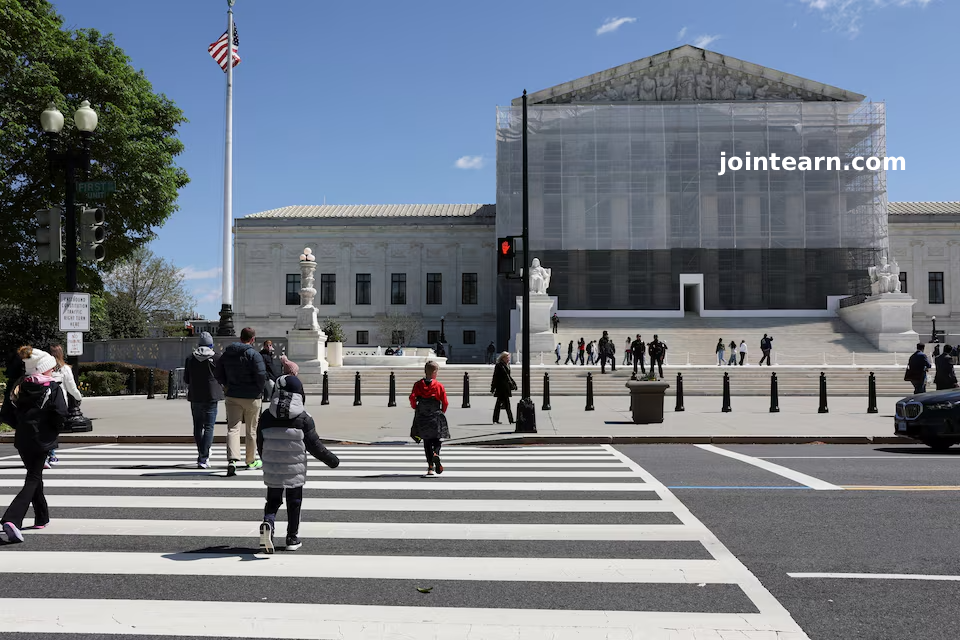
WASHINGTON, Nov. 26, 2025 – The U.S. Supreme Court has temporarily left in place Shira Perlmutter, the U.S. register of copyrights and head of the Copyright Office, while it considers whether former President Donald Trump can remove her. The decision postpones any immediate action on the Justice Department’s request to override a lower court’s block on her firing.
Background
Perlmutter was notified of her termination on May 10, 2025, a day after her office circulated a report stating that certain unauthorized uses of copyrighted works by tech companies for training generative AI systems may be unlawful. Legal filings suggest Trump sought to remove her because he disagreed with the findings.
Trump also fired Librarian of Congress Carla Hayden in May and appointed Todd Blanche, his former attorney and then-Deputy Attorney General, as acting head of the Library of Congress, which oversees the Copyright Office. Blanche attempted to ratify Perlmutter’s removal.
Perlmutter filed suit on May 22, arguing Trump lacked authority to fire her because the Library of Congress and the Copyright Office are part of the legislative branch, not the executive.
Lower Court Rulings
- In July, District Judge Timothy Kelly, a Trump appointee, denied Perlmutter’s request to block her removal, citing a lack of “irreparable harm.”
- In September, a D.C. Circuit Court panel reinstated her while the case proceeds, with Judge Florence Pan writing that the president’s attempt was akin to trying to fire a legislative branch official based on advice given to Congress.
Supreme Court Action
The Supreme Court indicated it will address Perlmutter’s case after hearing two related cases: Trump’s attempt to remove Federal Trade Commission member Rebecca Slaughter (Dec. 8) and Federal Reserve Governor Lisa Cook (Jan. 21). Conservative Justice Clarence Thomas dissented, stating he would have granted the Justice Department’s request to allow the firing.
Reactions
Skye Perryman, president of Democracy Forward, representing Perlmutter, said the court’s action is a “victory for rule of law, separation of powers, and the independence of the Library of Congress.”
The Justice Department declined to comment. The case underscores ongoing debates over the limits of presidential authority, particularly regarding legislative branch officials.


Leave a Reply