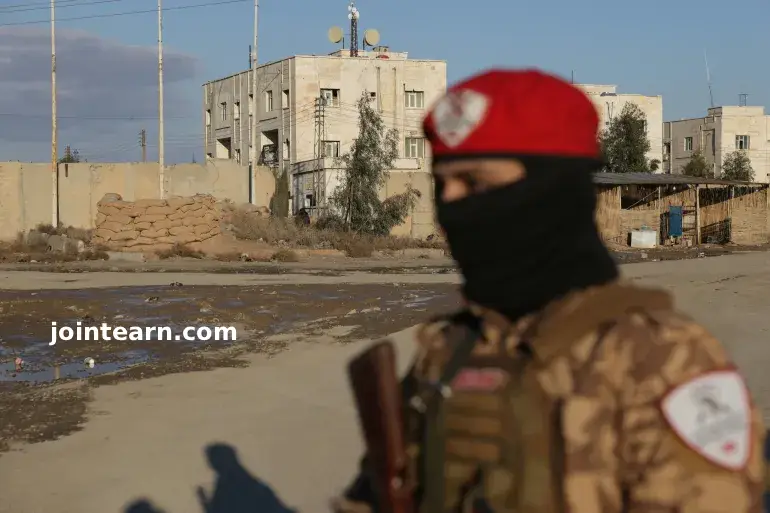
Al-Shaddadi, Syria – Renewed clashes between the Syrian army and the Kurdish-led Syrian Democratic Forces (SDF) in northeastern Syria have cast doubt on a newly announced ceasefire, after dozens of ISIL (ISIS) detainees escaped from a prison during the fighting.
Syria’s Interior Ministry confirmed on Tuesday that 81 out of approximately 120 ISIL prisoners who fled the al-Aqtan prison in the city of al-Shaddadi, located in Hasakah province, have since been recaptured, with security forces continuing their search for the remaining fugitives.
Curfew Imposed After Prison Break
According to Syria’s state news agency SANA, authorities imposed a curfew across al-Shaddadi after violence erupted around the prison complex late on Monday. The clashes occurred just one day after a ceasefire agreement was reached between Syrian President Ahmed al-Sharaa and SDF commander Mazloum Abdi (Mazloum Kobani).
The Syrian army told Al Jazeera that its forces have now taken full control of al-Shaddadi, including the prison housing suspected ISIL members. Troops are reportedly conducting extensive search-and-sweep operations in surrounding neighborhoods and rural areas to prevent any regrouping by escaped fighters.
Interior Ministry Takes Control of Prison Facilities
Syria’s Interior Ministry said control of al-Aqtan prison and other key security installations in the city has been transferred from military oversight to the Ministry of Interior, signaling a shift toward tighter central government control.
“The process of arresting the remaining escaped detainees is ongoing,” the ministry said, according to Reuters.
Conflicting Accounts of How ISIL Detainees Escaped
Both sides have traded accusations over the prison break:
- The Syrian army claims the SDF intentionally released ISIL detainees amid the chaos.
- The SDF denies the accusation, stating it lost control of the prison after it was attacked by government forces, a claim the Syrian military has rejected.
The SDF said nine of its fighters were killed and 20 wounded in clashes around the prison. The group also said it repeatedly called on the US-led international coalition fighting ISIL to intervene from a nearby base, but no assistance was provided.
Ceasefire Under Strain After Heavy Fighting
The clashes have raised serious questions about the durability of the ceasefire, which was intended to halt weeks of escalating violence between Damascus and the Kurdish-led forces.
Despite the unrest, Syria’s presidency said President al-Sharaa spoke by phone with US President Donald Trump on Monday. According to an official statement, the two leaders discussed:
- The protection of Kurdish rights within the Syrian state
- The unity and territorial integrity of Syria
- Continued cooperation to combat ISIL remnants
The call signaled rare diplomatic engagement between Damascus and Washington at a moment of heightened instability.
Strategic Shifts in Northeastern Syria
Following the ceasefire agreement reached over the weekend, the Syrian government announced that the SDF had agreed to withdraw from several territories it has controlled for years, including:
- Raqqa, once the de facto capital of ISIL
- Deir Az Zor, home to Syria’s most important oil and gas fields
However, Hasakah province, where al-Shaddadi is located, remains largely under SDF influence, making it a focal point of tension between the two sides.
ISIL Threat Persists Despite Defeat
Although ISIL was militarily defeated in Iraq in 2017 and Syria in 2019, the group continues to pose a significant security threat through sleeper cells, prison break attempts, and targeted attacks.
Large detention facilities holding thousands of suspected ISIL members have long been considered high-risk, with international observers warning that instability or power struggles could enable mass escapes.
Regional and International Implications
The renewed fighting highlights the fragile balance of power in northeastern Syria, where Syrian government forces, the SDF, US-led coalition troops, and remnants of ISIL operate in close proximity.
Analysts warn that any collapse of the ceasefire could:
- Undermine counter-ISIL operations
- Trigger broader displacement of civilians
- Draw in external actors, including the United States and regional powers
For now, Syrian authorities say security has been restored in al-Shaddadi, but events on the ground suggest the situation remains volatile.


Leave a Reply