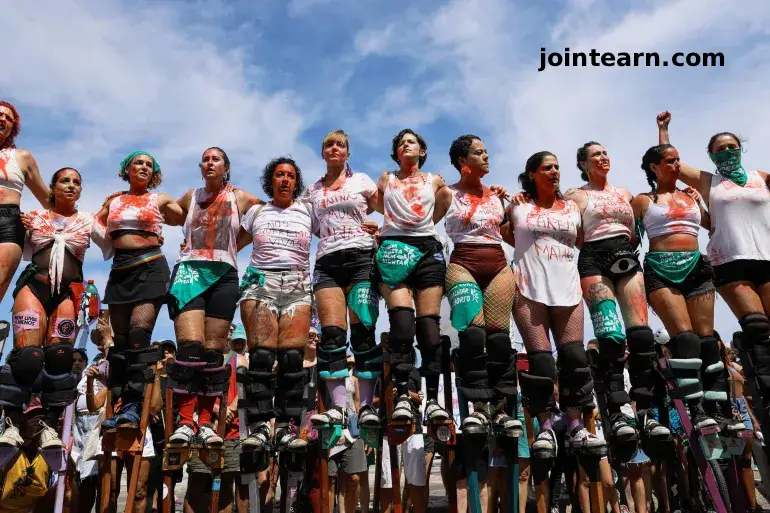
Tens of thousands of people took to the streets across Brazil on December 7, 2025, in a nationwide protest against femicide, rape, and gender-based violence. Demonstrators, including women of all ages and some men, marched in Rio de Janeiro, Sao Paulo, Florianopolis, and other major cities, calling for urgent action to protect women from growing threats.
Powerful Demonstrations and Messages
In Rio de Janeiro’s Copacabana, protesters placed dozens of black crosses to symbolize women who lost their lives to violence. Many carried stickers and banners reading “Machismo kills”. In Sao Paulo, demonstrators chanted “Stop killing us” and held placards stating “Enough of femicide”, highlighting the urgent need for legislative and social change.
Among the participants was Alline de Souza Pedrotti, whose sister was killed on November 28 by a male colleague unwilling to accept female supervisors. Pedrotti described her grief while expressing determination to push for legal reforms and preventive measures:
“I’m devastated, but I won’t stop. I want changes in the legislation and new protocols to prevent this kind of crime from happening again.”
Shocking Recent Cases Spur Nationwide Outcry
The protests were fueled by a string of highly publicized incidents in recent weeks. In Sao Paulo, 31-year-old Taynara Souza Santos was run over by her ex-boyfriend and dragged one kilometre, resulting in the amputation of her legs. Video footage of the attack went viral, sparking national outrage.
In Florianopolis, English teacher Catarina Kasten was raped and strangled while walking to a swimming lesson on November 21. These incidents were described by many as “the final straw”, prompting renewed calls for government action against gender-based violence.
The Legal Context of Femicide in Brazil
Brazil recognized femicide as a specific crime in 2015, defined as the killing of a woman motivated by contempt for her gender or occurring in domestic settings. Despite this, femicide rates continue to rise: 1,492 women were killed in 2024, marking the highest number since the law’s enactment, according to the Brazilian Forum on Public Safety.
Juliana Martins, expert in gender-based violence, noted:
“We’re seeing not only an increase in numbers but also the intensity and cruelty of violence. Social transformations seeking equality generate violent responses aimed at reaffirming women’s subordination.”
Calls for Cultural Change
Protesters emphasized that tackling femicide and misogyny requires cultural as well as legal reforms. Joao Pedro Cordao, a father of three daughters, stressed the role of men in combating gender violence:
“Men must stand with women, not only at protests but in daily life. Only then can we reduce violence against women.”
Meanwhile, Lizete de Paula, 79, highlighted how the dismantling of women’s rights policies during former President Jair Bolsonaro’s administration contributed to a climate of empowerment for men who hate women.
Growing Visibility and Activism
Despite the ongoing violence, more women are speaking out, gaining public visibility and rallying for equal rights and representation. The protests in Rio, Sao Paulo, and other cities reflect a nationwide movement demanding stronger legal protections, preventive measures, and societal change to address femicide and gender-based violence in Brazil.


Leave a Reply