Thailand has formally demanded that Cambodia unilaterally declare a ceasefire as a prerequisite for ending the latest round of deadly clashes between the two Southeast Asian neighbours. Bangkok insists that Phnom Penh, which it accuses of initiating hostilities, must take the first step toward de-escalation and demonstrate genuine cooperation on border security issues, including landmine clearance.
Speaking at a press briefing in Bangkok on Tuesday, Thai Foreign Ministry spokesperson Maratee Nalita Andamo said Cambodia must publicly announce a halt to fighting before any negotiations can move forward.
“As the aggressor onto Thai territory, Cambodia must announce the ceasefire first,” she said, according to AFP.
Thailand also called on Cambodia to cooperate “sincerely” in efforts to remove landmines along disputed border areas, which officials say continue to pose a threat to civilians and military personnel.
No Immediate Response from Cambodia
As of Tuesday, Cambodian authorities had not issued an official response to Thailand’s demand. Both governments have accused each other of provoking the violence, claiming their military actions are defensive and blaming the opposing side for attacks that have endangered civilians.
The fighting has intensified diplomatic tensions between the two countries, which share an 817-kilometre (508-mile) land border that has long been a source of territorial disputes.
Deadly Clashes and Mass Displacement
The renewed conflict began after a border skirmish on December 7, reigniting tensions that had previously been suppressed by an internationally backed ceasefire. Since then, clashes across multiple border locations have resulted in at least 32 deaths, including both soldiers and civilians, according to officials from both sides.
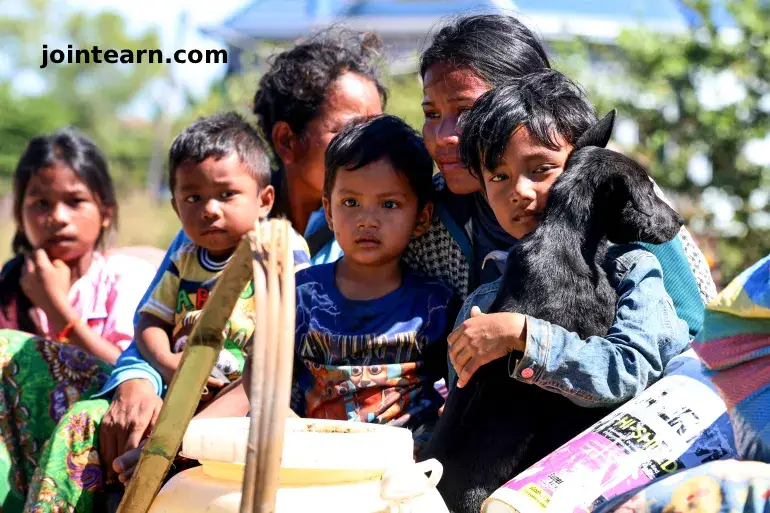
The violence has also triggered a major humanitarian crisis, with an estimated 800,000 people displaced in Thailand and Cambodia. Many residents have fled their homes amid shelling, air attacks, and rocket fire, seeking refuge in temples, schools, and temporary shelters.
Reporting from a temple sheltering displaced families in Thailand’s Sisaket province, Al Jazeera correspondent Jack Barton described ongoing fighting in the area.
“We can still hear the fighting,” he said, noting the sound of outgoing Thai artillery and incoming Cambodian Grad rockets.
Ceasefire Efforts Falter
The current violence has shattered a ceasefire brokered earlier this year by United States President Donald Trump, who had intervened following five days of intense fighting in July. Trump previously used the threat of trade tariffs to pressure both sides into halting hostilities.
Last week, Trump claimed that Thailand and Cambodia had agreed to a ceasefire beginning Saturday night. However, Bangkok has denied that any truce is in place, and fighting has continued daily since the latest outbreak.
Thai Prime Minister: ‘No Pressure’ for Ceasefire
Thai Prime Minister Anutin Charnvirakul dismissed suggestions that Thailand was under international pressure to agree to a ceasefire.
“No one is pressuring us. Who is pressuring whom? I don’t know,” he told reporters, according to Reuters.
He declined to comment on whether Washington was again using the threat of tariffs as leverage to end the fighting.
Border Closures and Rising Tensions
The conflict has also disrupted cross-border movement. Cambodian authorities closed a key checkpoint in Poipet, leaving up to 6,000 Thai citizens stranded. Thai officials are now working to arrange their repatriation.
Cambodia’s former leader and current Senate president, Hun Sen, said the checkpoint closure was intended to protect civilians from what he described as indiscriminate Thai shelling in the area.
Meanwhile, Thailand’s Ministry of Defence confirmed that active fighting is ongoing across eight border provinces, while Cambodia’s Ministry of Defence vowed its forces would “stand strong” against what it called Thai aggression.
Growing Regional and Humanitarian Concerns
As the conflict drags on, regional observers warn that continued fighting risks further destabilising the region, worsening civilian suffering, and undermining diplomatic efforts. Humanitarian groups have raised concerns about displacement, unexploded ordnance, and limited access to aid in contested areas.
Despite international calls for restraint, no clear path to a ceasefire has emerged, with both sides standing firm on their demands and accusations.


Leave a Reply